- We've been trying to stick to our Lenten fasts and some of us (not me!) can't seem to really settle into what exactly we are fasting from. Need to work on the spiritual flab!
- Sean started bass lessons!
- Both Sean and Becky are going to be busy this weekend. Becky is ushering at the community theater show and is also going to sing with the Youth Choir at the once a month youth mass for the first time.
- Sean has an all day today workshop prepping for work camp this summer
- Sean's been studying for his learner's permit all week. At some point this coming week, we are headed to the DMV.
- We are going to see Poulenc's opera Dialogues of the Carmelites this coming Thursday. To gear up for that and to finish off our study of the French Revolution we are going to watch the movie The War of the Vendee and then listen to commentary on the opera provided at the Kennedy Center site. I am kind of psyched!
- I am going out to lunch today to celebrate a friend's birthday.
- I have been doing better at exercising, though not up to what I should be. This week I exercised Sunday, Tuesday and Friday. I want to work up to 5 times a week.
- Once reason I haven't been exercising is because I ache. My shoulder hurts and arthritis is making my knees, hips, fingers and neck ache.
- We've been pre-reading a book a friend is writing. Kind of exciting!
- We've been cranking up the Latin study this week and will be more intense this coming week. We take the NLE the following week.
- Been having a lot of discussion with Josh on planning for his future.
- I have been planning a writing course for next year - a sort of one year of intensive rhetoric for high schoolers. It is going to have 4 components: 1) vocabulary study based on word roots (I am having fun looking at different curricula for that) 2) copy work that reflects rhetoric devices (we'll continue our use of Farnsworth), 3) studying the theory and history of rhetoric using such sources as The Art of Manliness's series on Rhetoric, and a couple of books by University of Dallas professors: The Office of Assertion and The Writer's Workshop, and finally 4) the kids will write - we might do some of the exercises in some of the books or they might choose to write something else but we'll try to incorporate what they are learning into what they write.
- Lately, I've been listening to a lot of Circe lectures on classical ed.
- I started reading poetry and Shakespeare out loud. That adds a fun element into things. I feel very Charlotte Masonish.
- We are still plugging through The Scarlet Pimpernel. The kids only seem half interested. I thought it would be this thrilling book. Oh well. I hope to finish it and then watch at least one adaption of it.
- I have ignored basic housekeeping this week. Must. do. housework. today.
- Rick has lately gotten into the history of Haiti. I think it is a byproduct of our study of the French revolution. Haiti was a French colony of course and the French Revolution inspired a revolution there. Rick wanted to know why Haiti didn't recover the way the other colonial islands did. Haiti shares an island with the Dominican Republic which is not nearly as poor as Haiti (though still poor). Why? Turns out it is very, very complicated and emotional. No one is unbiased about this at all. Very polemical issue. So he's been burying himself in that!
- Will is planning to go to Tennessee with his friend and record music there near Nashville. This is for spring break. I don't know what else is up with him. He doesn't call home the way he used to now that he's got a real bona fide girlfriend!
Saturday, February 28, 2015
What We've Been Up To
Random things:

Sunday, February 22, 2015
Year of No Sugar - Book 10
When I heard about Year of No Sugar, I decided it would be a perfect book to read for Lent, since I am giving up sugar. The author, Eve Schaub, saw the same video I did of Dr. Lustig lecturing about the evils of sugar. I saw it during a PBS marathon. I was completely convinced and also terrified because Steve had just died from his complications from diabetes and my sister had just been diagnosed with diabetes too. Diabetes was freaking me out! My mom had diabetes I and I now had two sisters with diabetes II and the same two sisters both had breast cancer as well, though both caught the breast cancer very early and the prognosis looks good. My aunt, who was always slender and ate moderately also develop diabetes II. I had to give her shots sometimes when she was too ill to do it herself. I don't want to get diabetes (or cancer) and of course I am convinced that I already am on the road to perdition.
I tried a couple years ago to also reduce sugar by only using honey, maple syrup (the real kind) or making my own desserts where I could control the sugar content. The trouble is I am not much of a baker at all. I never seem to have all the ingredients I need. I never seem to allot enough time or focus enough to do all the steps right. Plus so much baking involves white flour! For a while I was trying to grind my own whole wheat flour and bake my own bread. I did this precisely twice and then lost the handbook for the breadmaker. I am just not a dedicated cook or baker. I am too scatterbrained.
Year of No Sugar really spoke to me. This is mom living in our culture trying to do something supremely counterculture - trying not to consume sugar. It is actually impossible, it turns out. Towards the end of their year they get really worn down by it all. She is amazed that a food that really didn't become that common until a few generations ago is so ubiquitous. We are drowning in sugar! One thing that really struck the author of the book is the mountain of sugar that is pushed on our kids every single day. It is awful and impossible to get away from.
According to Dr. Lustig, it is the fructose in all our foods that is so poisonous to our bodies. Artificial sweeteners have lots of bad health implications too. But there are a couple of sweeteners you can learn to cook with aren't bad for you. Powdered dextrose can be used as a sugar substitute. This is the kind of sugar our bodies produce, so it is ok. Barley malt syrup also seems to be ok to use. Reading the reviews for this book though, many people criticized it because the mom didn't cut out ALL sugar and in fact baked a lot with dextrose. She says flat out in the book that she didn't want to go to extremes so that part didn't bother me. She is just a mom with two kids in public school trying to figure this thing out.
Although I really enjoyed getting a mom's eye view of what life is like with no sugar (or drastically reduced sugar) and Schaub has a breezy, funny writing style, I found myself really feeling almost alienated from her. She really is a foodie, of the type so many seem to be now, where food does seem to be her religion. She even has a chapter on this which is weirdly flippant and whiny at the same time. Earlier in the book she talked about how she knew this project of hers could only happen in the first world. That she was really ultimately privileged to be able to have this problem and then have the means to try to change things. I kept waiting for her to go back to that point but instead she just really goes off on how food is holy. . . somehow.
I did however, love the idea of coming up with one dessert a month to use as a celebration, making sugary treats, as in the past, for special occasions only. And Schaub really does think through every layer of meaning and complication that comes with trying to do something so counterculture. I appreciated that aspect of the book.
For Lent I am allowing myself one cheat each day, and a dessert on Sunday. My cheats are very wholesome though. For instance today I had a bagel (refined flour and some sugar). Another day I put honey on toast (Ezekiel Sprouted Whole Grain - no sugar!). I have to carefully plan when I will have my weekly glass of wine. Alcohol is sugar so according to Dr. Lustig it is to be taken into account when figuring out how much sugar you consume. A couple of days a week though I hope to be more of a purist about my sugar intake, to make up for that little bit of sugar consumed over the course of the week.
The book contains a lot of wisdom born of experience that Schaub is sharing with us all, so for that I definitely thank her. I also now want to read David Gillespie's book, Sweet Poison. He's got a popular website (you must pay to join - he's supporting 6 kids!). I still am puzzled about the lack of mentioning white flour and why recipes don't talk about using whole wheat or some other grain instead in Year of No Sugar.
Two thumbs up! For more book reviews go to Read 52 Books in 52 Weeks.
Blessings in Disguise - Book 9
Blessings in Disguise by the British actor Sir Alec Guinness is the first of his three memoirs. This first one was so well received that he was inspired to pen another two after it! However, weirdly, his books are now out of print. This first book was on the New York Times best seller list in the 1980s. The author is a cultural icon from playing the role of Obi Wan Kenobi. He also is an amazing writer. Why is this out of print? Why are all three out of print?
This memoir is not organized chronologically, but rather each chapter is loosely centered on a particular person or event. He does start off with his childhood and how he became an actor but the rest of the chapters often talk about his long term friendships with other actors, the ones who mentored him and were part of his theater life before World War II. He also tells of his World War II experience as a British Navy Captain of transport ships. After the war he talks a bit about how he got started in films. He is witty, erudite, tongue-in-cheek, generous, penetrating and self-deprecating. He is also rather understated when he relates stories about various actors and actresses and how completely neurotic and insecure they were!
Alec Guinness makes me miss my parents. He was of their generation. I remember watching Bridge On the River Kwai with my dad when I was about eleven. I've seen bits and pieces of his movies over the years. Now I want to go on an Alec Guinness binge. Actually we watched Bridge on the River Kwai the other night and we also watched the first episode of Tinker, Tailor, Soldier, Spy. I think the fact that the book made me feel so nostalgic is due to the fact that Guinness is feeling that himself as he looks back over his life and the many friends he had that have already passed away. In a way the book is really a collection of his tributes to them.
Another element I enjoyed in this book is how Guinness talks about his conversion to Catholicism. He focuses on it particularly in one chapter but it is woven throughout the book as well. He casually mentioned read St. Theresa of Avila, or visiting Lourdes. Or going to Mass somewhere.
The other understated thing in the book is his long and very happy marriage of I think 62 years to Merula, a young actress he met while doing the play Noah in 1935. They married in 1938. They had one son, who also became an actor but not nearly at the caliber of his father. He never married apparently.
I look forward to reading his next two memoirs and also the official biography written by Piers Paul Read.
Two thumbs up! For more books reviews got to Read 52 Books in 52 Weeks.
This memoir is not organized chronologically, but rather each chapter is loosely centered on a particular person or event. He does start off with his childhood and how he became an actor but the rest of the chapters often talk about his long term friendships with other actors, the ones who mentored him and were part of his theater life before World War II. He also tells of his World War II experience as a British Navy Captain of transport ships. After the war he talks a bit about how he got started in films. He is witty, erudite, tongue-in-cheek, generous, penetrating and self-deprecating. He is also rather understated when he relates stories about various actors and actresses and how completely neurotic and insecure they were!
Alec Guinness makes me miss my parents. He was of their generation. I remember watching Bridge On the River Kwai with my dad when I was about eleven. I've seen bits and pieces of his movies over the years. Now I want to go on an Alec Guinness binge. Actually we watched Bridge on the River Kwai the other night and we also watched the first episode of Tinker, Tailor, Soldier, Spy. I think the fact that the book made me feel so nostalgic is due to the fact that Guinness is feeling that himself as he looks back over his life and the many friends he had that have already passed away. In a way the book is really a collection of his tributes to them.
Another element I enjoyed in this book is how Guinness talks about his conversion to Catholicism. He focuses on it particularly in one chapter but it is woven throughout the book as well. He casually mentioned read St. Theresa of Avila, or visiting Lourdes. Or going to Mass somewhere.
The other understated thing in the book is his long and very happy marriage of I think 62 years to Merula, a young actress he met while doing the play Noah in 1935. They married in 1938. They had one son, who also became an actor but not nearly at the caliber of his father. He never married apparently.
I look forward to reading his next two memoirs and also the official biography written by Piers Paul Read.
Two thumbs up! For more books reviews got to Read 52 Books in 52 Weeks.
Friday, February 20, 2015
50 Things to do Instead of Punishing
(This is the third part of a series of posts of why and how I stopped being a punitive parent. The first post is here. And the second post is here.)
I am a sinner and a very imperfect mother. I have made all the mistakes in the book. I have done things that make me ashamed and regretful. I have been down in the depths of despair over my kids. My kids aren't perfect and they are not done cooking yet either! They, as I, are works in progress and we will be, until we breath our last. Here is a collection of the various things I've tried and some wisdom I have gathered over the years, paltry as it is. Since I am still raising teens, I am still working on much of this myself. Writing all this out has been a good refresher for me. I need constant refreshers.
When midpoint through my mothering career I came to the conclusion that punishment is pretty useless and unnecessary and actually can be counterproductive, I began to cultivate other ways of responding to misbehavior and disobedience. I culled a lot of this from various readings over the years. They are in a very random order! Basically, my approach tries to focus more on relationship rather than conduct.
1. Distraction - this works especially well for little ones, but it can work for older ones too. You see that the child is starting to go off the rails, you quickly intervene with a cheerful suggestion, or quickly present another toy or alternative thing to do.
2. Routines and rhythms that help the child be good - enough sleep, not getting overstimulated, not having to perform all day on demand for the parent, quiet time, lots of free play and outdoors time. This is really important. I think parents, especially ones who are used to leading a busy life, full of socializing and frenetic last minute changes, can be really insensitive to the need that children have for cozy, comforting order. When they get older remember that teens need more sleep. They really do. Their sleep patterns shift too. Don't call them lazy or get all rigid if they want to stay up and then sleep in. Negotiate a good compromise instead.
3. Use humor - child didn't respond to your request? Do something funny like take a flashlight and look in their ears. They'll wonder what you are doing. Tell them you thought there must have been something blocking their ears. They'll laugh and get the point and next time they'll respond quicker or at least, you'll only have to say something like 'where's the flashlight' or 'uh oh, we need the ear doctor!' Do stuff like that. Be goofy, silly and light-hearted.
4. Cultivate a feeling of camaraderie, team work, a sense of 'we are in this together:' I'll help you and then if you help me, we'll be done and we can do something fun! The naughtier the phase, the more you should strive to cultivate this feeling of closeness. If your child is being obnoxious the natural thing is to feel irritated and become alienated from them. Try to resist that. Hug them more, not less. Go ruffle their hair as they walk by, look at their baby pictures with them and coo over how cute they were, call them sweet, silly names, like 'apple of my eye' or 'honey-pie.' The closer they feel, the faster the obnoxious stage will pass!
5. Be sensitive to transitions - give them 5 or 10 minute warnings. Transitions are HARD for kids. Respect that.
6. Find soothing activities to do - kids can take a bath, play with play doh or legos, watch a favorite tv show, curl up with a book, etc. Encourage these things when those warning signs of melt down start up.
7. Do chores together (unless the child wants to be independent, then let the child do things on their own). But if you work together you can model what you want done, you can chat with your child while working and it isn't impersonal and burdensome like a chore chart where you need to bribe the kids with stickers or rewards. It becomes relational. Sometimes your kids will just chat and you'll be doing the work, sometimes they will even be a hindrance but you'll be together, side by side. And don't worry that your child will never be independent. They'll be fine. You don't have to teach independence at age 7 or whatever. Your child naturally wants to grow into a competent adult. Trust that. I have heard so many people who do the chore chart when the kids are little and then have real rebellion problems with chores later. But my kids have gotten more helpful as they have gotten into their teens, not less (well I can think of one egregious exception, but that was the exception rather than the rule). I am not big into behavior modification for kids or using rewards to bribe them. I think it is manipulative, frankly, and does not speak to their dignity as human beings. Giving treats to dogs to make them perform works great, not so much children. I think it opens up a whole can of worms. Read Punished by Rewards by Alfie Kohn if you are interested in further detail about the problems with using rewards.
8. Thank them and praise them when they do something generous or good. I know I often forget to to do this. It is so very, very easy to take people for granted. Knowing you are appreciated is a real, not artificial, reward!
9. Model politeness and patience. Kids mirror our behavior back to us. This can be humiliating, when we hear them repeat the phrases we say more than we should! Get the boulder out of your own eye before you worry about the speck in his. If you snap and are impatient, you can't expect your child to be pleasant either. For one thing they are immature due to their age and simply do not have the same emotional control that you, as an adult, are supposed to have. Show them how it's done.
10. Give them a break. Not everyone can be perfect all the time. Sometimes you just have to let it go once in a while. They won't turn into monsters if you cut them some slack once in a while. It gets drilled into our heads by every parenting article and book that consistency is the be all and end all but we are not robots, we are humans. We should be merciful sometimes; sometimes looking away and ignoring a behavior is the very best thing to do at that moment.
11. Give as many choices as you can. You really don't have to dictate every little thing. If it is a matter of safety or simply impractical then, yes, you need to call the shots, but if it really is just a matter of preference or something you could be more relaxed about, then try to stretch your little ole self and relent a little.
12. Show them affection in the way they'll appreciate it. The 5 Love Languages of Children is an excellent book for this. I highly recommend it.
13. Have real conversations with them. Sometimes we get in the habit of just nagging, reacting or lecturing. Find out what they think, let them confide in you, put away distractions and give them your full attention now and again. Sometimes just being a good listener is the best discipline of all.
14. Read them stories about kids being virtuous. If you read about a child being naughty, talk about it or maybe just ask them what they think. You can contrast Edmund and Peter in The Lion, The Witch and The Wardrobe. You can talk about the Little House books and Laura and Mary's obedience to Ma and Pa. Read Bible stories and the Book of Virtues out loud. There are many stories and books that can used to teach virtue.
15. Court your child. Take them on dates regularly or have some kind of regular bonding time with just him or her. Surprise them occasionally with treats. Write them little notes to tell them you love them. Do little considerate things for them. Let them witness you doing little considerate things for your spouse.
16. Let your child help with things like cooking food for a sick neighbor or a mom with a new baby. Let them volunteer with you at church or somewhere in the community. Get them involved in scouts or some kind of club that does a lot for others and emphasizes kindness, duty, selflessness, etc.
17. When something is wrong, point it out in a calm and direct manner. "Honey, don't do that. That is not the right thing to do." Maybe you can supply them with an alternative, or just distract them or just say I'm sorry honey but I just can't allow you to do that. If they are disappointed and cry, well.give them time to get over it. They might stop fussing in a few minutes if you are patient, calm, sympathetic but matter of fact too. It is no sin to be upset when disappointed. It is a natural feeling. Help them learn how to cope with it. Don't treat it as disobedience. See it as an opportunity to learn patience yourself. (This is one of my major weaknesses).
18. Try to address problems in a non-confrontational way. It is good to have a regular meeting time where you can bring up issues and remind them of the rules or duties. Mix it in with pleasanter stuff too though so it doesn't become a situation where the child is always put on the spot and made to feel bad. You don't want them dreading that weekly meeting or however you handle this. You want them to be a full participant.
19. Don't have too many rules, but you do have to have some rules so the kids know what to expect. Make sure the rules are clearly promulgated so they know what they are supposed to be doing. Clearly promulgated means you have to explain them over and over again for 1000 times! That is just the way it is. You can choose to cheerfully embrace this fact or let it irritate you and sow resentment in your heart. It is all in your attitude!
20. Don't test your child all the time by expecting independence before they are really able to attain it. I strongly believe parents often expect too much too soon from their kids and they also expect the kids to perform for them all day long at the moment the parent demands it. Make sure you are sensitive to your child. Many times I've seen parents demand certain things of their child and then get exasperated when the child doesn't do it or rebels and it is always the child's fault for being lazy or bad and when really it struck me that it was the parent being unrealistic about their demands.
21. Take care of yourself as much as is possible to be well rested and have healthy breaks. Motherhood is hard! It is very demanding physically. We spend all day (and night!) lifting, carrying, bending, nursing, being spit up on, drooled on, thrown up on, pooped and peed on, chewed on, scratched, pinched, hugged, kissed, squeezed, pulled, walloped, etc. We don't get enough sleep. We are constantly exposed to germs. We are constantly being interrupted and pestered when we are dealing with very needy, immature people all day long! And we have to make about a million little decisions and judgment calls all day long too. It is tough! So cut yourself some slack. Find what you need to do to stay calm. If that means the kids get time in front of the TV, or the like, so be it! Don't beat yourself up over it. That saying about putting your own oxygen mask on first before the kids makes perfect sense. You will be a better and more patient parent if you have some down time yourself to regroup and rest a little.
22. It is ok to negotiate and compromise sometimes. Kids can be great lawyers always wrangling to make things optimum for what they want. But that is actually a really good life skill! So let them do that occasionally. Sometimes you can't give in because of the circumstances, but just explain that. But where you can negotiate, it is ok to do so.
23. Sometimes everybody just needs to separate to cool down or get away from being infernally irritated by each other. People who are out of sorts frequently need solitude. Sometimes a tantruming child needs to go his room to calm down and cool off. Sending a child to their room isn't always punishment. Sometimes it is just the best response to the crisis at the moment. Heck, sometimes a child will flee to their room because they are upset. They know they need a refuge where they can collect themselves.
24. Use the environment of your home to encourage cooperation and consideration. I put up sayings around the house by saints and other famous folk. Religious art promotes thinking about higher things. Have a little altar in your home with a crucifix, Mary and other saints. My kids often do copy work that emphasizes virtuous behavior.
25. If you yell at your kids all the time, if you are always emitting sighs of exasperation or grumbling about how rotten they are, you won't have much control over them at all. But if you are really sparing in showing your disapproval, one sharp glance of reproof, a glance that only lasts a second, can do wonders in terms of stopping bad behavior. Less is more.
26. Recently there was a conversation on facebook where some parents said that they made their kids go to bed earlier if they were being troublemakers. Depending on how you apply it, I don't think this is necessarily punishment. Sometimes, you just have to admit defeat. The day has gone downhill, everyone, including mom is at the end of their ropes, therefore, it might just be good common sense to end the day a little bit earlier, as a way of avoiding near occasions of sin. But if you say: That's it, young man, an hour early bedtime for you!!!! Well, then it is a punishment.
27. Does your child always want to have the last word? Does your teen always have one more argument or shot at you they have to make when they are upset or disagree with you? Don't get into it with them. This has been so hard for me but I sometimes take refuge by just saying point blank: "I can't have this conversation right now." The teen wants to keep wrangling and I just repeat, "I can't have this conversation right now." And then I walk away as soon as I can. It is so, so hard for me not to retaliate in kind. I always regret it when I do though!
28. Make sure you and your husband present an united front most of the time. I don't think it can ever be all the time, but if most of the time you and your husband are on the same page, you can support each other and help each other out when it comes to the smooth running of things. Talk about issues before you deal with the kids.
29. When you really want something done right away, don't yell to your kids, instead go right up to them, be physically close to them and then tell them. If you do have to shout across the house to them, say something like HELP!! Let them come running to you and then say, I just realized we need to do so and so (whatever it is). Apologize for shouting at them. Shouting at people is rude. Plus there is something that weakens your authority if you are always yelling. But the mere fact of your physical presence gives greater weight to your request.
30. Do overs - give the child a chance to redeem himself. If he snatched a toy from his sister or replied to you rudely, tell him, let's rewind and redo that the right way this time. Give him a little time to work it through and then applaud his correction.
31. Don't overreact. A lot of times I made the mistake of taking behavior personally when really it was just immaturity and testing boundaries (something all children do). If I can remain firm and detached and simply state what's what, that serves as correction enough. There is no reason to get punitive.
32. A lot of times I have seen moms who really get upset about lying. If their kid tells a lie they really come down on them hard. My approach was different. I think everybody lies at some point in their life and if anyone tells you otherwise they are lying! I think, unlike some sins, lying is a pretty universal one. Also, I think kids really need to develop an understanding of what truth is. It truly does take a child a while to figure out what is fantasy and what isn't. And sometimes they know it intellectually but emotionally they can't handle the distinction yet. They want something to be true so much, they will it to be true. Heck, I know adults that are like this! I wanted to be very careful not to encourage my children to lie to get out of trouble. I would say to them: the most important thing is to tell the truth. You won't get in trouble if you tell the truth, but if you did something bad (whatever it is I am suspecting them of) we'll brainstorm to figure out how to solve the problem. So no punishment if you tell the truth. Telling the truth actually takes a lot of courage for a kid when they feel backed against the wall. So when the kid admits, yes, I did eat the snack you were planning to take to the pot luck gathering or yes, I did smack my sister and that's why she's crying, then I would praise them for being brave and telling the truth and then we'd brainstorm about how to fix the mess they'd made (go hug and kiss sister and play nicely with her or do something nice for mom to make up for the fact she now doesn't have any food to take to the pot luck.) If you do this, your kids will confide in you and seek your guidance in everything. Including when they are being tempted by sex at age 17 and other bad stuff that you probably don't want to think about right now! The pay off on this one is big! Knowing they can come to you no matter what, will weather them through the storms that modern life throws at them.
33. Give a child a chance to redeem himself. Sometime we pounce too soon. If you can diffuse the situation without resorting to punishment, the child very well might repent after having a chance to reflect on his own actions and then seek reconciliation all on his own. You don't always have to teach them a lesson. As their awareness of others increases, they'll begin to pick up on this stuff on their own.
34. If there is a recurring problem, invite the kids to brainstorm about the best way to handle it. You'd be surprised at how letting them own the problem helps them deal with issues.
35. Sometimes you just have to learn to live with certain things. My youngest two kids' bickering which has been going on for about 11 years now, drives me batty. However, in spite of this area of disharmony, they are the best of friends. So sometimes you just have to realize no one is perfect and that there are certain foibles that just ain't gonna go away!
36. About sibling fighting. Although not good, it is completely normal and is actually the kids' way of working out how to socialize with each other all the time. You do have to protect the younger ones from being unduly dominated by the older ones, either through sheer bossiness or being overly critical of the younger ones. This latter thing was a real issue that we often grappled with. However, our younger ones adore the older ones and missed them terribly when they went away to college, so really parents need to take a step back and not overreact to everything. Time and maturity takes care of a lot of things.
37. Remove temptations. My kids would go through a stage where they would start chucking things at people- maybe about 18 mos to 2.5 years? I just put the blocks away for that amount of time or I put them in one bedroom so that only the older kids had access to them. Toddlers and Preschoolers go through periods where they bite too. During that phase you just have to be right on them to admonish, distract or remove them from the situation.
38. If your kid has a meltdown when you are out try to go into your matter of fact, detached zone or frame of mind. Assess the situation. Can you just take him back to the car and give it a little time to blow over? Has he gone over the edge in complete melt down mode and it is better to cut and run? Are the other kids beginning to follow him into melt down? Whatever you do, ignore other people; don't let their judgment intimidate you. Don't let them interfere with your relationship with your child. They just don't count at that moment. Brush them off and handle the situation as best you can. You are earning heavenly brownie points with all this! Also, make sure your kids aren't going into melt downs all the time because you are forcing them to do too much. Sometimes it is unavoidable but for instance, if your kid always loses it at the grocery store, maybe your husband could do the shopping or you could shop at night or very early in the morning when he's at home. Or you could hire the neighbor's 11 year old to come along with you and distract the kids while you shop. Maybe you can get groceries delivered. Just don't keep repeating what winds up being something that always ends badly.
I remember when we had our second child, we stopped being able to go to restaurants with him. We ate out a lot. My husband and I were young professionals. Our oldest had proved to be very portable and not much of a problem in restaurants. But our next baby just couldn't handle being out in crowds. He was very sensitive to it and easily overstimulated. He was LOUD and screamed a lot. We just stopped eating out very much for the next two or three years! Sometimes you have to make sacrifices!
Also at church. Lots of people handle young ones at church differently. While taking little kids to Mass is a wonderful thing to do for many reasons, it is not required that you bring your toddler or preschooler to Mass. if it is always an occasion of unpleasantness and detracts from your being fed spiritually, you don't need to bring them. You can wait until they are a little older. You are not a bad Catholic mother if you do this! Especially if you have a kid with ADHD or some other condition. Sometimes other Catholic moms are the harshest judges and the most opinionated about this. Ignore them. I will say though that I agree with the idea of not bringing a ton of toys or food to distract a child during Mass. I try to model reverence when at Mass. I actually trained my below 5 year old kids by going to a shorter daily Mass each week with them (at a church with a cry room) and then making it a big deal when they were old enough to attend Sunday Mass with me. By that time they really can pay attention pretty well and they are proud of the fact that they are old enough to go. I simply wouldn't make make Mass-going an occasion where you have to constantly be threatening a child or dealing with their misbehavior. I never want to dampen their love for Jesus!
39. Sometimes a good cuddle heads a temper tantrum off at the pass.
40. Model trying to improve. I went through a point where I couldn't stand all the sarcasm being launched every day in our house. But then I realized I was often sarcastic. My kids took this and amplified it tenfold. So I announced that I was going to try to break the habit of being sarcastic. I don't know if we accomplished this 100%, but the level of sarcasm went down considerably when the kids saw I was trying to change my ways.
41. Try to focus on a virtue a month. There is a great book by Richard and Linda Eyre (I think they are Mormons) called Teaching Your Children Values. They came up with very clever and fun ways to impart the love of virtues to your children.
42. When kids are really acting out because they are frustrated, often physical exercise will release the tension built up. Explain that when they get frustrated stress levels build. Tell them that if they exercise, their brain will release a chemical that will make them feel better. Wasn't that nice of God to design us that way? Have them go outside and run around the house or up and down the driveway or jump rope or bounce on the trampoline or whatever works! It is magical how quickly it makes you feel better!
43. Use audio-visual resources to teach virtues too. See Alexander's Amazing Adventures by the Eyres from #41. Or watch CCC videos on the saints or watch Veggie Tales or maybe some PBS or EWTN programming that deals with this sort of stuff.
44. Which is a better response: you are discussing what time your teen should be in at night and they roll their eyes at you. 1) Don't you dare roll your eyes at me, young lady! 2) Honey, I love you. I am going to overlook your eye rolling because I don't want this to be a fight. I am not telling you when to come in because I am trying to oppress you. I am your mom and I am doing my job as I see fit. (And then walk away). Your kid might be mad, but when they cool down they will respect you for being calm and on the level.
45. When your kid slams the door, has a tantrum, whines, interrupts you for the 100th time, this might be a good time to unite your sufferings with Christ on the cross. Yep, offering it up isn't just for kids. Though sometimes, in the right moment, you can suggest that to your child as a way for them to connect to Jesus and to learn self-control. But you, the aware adult, can be working on this all the time!
46. I remember reading somewhere a long time ago that children whine out of anger. That struck a chord with me. Kids do whine because they are unhappy and have no control over the situation. They want to go home and they have no idea when Mommy is going to stop chatting with Mrs. Jones. It seems like an eternity! They are hungry but mom is serving that yucky dinner again. Seeing things from their point of view helps put you in an understanding frame of mind and lengthens your fuse in terms of getting annoyed. Though my kids had the ability to hit just the exact note of whine in their voice that would make me jump out of skin practically! It was like fingernails on a chalkboard! I wanted to cover my ears and run away screaming! When I found myself getting like that, music really helped. Put on happy, driving music to cover up the whine. Dance around like a maniac. It is a good distraction and would help diffuse my visceral response to the whine. The worst is being trapped in the car in traffic with kids who are screaming and whining. Thank God for the radio or cds of kids' music (am I dating myself with cds? Maybe MP3s now?) If you don't have music, sing! Maybe at the top of your voice!
47. Work on your marriage. When you are feeling in harmony with your spouse, you have a sense of well being that gives you confidence and the emotional resources to be a lot more patient with the kids.
48. Don't vent too much about your kids. I am a child of the 70s. We were told venting was good. But we were told wrong! A little venting might be good, to get something off your chest, or to seek some real advice, but if all you do is vent, vent, vent, well that is the direction your mind is always taking and that is not a good thing. Count your blessings, emphasize the good things you have, cultivate gratitude in yourself and your kids. Look for the good in your child. Try to talk about that stuff more than complaining. I often chose not to go to mother nights out because I could not stand the negativity of the other moms. These were good women but some saw venting as a way of relating to the other moms. I would find my wimpy old self joining in to fit in, and then it would depress the heck out of me! I would come away from these supposedly refreshing evenings of 'me' time and be even more bothered about everything that was irritating in my life! I found that deliberately trying to be a bit more stoical than I naturally am actually made me a happier parent.
49. Instead of getting mad at your kid's misbehavior, seeing it as defiance against you, train yourself to feel sad instead. Disobedience sows unhappiness and sinfulness which is really sad stuff! If you are sad instead of mad, your child might respond really differently. Knowing what they did made you sad speaks to their heart. Knowing what they did makes you mad, speaks to their will. Often kids just get mad back! But if you are sad, they often want to comfort you instead. Mommy, don't be sad! I won't do it again!
50. Finally, pray. Pray a lot. Pray with your kids every day. Pray for your kids every day. Pray for yourself every day. The closer you are to Jesus, the better a parent you'll be. Love God with your whole heart, soul, mind and strength and your kids can't help but notice and respond. Frequent reception of the sacraments is good too! No matter how hard you try, you will always be imperfect and your children will always be imperfect but that is ok because God is merciful!
I am a sinner and a very imperfect mother. I have made all the mistakes in the book. I have done things that make me ashamed and regretful. I have been down in the depths of despair over my kids. My kids aren't perfect and they are not done cooking yet either! They, as I, are works in progress and we will be, until we breath our last. Here is a collection of the various things I've tried and some wisdom I have gathered over the years, paltry as it is. Since I am still raising teens, I am still working on much of this myself. Writing all this out has been a good refresher for me. I need constant refreshers.
When midpoint through my mothering career I came to the conclusion that punishment is pretty useless and unnecessary and actually can be counterproductive, I began to cultivate other ways of responding to misbehavior and disobedience. I culled a lot of this from various readings over the years. They are in a very random order! Basically, my approach tries to focus more on relationship rather than conduct.
1. Distraction - this works especially well for little ones, but it can work for older ones too. You see that the child is starting to go off the rails, you quickly intervene with a cheerful suggestion, or quickly present another toy or alternative thing to do.
2. Routines and rhythms that help the child be good - enough sleep, not getting overstimulated, not having to perform all day on demand for the parent, quiet time, lots of free play and outdoors time. This is really important. I think parents, especially ones who are used to leading a busy life, full of socializing and frenetic last minute changes, can be really insensitive to the need that children have for cozy, comforting order. When they get older remember that teens need more sleep. They really do. Their sleep patterns shift too. Don't call them lazy or get all rigid if they want to stay up and then sleep in. Negotiate a good compromise instead.
3. Use humor - child didn't respond to your request? Do something funny like take a flashlight and look in their ears. They'll wonder what you are doing. Tell them you thought there must have been something blocking their ears. They'll laugh and get the point and next time they'll respond quicker or at least, you'll only have to say something like 'where's the flashlight' or 'uh oh, we need the ear doctor!' Do stuff like that. Be goofy, silly and light-hearted.
4. Cultivate a feeling of camaraderie, team work, a sense of 'we are in this together:' I'll help you and then if you help me, we'll be done and we can do something fun! The naughtier the phase, the more you should strive to cultivate this feeling of closeness. If your child is being obnoxious the natural thing is to feel irritated and become alienated from them. Try to resist that. Hug them more, not less. Go ruffle their hair as they walk by, look at their baby pictures with them and coo over how cute they were, call them sweet, silly names, like 'apple of my eye' or 'honey-pie.' The closer they feel, the faster the obnoxious stage will pass!
5. Be sensitive to transitions - give them 5 or 10 minute warnings. Transitions are HARD for kids. Respect that.
6. Find soothing activities to do - kids can take a bath, play with play doh or legos, watch a favorite tv show, curl up with a book, etc. Encourage these things when those warning signs of melt down start up.
7. Do chores together (unless the child wants to be independent, then let the child do things on their own). But if you work together you can model what you want done, you can chat with your child while working and it isn't impersonal and burdensome like a chore chart where you need to bribe the kids with stickers or rewards. It becomes relational. Sometimes your kids will just chat and you'll be doing the work, sometimes they will even be a hindrance but you'll be together, side by side. And don't worry that your child will never be independent. They'll be fine. You don't have to teach independence at age 7 or whatever. Your child naturally wants to grow into a competent adult. Trust that. I have heard so many people who do the chore chart when the kids are little and then have real rebellion problems with chores later. But my kids have gotten more helpful as they have gotten into their teens, not less (well I can think of one egregious exception, but that was the exception rather than the rule). I am not big into behavior modification for kids or using rewards to bribe them. I think it is manipulative, frankly, and does not speak to their dignity as human beings. Giving treats to dogs to make them perform works great, not so much children. I think it opens up a whole can of worms. Read Punished by Rewards by Alfie Kohn if you are interested in further detail about the problems with using rewards.
8. Thank them and praise them when they do something generous or good. I know I often forget to to do this. It is so very, very easy to take people for granted. Knowing you are appreciated is a real, not artificial, reward!
9. Model politeness and patience. Kids mirror our behavior back to us. This can be humiliating, when we hear them repeat the phrases we say more than we should! Get the boulder out of your own eye before you worry about the speck in his. If you snap and are impatient, you can't expect your child to be pleasant either. For one thing they are immature due to their age and simply do not have the same emotional control that you, as an adult, are supposed to have. Show them how it's done.
10. Give them a break. Not everyone can be perfect all the time. Sometimes you just have to let it go once in a while. They won't turn into monsters if you cut them some slack once in a while. It gets drilled into our heads by every parenting article and book that consistency is the be all and end all but we are not robots, we are humans. We should be merciful sometimes; sometimes looking away and ignoring a behavior is the very best thing to do at that moment.
11. Give as many choices as you can. You really don't have to dictate every little thing. If it is a matter of safety or simply impractical then, yes, you need to call the shots, but if it really is just a matter of preference or something you could be more relaxed about, then try to stretch your little ole self and relent a little.
12. Show them affection in the way they'll appreciate it. The 5 Love Languages of Children is an excellent book for this. I highly recommend it.
13. Have real conversations with them. Sometimes we get in the habit of just nagging, reacting or lecturing. Find out what they think, let them confide in you, put away distractions and give them your full attention now and again. Sometimes just being a good listener is the best discipline of all.
14. Read them stories about kids being virtuous. If you read about a child being naughty, talk about it or maybe just ask them what they think. You can contrast Edmund and Peter in The Lion, The Witch and The Wardrobe. You can talk about the Little House books and Laura and Mary's obedience to Ma and Pa. Read Bible stories and the Book of Virtues out loud. There are many stories and books that can used to teach virtue.
15. Court your child. Take them on dates regularly or have some kind of regular bonding time with just him or her. Surprise them occasionally with treats. Write them little notes to tell them you love them. Do little considerate things for them. Let them witness you doing little considerate things for your spouse.
16. Let your child help with things like cooking food for a sick neighbor or a mom with a new baby. Let them volunteer with you at church or somewhere in the community. Get them involved in scouts or some kind of club that does a lot for others and emphasizes kindness, duty, selflessness, etc.
17. When something is wrong, point it out in a calm and direct manner. "Honey, don't do that. That is not the right thing to do." Maybe you can supply them with an alternative, or just distract them or just say I'm sorry honey but I just can't allow you to do that. If they are disappointed and cry, well.give them time to get over it. They might stop fussing in a few minutes if you are patient, calm, sympathetic but matter of fact too. It is no sin to be upset when disappointed. It is a natural feeling. Help them learn how to cope with it. Don't treat it as disobedience. See it as an opportunity to learn patience yourself. (This is one of my major weaknesses).
18. Try to address problems in a non-confrontational way. It is good to have a regular meeting time where you can bring up issues and remind them of the rules or duties. Mix it in with pleasanter stuff too though so it doesn't become a situation where the child is always put on the spot and made to feel bad. You don't want them dreading that weekly meeting or however you handle this. You want them to be a full participant.
19. Don't have too many rules, but you do have to have some rules so the kids know what to expect. Make sure the rules are clearly promulgated so they know what they are supposed to be doing. Clearly promulgated means you have to explain them over and over again for 1000 times! That is just the way it is. You can choose to cheerfully embrace this fact or let it irritate you and sow resentment in your heart. It is all in your attitude!
20. Don't test your child all the time by expecting independence before they are really able to attain it. I strongly believe parents often expect too much too soon from their kids and they also expect the kids to perform for them all day long at the moment the parent demands it. Make sure you are sensitive to your child. Many times I've seen parents demand certain things of their child and then get exasperated when the child doesn't do it or rebels and it is always the child's fault for being lazy or bad and when really it struck me that it was the parent being unrealistic about their demands.
21. Take care of yourself as much as is possible to be well rested and have healthy breaks. Motherhood is hard! It is very demanding physically. We spend all day (and night!) lifting, carrying, bending, nursing, being spit up on, drooled on, thrown up on, pooped and peed on, chewed on, scratched, pinched, hugged, kissed, squeezed, pulled, walloped, etc. We don't get enough sleep. We are constantly exposed to germs. We are constantly being interrupted and pestered when we are dealing with very needy, immature people all day long! And we have to make about a million little decisions and judgment calls all day long too. It is tough! So cut yourself some slack. Find what you need to do to stay calm. If that means the kids get time in front of the TV, or the like, so be it! Don't beat yourself up over it. That saying about putting your own oxygen mask on first before the kids makes perfect sense. You will be a better and more patient parent if you have some down time yourself to regroup and rest a little.
22. It is ok to negotiate and compromise sometimes. Kids can be great lawyers always wrangling to make things optimum for what they want. But that is actually a really good life skill! So let them do that occasionally. Sometimes you can't give in because of the circumstances, but just explain that. But where you can negotiate, it is ok to do so.
23. Sometimes everybody just needs to separate to cool down or get away from being infernally irritated by each other. People who are out of sorts frequently need solitude. Sometimes a tantruming child needs to go his room to calm down and cool off. Sending a child to their room isn't always punishment. Sometimes it is just the best response to the crisis at the moment. Heck, sometimes a child will flee to their room because they are upset. They know they need a refuge where they can collect themselves.
24. Use the environment of your home to encourage cooperation and consideration. I put up sayings around the house by saints and other famous folk. Religious art promotes thinking about higher things. Have a little altar in your home with a crucifix, Mary and other saints. My kids often do copy work that emphasizes virtuous behavior.
25. If you yell at your kids all the time, if you are always emitting sighs of exasperation or grumbling about how rotten they are, you won't have much control over them at all. But if you are really sparing in showing your disapproval, one sharp glance of reproof, a glance that only lasts a second, can do wonders in terms of stopping bad behavior. Less is more.
26. Recently there was a conversation on facebook where some parents said that they made their kids go to bed earlier if they were being troublemakers. Depending on how you apply it, I don't think this is necessarily punishment. Sometimes, you just have to admit defeat. The day has gone downhill, everyone, including mom is at the end of their ropes, therefore, it might just be good common sense to end the day a little bit earlier, as a way of avoiding near occasions of sin. But if you say: That's it, young man, an hour early bedtime for you!!!! Well, then it is a punishment.
27. Does your child always want to have the last word? Does your teen always have one more argument or shot at you they have to make when they are upset or disagree with you? Don't get into it with them. This has been so hard for me but I sometimes take refuge by just saying point blank: "I can't have this conversation right now." The teen wants to keep wrangling and I just repeat, "I can't have this conversation right now." And then I walk away as soon as I can. It is so, so hard for me not to retaliate in kind. I always regret it when I do though!
28. Make sure you and your husband present an united front most of the time. I don't think it can ever be all the time, but if most of the time you and your husband are on the same page, you can support each other and help each other out when it comes to the smooth running of things. Talk about issues before you deal with the kids.
29. When you really want something done right away, don't yell to your kids, instead go right up to them, be physically close to them and then tell them. If you do have to shout across the house to them, say something like HELP!! Let them come running to you and then say, I just realized we need to do so and so (whatever it is). Apologize for shouting at them. Shouting at people is rude. Plus there is something that weakens your authority if you are always yelling. But the mere fact of your physical presence gives greater weight to your request.
30. Do overs - give the child a chance to redeem himself. If he snatched a toy from his sister or replied to you rudely, tell him, let's rewind and redo that the right way this time. Give him a little time to work it through and then applaud his correction.
31. Don't overreact. A lot of times I made the mistake of taking behavior personally when really it was just immaturity and testing boundaries (something all children do). If I can remain firm and detached and simply state what's what, that serves as correction enough. There is no reason to get punitive.
32. A lot of times I have seen moms who really get upset about lying. If their kid tells a lie they really come down on them hard. My approach was different. I think everybody lies at some point in their life and if anyone tells you otherwise they are lying! I think, unlike some sins, lying is a pretty universal one. Also, I think kids really need to develop an understanding of what truth is. It truly does take a child a while to figure out what is fantasy and what isn't. And sometimes they know it intellectually but emotionally they can't handle the distinction yet. They want something to be true so much, they will it to be true. Heck, I know adults that are like this! I wanted to be very careful not to encourage my children to lie to get out of trouble. I would say to them: the most important thing is to tell the truth. You won't get in trouble if you tell the truth, but if you did something bad (whatever it is I am suspecting them of) we'll brainstorm to figure out how to solve the problem. So no punishment if you tell the truth. Telling the truth actually takes a lot of courage for a kid when they feel backed against the wall. So when the kid admits, yes, I did eat the snack you were planning to take to the pot luck gathering or yes, I did smack my sister and that's why she's crying, then I would praise them for being brave and telling the truth and then we'd brainstorm about how to fix the mess they'd made (go hug and kiss sister and play nicely with her or do something nice for mom to make up for the fact she now doesn't have any food to take to the pot luck.) If you do this, your kids will confide in you and seek your guidance in everything. Including when they are being tempted by sex at age 17 and other bad stuff that you probably don't want to think about right now! The pay off on this one is big! Knowing they can come to you no matter what, will weather them through the storms that modern life throws at them.
33. Give a child a chance to redeem himself. Sometime we pounce too soon. If you can diffuse the situation without resorting to punishment, the child very well might repent after having a chance to reflect on his own actions and then seek reconciliation all on his own. You don't always have to teach them a lesson. As their awareness of others increases, they'll begin to pick up on this stuff on their own.
34. If there is a recurring problem, invite the kids to brainstorm about the best way to handle it. You'd be surprised at how letting them own the problem helps them deal with issues.
35. Sometimes you just have to learn to live with certain things. My youngest two kids' bickering which has been going on for about 11 years now, drives me batty. However, in spite of this area of disharmony, they are the best of friends. So sometimes you just have to realize no one is perfect and that there are certain foibles that just ain't gonna go away!
36. About sibling fighting. Although not good, it is completely normal and is actually the kids' way of working out how to socialize with each other all the time. You do have to protect the younger ones from being unduly dominated by the older ones, either through sheer bossiness or being overly critical of the younger ones. This latter thing was a real issue that we often grappled with. However, our younger ones adore the older ones and missed them terribly when they went away to college, so really parents need to take a step back and not overreact to everything. Time and maturity takes care of a lot of things.
37. Remove temptations. My kids would go through a stage where they would start chucking things at people- maybe about 18 mos to 2.5 years? I just put the blocks away for that amount of time or I put them in one bedroom so that only the older kids had access to them. Toddlers and Preschoolers go through periods where they bite too. During that phase you just have to be right on them to admonish, distract or remove them from the situation.
38. If your kid has a meltdown when you are out try to go into your matter of fact, detached zone or frame of mind. Assess the situation. Can you just take him back to the car and give it a little time to blow over? Has he gone over the edge in complete melt down mode and it is better to cut and run? Are the other kids beginning to follow him into melt down? Whatever you do, ignore other people; don't let their judgment intimidate you. Don't let them interfere with your relationship with your child. They just don't count at that moment. Brush them off and handle the situation as best you can. You are earning heavenly brownie points with all this! Also, make sure your kids aren't going into melt downs all the time because you are forcing them to do too much. Sometimes it is unavoidable but for instance, if your kid always loses it at the grocery store, maybe your husband could do the shopping or you could shop at night or very early in the morning when he's at home. Or you could hire the neighbor's 11 year old to come along with you and distract the kids while you shop. Maybe you can get groceries delivered. Just don't keep repeating what winds up being something that always ends badly.
I remember when we had our second child, we stopped being able to go to restaurants with him. We ate out a lot. My husband and I were young professionals. Our oldest had proved to be very portable and not much of a problem in restaurants. But our next baby just couldn't handle being out in crowds. He was very sensitive to it and easily overstimulated. He was LOUD and screamed a lot. We just stopped eating out very much for the next two or three years! Sometimes you have to make sacrifices!
Also at church. Lots of people handle young ones at church differently. While taking little kids to Mass is a wonderful thing to do for many reasons, it is not required that you bring your toddler or preschooler to Mass. if it is always an occasion of unpleasantness and detracts from your being fed spiritually, you don't need to bring them. You can wait until they are a little older. You are not a bad Catholic mother if you do this! Especially if you have a kid with ADHD or some other condition. Sometimes other Catholic moms are the harshest judges and the most opinionated about this. Ignore them. I will say though that I agree with the idea of not bringing a ton of toys or food to distract a child during Mass. I try to model reverence when at Mass. I actually trained my below 5 year old kids by going to a shorter daily Mass each week with them (at a church with a cry room) and then making it a big deal when they were old enough to attend Sunday Mass with me. By that time they really can pay attention pretty well and they are proud of the fact that they are old enough to go. I simply wouldn't make make Mass-going an occasion where you have to constantly be threatening a child or dealing with their misbehavior. I never want to dampen their love for Jesus!
39. Sometimes a good cuddle heads a temper tantrum off at the pass.
40. Model trying to improve. I went through a point where I couldn't stand all the sarcasm being launched every day in our house. But then I realized I was often sarcastic. My kids took this and amplified it tenfold. So I announced that I was going to try to break the habit of being sarcastic. I don't know if we accomplished this 100%, but the level of sarcasm went down considerably when the kids saw I was trying to change my ways.
41. Try to focus on a virtue a month. There is a great book by Richard and Linda Eyre (I think they are Mormons) called Teaching Your Children Values. They came up with very clever and fun ways to impart the love of virtues to your children.
42. When kids are really acting out because they are frustrated, often physical exercise will release the tension built up. Explain that when they get frustrated stress levels build. Tell them that if they exercise, their brain will release a chemical that will make them feel better. Wasn't that nice of God to design us that way? Have them go outside and run around the house or up and down the driveway or jump rope or bounce on the trampoline or whatever works! It is magical how quickly it makes you feel better!
43. Use audio-visual resources to teach virtues too. See Alexander's Amazing Adventures by the Eyres from #41. Or watch CCC videos on the saints or watch Veggie Tales or maybe some PBS or EWTN programming that deals with this sort of stuff.
44. Which is a better response: you are discussing what time your teen should be in at night and they roll their eyes at you. 1) Don't you dare roll your eyes at me, young lady! 2) Honey, I love you. I am going to overlook your eye rolling because I don't want this to be a fight. I am not telling you when to come in because I am trying to oppress you. I am your mom and I am doing my job as I see fit. (And then walk away). Your kid might be mad, but when they cool down they will respect you for being calm and on the level.
45. When your kid slams the door, has a tantrum, whines, interrupts you for the 100th time, this might be a good time to unite your sufferings with Christ on the cross. Yep, offering it up isn't just for kids. Though sometimes, in the right moment, you can suggest that to your child as a way for them to connect to Jesus and to learn self-control. But you, the aware adult, can be working on this all the time!
46. I remember reading somewhere a long time ago that children whine out of anger. That struck a chord with me. Kids do whine because they are unhappy and have no control over the situation. They want to go home and they have no idea when Mommy is going to stop chatting with Mrs. Jones. It seems like an eternity! They are hungry but mom is serving that yucky dinner again. Seeing things from their point of view helps put you in an understanding frame of mind and lengthens your fuse in terms of getting annoyed. Though my kids had the ability to hit just the exact note of whine in their voice that would make me jump out of skin practically! It was like fingernails on a chalkboard! I wanted to cover my ears and run away screaming! When I found myself getting like that, music really helped. Put on happy, driving music to cover up the whine. Dance around like a maniac. It is a good distraction and would help diffuse my visceral response to the whine. The worst is being trapped in the car in traffic with kids who are screaming and whining. Thank God for the radio or cds of kids' music (am I dating myself with cds? Maybe MP3s now?) If you don't have music, sing! Maybe at the top of your voice!
47. Work on your marriage. When you are feeling in harmony with your spouse, you have a sense of well being that gives you confidence and the emotional resources to be a lot more patient with the kids.
48. Don't vent too much about your kids. I am a child of the 70s. We were told venting was good. But we were told wrong! A little venting might be good, to get something off your chest, or to seek some real advice, but if all you do is vent, vent, vent, well that is the direction your mind is always taking and that is not a good thing. Count your blessings, emphasize the good things you have, cultivate gratitude in yourself and your kids. Look for the good in your child. Try to talk about that stuff more than complaining. I often chose not to go to mother nights out because I could not stand the negativity of the other moms. These were good women but some saw venting as a way of relating to the other moms. I would find my wimpy old self joining in to fit in, and then it would depress the heck out of me! I would come away from these supposedly refreshing evenings of 'me' time and be even more bothered about everything that was irritating in my life! I found that deliberately trying to be a bit more stoical than I naturally am actually made me a happier parent.
49. Instead of getting mad at your kid's misbehavior, seeing it as defiance against you, train yourself to feel sad instead. Disobedience sows unhappiness and sinfulness which is really sad stuff! If you are sad instead of mad, your child might respond really differently. Knowing what they did made you sad speaks to their heart. Knowing what they did makes you mad, speaks to their will. Often kids just get mad back! But if you are sad, they often want to comfort you instead. Mommy, don't be sad! I won't do it again!
50. Finally, pray. Pray a lot. Pray with your kids every day. Pray for your kids every day. Pray for yourself every day. The closer you are to Jesus, the better a parent you'll be. Love God with your whole heart, soul, mind and strength and your kids can't help but notice and respond. Frequent reception of the sacraments is good too! No matter how hard you try, you will always be imperfect and your children will always be imperfect but that is ok because God is merciful!
Thursday, February 19, 2015
Parenting with St. John Bosco
I find myself writing a series here on discipline, punishment and being Catholic. This is a follow up to my post, Why Parents Should Be Friends with Their Children.
There is a certain shift in thinking that has to take place when one abandons punitive-focused approaches to disciplining children. You might feel like you aren't doing enough. You might feel like you are giving up control. I had that feeling. If I decided I didn't want to punish anymore, how was I going to raise up children that didn't turn out to be monsters? I can't just spoil them or let them run ramshod over me and everybody else! Definitely not! I mean if God lent me these souls to raise for his glory, I better do my job and teach them right from wrong!
Enter St. John Bosco.
St. John Bosco, grew up really poor in Italy in the mid 1800s. His mother was illiterate but she knew her catechism and had a deep devotion to God. His father either left them or died early. I can't remember. And apparently he wasn't such a nice guy. Unfortunately John Bosco's older brother took after the father and wasn't so nice either.
What saved John Bosco from the very hard circumstances of his birth was that from an early age he longed to be a priest. He was also very intelligent, athletic and talented. Education wasn't free in Italy at that time. So John Bosco's mother had to scrape together some money so he could learn to read and write. St. John took a long time to study for the priesthood because he had to work his way through school and had to overcome many set backs. He was older than a lot of the classmates in the seminary because of this. Once when he was attending a school that was far from home, he worked at a bakery during the night and then attended school during the day. He lived in a little room in the baker's shop. The baker had a piano and somehow between studying and attending school and baking bread in the wee hours of the morning, John Bosco managed to teach himself music on that piano. It turned out he had a lot of innate musical talent too.
As I said, St. John was also a natural athlete. All this helped him later after he became a priest. He had this idea that the reason why God had called him to the priesthood was so that he could help poor boys like himself. This was at the time of the industrial revolution in Italy. There were many very poor boys who were roving the streets in gangs. He wanted to help these homeless or extremely neglected boys. The first thing he did was start a soccer club. He'd take these rough and tumble boys who were used to hanging out with their gangs and causing trouble, out to a field and play soccer with them for hours. While he was coaching them or they were taking breaks, he'd tell them about Jesus. He'd invite them to go to Mass with him. And eventually they would. He also taught them to sing. You know how Italians are with singing! St. John Bosco believed singing ennobled the soul. And these boys' souls needed ennobling! Eventually he started up a school for the boys. At the time the Communist party was on the rise and members would pass out anti-Catholic literature in the streets. St. John Bosco got someone to donate an old printing press and he and the boys learned how to print their own pamphlets. This, by the way, taught the boys a trade which was very useful.
At first Father John Bosco was such a maverick the church hierarchy didn't know how to deal with him and he met with a lot of opposition. But eventually they realized they were dealing with a holy powerhouse of a man. He began to start up schools all over Italy and then into other countries in Europe. He wrote the headmasters of these schools long letters guiding them in how to raise these poor boys. And he came up with his Preventive system of discipline (he called the usual methods of discipline 'repressive.'). He knew children didn't need more brutality or harshness in dealing with their sinfulness. What they needed was love, patience, guidance, high expectations and a feeling of belonging to Christ.
The face that St. John Bosco presented to the world was one of gentleness, kindness, determination, good humor, and practical wisdom. What very few people knew (or maybe they didn't know until after his death) was that he was frequently assaulted by supernatural visions of evil. He had horrific nightmares of hell and had to wrestle with demons. If you read his The Forty Dreams of St. John Bosco the hair on the back of your neck will stand up for sure! He was spiritually besieged in the most frightening ways and yet he kept it a secret from almost everyone.
Anyway, all this is just to point you to his preventive system Please do yourself a favor and read this great and holy man's take on how to discipline children, and see if it isn't a spiritually rich approach that changes and sanctifies your thinking on discipline and children.
There is a certain shift in thinking that has to take place when one abandons punitive-focused approaches to disciplining children. You might feel like you aren't doing enough. You might feel like you are giving up control. I had that feeling. If I decided I didn't want to punish anymore, how was I going to raise up children that didn't turn out to be monsters? I can't just spoil them or let them run ramshod over me and everybody else! Definitely not! I mean if God lent me these souls to raise for his glory, I better do my job and teach them right from wrong!
Enter St. John Bosco.
St. John Bosco, grew up really poor in Italy in the mid 1800s. His mother was illiterate but she knew her catechism and had a deep devotion to God. His father either left them or died early. I can't remember. And apparently he wasn't such a nice guy. Unfortunately John Bosco's older brother took after the father and wasn't so nice either.
What saved John Bosco from the very hard circumstances of his birth was that from an early age he longed to be a priest. He was also very intelligent, athletic and talented. Education wasn't free in Italy at that time. So John Bosco's mother had to scrape together some money so he could learn to read and write. St. John took a long time to study for the priesthood because he had to work his way through school and had to overcome many set backs. He was older than a lot of the classmates in the seminary because of this. Once when he was attending a school that was far from home, he worked at a bakery during the night and then attended school during the day. He lived in a little room in the baker's shop. The baker had a piano and somehow between studying and attending school and baking bread in the wee hours of the morning, John Bosco managed to teach himself music on that piano. It turned out he had a lot of innate musical talent too.
As I said, St. John was also a natural athlete. All this helped him later after he became a priest. He had this idea that the reason why God had called him to the priesthood was so that he could help poor boys like himself. This was at the time of the industrial revolution in Italy. There were many very poor boys who were roving the streets in gangs. He wanted to help these homeless or extremely neglected boys. The first thing he did was start a soccer club. He'd take these rough and tumble boys who were used to hanging out with their gangs and causing trouble, out to a field and play soccer with them for hours. While he was coaching them or they were taking breaks, he'd tell them about Jesus. He'd invite them to go to Mass with him. And eventually they would. He also taught them to sing. You know how Italians are with singing! St. John Bosco believed singing ennobled the soul. And these boys' souls needed ennobling! Eventually he started up a school for the boys. At the time the Communist party was on the rise and members would pass out anti-Catholic literature in the streets. St. John Bosco got someone to donate an old printing press and he and the boys learned how to print their own pamphlets. This, by the way, taught the boys a trade which was very useful.
At first Father John Bosco was such a maverick the church hierarchy didn't know how to deal with him and he met with a lot of opposition. But eventually they realized they were dealing with a holy powerhouse of a man. He began to start up schools all over Italy and then into other countries in Europe. He wrote the headmasters of these schools long letters guiding them in how to raise these poor boys. And he came up with his Preventive system of discipline (he called the usual methods of discipline 'repressive.'). He knew children didn't need more brutality or harshness in dealing with their sinfulness. What they needed was love, patience, guidance, high expectations and a feeling of belonging to Christ.
The face that St. John Bosco presented to the world was one of gentleness, kindness, determination, good humor, and practical wisdom. What very few people knew (or maybe they didn't know until after his death) was that he was frequently assaulted by supernatural visions of evil. He had horrific nightmares of hell and had to wrestle with demons. If you read his The Forty Dreams of St. John Bosco the hair on the back of your neck will stand up for sure! He was spiritually besieged in the most frightening ways and yet he kept it a secret from almost everyone.
Anyway, all this is just to point you to his preventive system Please do yourself a favor and read this great and holy man's take on how to discipline children, and see if it isn't a spiritually rich approach that changes and sanctifies your thinking on discipline and children.
Wednesday, February 18, 2015
Ash Wednesday Quote
From Alec Guinness's first memoir, Blessings in Disguise:
'Oh you are lucky to be a Catholic,' some people say, as if my Premium Bonds had paid a handsome dividend. Well, yes, but the constant failures are painful, when not just laughable, and boringly repetitive. A few years ago, on Ash Wednesday, standing in line to be smudged on the forehead with ashes, as is the custom, a small boy of about seven was immediately in front of me. In front of him shambled a man probably in his late eighties. Behind me stood a very pretty young woman. Each of us, as the ashes were imposed, would hear the words, 'Remember man, that you are dust, and unto dust you shall return.' Caesar, the Pope, the small boy, one's friends and oneself, all destined to be blown away, recycled or reconstituted. I cannot see much to grumble at. Others coming after us will love much of what we have loved and many new beauties besides. The ashes imposed on our heads are the burned, pulverized and blessed palm branches leftover from the previous year's Passion Tide; and another Easter is always on the way.
Tuesday, February 17, 2015
Getting Ready for Lent
Happy Mardi Gras!
It snowed during the night here and the temperature is quite cold. I do hope I can go grocery shopping this afternoon. I hope the plow guys are out doing their job. God bless them!
The plan is to have pancakes and sausage for dinner tonight. Tomorrow is Ash Wednesday and thus Lent begins.
Lent is going to be a bit complicated food-wise. I am giving up sugar and refined carbs and Becky is also. But Sean decided to give up meat. I can't dissuade him. So I've got to do some planning. I've done this before, we've gone through periods of being vegetarian, except for Sean. It really will be a sacrifice for him because he lives for cheese burgers, his absolute favorite food and also he lives for Chipolte's chicken. We've been in the very bad habit of having Chick fil e every Tuesday for lunch and eating out at Chipotle every Friday. I suppose he can now just go vegetarian at Chipotle but it will be hard to go there and not eat his beloved chicken!
I've been trying to cut back on sugar and refined carbs and doing a very poor job at it. So, hopefully, with the extra muscle that Lent lends to will power, I can conquer my stupid cravings.
I am still going eat fruit and I am still going to use honey on my yogurt or occasionally in tea. But that's it. All bread and pasta will be whole wheat and all rice will be brown. Except on Sundays!
Because we aren't cutting out dairy, eggs or fish though, it really isn't as bad as all that.
Breakfast:
oatmeal
breakfast cereal (not for me but for others)
eggs
plain yogurt with fruit
breakfast sandwiches (whole wheat English muffins and no ham, etc)
cheese, bread and fruit
bagels and cream cheese
Lunches:
peanut butter and honey (or just plain pb on whole wheat crackers)
peanut butter and fruit (bananas or apples)
vegetarian soups
grilled cheese
cheese quesadillas (whole wheat tortilla)
tuna salad
salad with nuts, cheese
vegetarian burrito (whole wheat tortilla)
egg salad
snacks:
nuts
fruit
tortilla chips
popcorn
veggies with hummus
Dinners:
It snowed during the night here and the temperature is quite cold. I do hope I can go grocery shopping this afternoon. I hope the plow guys are out doing their job. God bless them!
The plan is to have pancakes and sausage for dinner tonight. Tomorrow is Ash Wednesday and thus Lent begins.
Lent is going to be a bit complicated food-wise. I am giving up sugar and refined carbs and Becky is also. But Sean decided to give up meat. I can't dissuade him. So I've got to do some planning. I've done this before, we've gone through periods of being vegetarian, except for Sean. It really will be a sacrifice for him because he lives for cheese burgers, his absolute favorite food and also he lives for Chipolte's chicken. We've been in the very bad habit of having Chick fil e every Tuesday for lunch and eating out at Chipotle every Friday. I suppose he can now just go vegetarian at Chipotle but it will be hard to go there and not eat his beloved chicken!
I've been trying to cut back on sugar and refined carbs and doing a very poor job at it. So, hopefully, with the extra muscle that Lent lends to will power, I can conquer my stupid cravings.
I am still going eat fruit and I am still going to use honey on my yogurt or occasionally in tea. But that's it. All bread and pasta will be whole wheat and all rice will be brown. Except on Sundays!
Because we aren't cutting out dairy, eggs or fish though, it really isn't as bad as all that.
Breakfast:
oatmeal
breakfast cereal (not for me but for others)
eggs
plain yogurt with fruit
breakfast sandwiches (whole wheat English muffins and no ham, etc)
cheese, bread and fruit
bagels and cream cheese
Lunches:
peanut butter and honey (or just plain pb on whole wheat crackers)
peanut butter and fruit (bananas or apples)
vegetarian soups
grilled cheese
cheese quesadillas (whole wheat tortilla)
tuna salad
salad with nuts, cheese
vegetarian burrito (whole wheat tortilla)
egg salad
snacks:
nuts
fruit
tortilla chips
popcorn
veggies with hummus
Dinners:
Potato cheese soup with salad and whole wheat bread on side
Mac and Cheese (whole wheat macaroni), veggies and applesauce
Salmon fritters, potatoes, salad
Broiled fish, rice or potatoes, veggies
Baked fish, baked with veggies, rice or potatoes (maybe sometimes I'll sub sweet potatoes)
Shrimp
Egg fried rice, stir fried veggies
Omelets with fried potatoes and fruit salad
Stuffed potatoes, with vegetarian chili, broccoli
Beans and rice, lots of Mexican toppings
Quinoa salad - this will be a new recipe
Fettuccini Alfredo with caesar salad and some good wheat bread from bakery
Gnocchi (frozen from TJ's) with veggies
Vegetarian lasagna
vegetarian ravioli
Peanut butter/sesame noodles
As you can see from above. we aren't really going to be too deprived! But I will have to plan better. I would like to cut out white potatoes too but my whole family will go into revolt. So the no sugar, no meat, only whole wheat thing is enough for now.
The big thing I have to do is pay more attention to cooking vegetables well. Actually most in my family like raw veggies, but you can only eat so many sliced cucumbers, baby carrots and the occasional celery stick. They don't even like tomatoes. They will eat sauteed mushrooms and sometimes will eat some roasted veggies. Lately though they have been eating hardly any salad, which used to be something I could count on. So I need to somehow freshen up the veggie department here. I need to remember to eat the veggies first and to make sure they are half the plate. And I need to have plenty of either fruit or veggie at each meal. And while I will eat some whole wheat bread, I plan to cut down on bread altogether. Also, while I don't plan to cut out butter and such, I should be very careful with portions. I go way overboard with butter!
Tomorrow for Ash Wednesday I plan to start two new books: Year of No Sugar to help with my fast and Jesus: A Pilgrimage by Father James Martin. I am looking forward to reading both of them.
I wish I were strong and could give up something like coffee for Lent. That would be so hard! But I am not quite up to that!
Monday, February 16, 2015
The Shallows - Book 8
I got this audio book, The Shallows; What the Internet is Doing to Our Brains by Nicholas Carr, out of the library and had to renew it twice to listen to the whole book. The subject matter is interesting but I, at turns, found the book intriguing, annoying and depressing. It took me so long to listen to the whole thing because 1) many times I had other people in the car with me and so didn't listen 2) I had to be in the mood.
However, all that said, it is a really illuminating look at what the internet is doing to humankind. Carr starts off the book with his own personal story of how he came to be interested in the topic, enough to want to write a book about it. Then he moves into a long and thorough history of the relationship between man's intellectual and cultural history and technology. It is quite informative and thought provoking. Carr starts with the invention of the alphabet and travels forward in time all the way to the present (the most recent studies cited in the book are from 2009).
He also thoroughly examines all the neuroscience related to internet use and reading as well. He cites many, many studies. My kids hated when I would talk about this book. They do not want to hear how it is proven that lots of internet use shortens attention span and effects the ability to reason in a linear way. Like Carr I have noticed my own capacity for focus and concentration change the more I am on line. This is one reason why I have gotten into the habit of regular, intentional reading. I don't want to lose that capacity to sit and be immersed in a book. As Carr said at the beginning of the book, "I want my old brain back!"
While Carr is a very thorough writer who really studies the whole phenomenon quite deeply, he also annoyed me at times. Even as he is citing Socrates and Plato he seems to be a modernist who thinks we are all somehow smarter than our ancestors. This bugged me. He talked about how literacy and the access to books actually made people smarter. But if this is so, why are there so many stupid people in the world even though we have an extremely high rate of literacy now? When I see or read any ancient Greek plays, for example, I am always blown away at how profound and complex the stories and moral issues are. And the Greeks made huge amphitheaters so that everyone could come and see these plays. Somehow I think folks who weren't literate were still able to enjoy the drama and muse over the poignant and hard questions raised by what they saw. I think we now have the advantage of all the genius and discoveries of the past as our foundational point of reference. They who went before us, didn't. They were the discoverers upon which we build our own knowledge. I don't think we are smarter; we just have the advantage because of the legacy they have left us. So that modernist point of view kept popping up and it nettled me quite a bit at times.
The other thing about this book is how it acknowledges the dangers and losses we are suffering as a culture because of the internet. It is a great gift and a great curse. And we can't reject it. So we have to embrace the bounty it does deliver and figure out how to deal with the very profound downside of life on the internet. The internet changes everything. And we don't really know how or what the repercussions will be. On Amazon there is a quote about this book, that it is 'The Silent Spring of the literary mind.' This is such an eloquent way to put it. If you fear and dread what pollution is doing to our world, this book puts that same fear into what the internet is doing to our literacy and our intellectual culture.
Three practical things I got out of this book: 1) off line reading - that is, reading regular books is good for your brain. Do it regularly. 2) we've stopped memorizing stuff and that's bad. The less you use your memory, the dumber you are. Carr's cites a speech that Page, the inventor of google, gave somewhere where he (Page) talks about how no one will need to memorize things because they can just look it up and that will free our brains for other things. But it turns out making connections, which involves using our memory, IS intelligence. And the more you memorize, the better your brain gets at it. So now I really want to incorporate memory work into our daily lives. 3) Take regular screen breaks and go out into nature. Going on a nice walk through the country really does clear your head. Scientific studies have proven that people think better when they've been out in nature.
The internet is here to stay but we have to figure out how protect ourselves from the negative repercussions of its use. We have to counter its bad effects on us and our society. Time to get proactive!
This book was really interesting, very well researched and well written. I was a bit prickly about it as I was listening but I am glad that I persevered to the end. It is definitely a very worthwhile read.
(One of the best books I read in 2014 was Strange Gods by Elizabeth Scalia. I just checked out her blog at The Anchoress and she has a post up about how too much internet is destroying her ability to read real books).
For more book reviews go to Read 52 Books in 52 Weeks.
However, all that said, it is a really illuminating look at what the internet is doing to humankind. Carr starts off the book with his own personal story of how he came to be interested in the topic, enough to want to write a book about it. Then he moves into a long and thorough history of the relationship between man's intellectual and cultural history and technology. It is quite informative and thought provoking. Carr starts with the invention of the alphabet and travels forward in time all the way to the present (the most recent studies cited in the book are from 2009).
He also thoroughly examines all the neuroscience related to internet use and reading as well. He cites many, many studies. My kids hated when I would talk about this book. They do not want to hear how it is proven that lots of internet use shortens attention span and effects the ability to reason in a linear way. Like Carr I have noticed my own capacity for focus and concentration change the more I am on line. This is one reason why I have gotten into the habit of regular, intentional reading. I don't want to lose that capacity to sit and be immersed in a book. As Carr said at the beginning of the book, "I want my old brain back!"
While Carr is a very thorough writer who really studies the whole phenomenon quite deeply, he also annoyed me at times. Even as he is citing Socrates and Plato he seems to be a modernist who thinks we are all somehow smarter than our ancestors. This bugged me. He talked about how literacy and the access to books actually made people smarter. But if this is so, why are there so many stupid people in the world even though we have an extremely high rate of literacy now? When I see or read any ancient Greek plays, for example, I am always blown away at how profound and complex the stories and moral issues are. And the Greeks made huge amphitheaters so that everyone could come and see these plays. Somehow I think folks who weren't literate were still able to enjoy the drama and muse over the poignant and hard questions raised by what they saw. I think we now have the advantage of all the genius and discoveries of the past as our foundational point of reference. They who went before us, didn't. They were the discoverers upon which we build our own knowledge. I don't think we are smarter; we just have the advantage because of the legacy they have left us. So that modernist point of view kept popping up and it nettled me quite a bit at times.
The other thing about this book is how it acknowledges the dangers and losses we are suffering as a culture because of the internet. It is a great gift and a great curse. And we can't reject it. So we have to embrace the bounty it does deliver and figure out how to deal with the very profound downside of life on the internet. The internet changes everything. And we don't really know how or what the repercussions will be. On Amazon there is a quote about this book, that it is 'The Silent Spring of the literary mind.' This is such an eloquent way to put it. If you fear and dread what pollution is doing to our world, this book puts that same fear into what the internet is doing to our literacy and our intellectual culture.
Three practical things I got out of this book: 1) off line reading - that is, reading regular books is good for your brain. Do it regularly. 2) we've stopped memorizing stuff and that's bad. The less you use your memory, the dumber you are. Carr's cites a speech that Page, the inventor of google, gave somewhere where he (Page) talks about how no one will need to memorize things because they can just look it up and that will free our brains for other things. But it turns out making connections, which involves using our memory, IS intelligence. And the more you memorize, the better your brain gets at it. So now I really want to incorporate memory work into our daily lives. 3) Take regular screen breaks and go out into nature. Going on a nice walk through the country really does clear your head. Scientific studies have proven that people think better when they've been out in nature.
The internet is here to stay but we have to figure out how protect ourselves from the negative repercussions of its use. We have to counter its bad effects on us and our society. Time to get proactive!
This book was really interesting, very well researched and well written. I was a bit prickly about it as I was listening but I am glad that I persevered to the end. It is definitely a very worthwhile read.
(One of the best books I read in 2014 was Strange Gods by Elizabeth Scalia. I just checked out her blog at The Anchoress and she has a post up about how too much internet is destroying her ability to read real books).
For more book reviews go to Read 52 Books in 52 Weeks.
Christmas with the Savages - Book 7
I know, I know, it's February! It is not Christmas anymore! But when I ran across a review of this book on a book blog, I just had to have it. It was just after Christmas day. I am Catholic so Christmas Eve is the official start of the Christmas liturgical season and it doesn't end until the Baptism of Jesus some weeks later. And some people are old fashioned and don't end their own private Christmas liturgical season until February 2nd, Candlemas. So I thought I would be safe to read a Christmas book well after Christmas Day. Unfortunately it didn't arrive until Feb. 3rd. I seriously wondered if I should just put it aside until next year, but then I thought I'd kick up my heels and live a little! LOL. Anyway, so at least I got it read before Lent started!
This book is a charmer! It is a fictionalized account of Lady Mary Clive's memories of one Edwardian Christmas from her childhood. Evelyn, the main character is used to living alone with her nanny and sometimes her parents (when they aren't traveling). She longs to be sophisticated and grown up. One year while her parents are off in Scotland without her, her father falls sick and has to stay in a sanatorium for a few weeks. Her parents decide she'll spend Christmas at the country estate of one of their good friends, Lady Tamarlane who has many grandchildren. Evelyn meets one set of grandchildren on the train from the London, the Savages. Thus begins her exciting visit, though perhaps it is a lot to adjust to for a quiet girl who is used to being mostly with grown ups.
The narrator is honest and the children's characters and behaviors all ring true. The situations are comical and the whole book is just a delightful read. This would be suitable for late elementary on up to read independently. It would also make a cozy read aloud to the whole family during the Christmas season.
Two thumbs up! For more book reviews, go to Read 52 Books in 52 Weeks.
This book is a charmer! It is a fictionalized account of Lady Mary Clive's memories of one Edwardian Christmas from her childhood. Evelyn, the main character is used to living alone with her nanny and sometimes her parents (when they aren't traveling). She longs to be sophisticated and grown up. One year while her parents are off in Scotland without her, her father falls sick and has to stay in a sanatorium for a few weeks. Her parents decide she'll spend Christmas at the country estate of one of their good friends, Lady Tamarlane who has many grandchildren. Evelyn meets one set of grandchildren on the train from the London, the Savages. Thus begins her exciting visit, though perhaps it is a lot to adjust to for a quiet girl who is used to being mostly with grown ups.
The narrator is honest and the children's characters and behaviors all ring true. The situations are comical and the whole book is just a delightful read. This would be suitable for late elementary on up to read independently. It would also make a cozy read aloud to the whole family during the Christmas season.
Two thumbs up! For more book reviews, go to Read 52 Books in 52 Weeks.
Saturday, February 14, 2015
Why Parents Should Be Friends with their Children
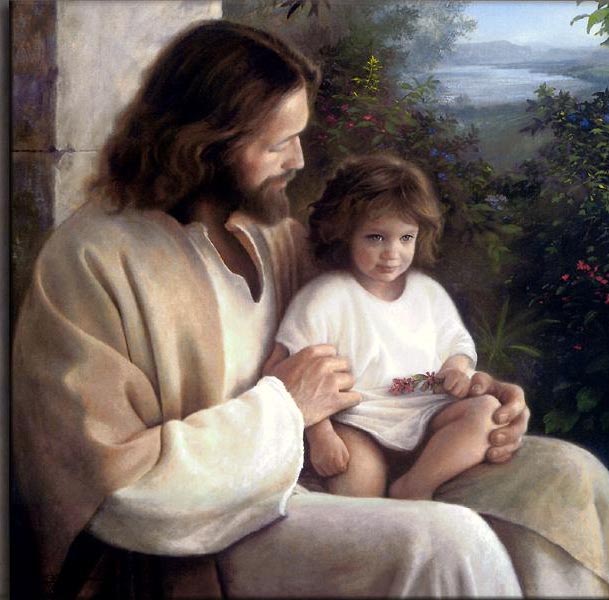 |
| Jesus is telling this child right now: You must write 25 times, I will not hit my brother. And you are not leaving your room until you are finished!!! |
This post could also be entitled: Why I Don't Buy Punitive Parenting.
When I started having children I discovered that I was a terrible disciplinarian. I either took the disobedience personally and overreacted or if I was in a more sanguine mood, I was a pushover who let the child get away with naughtiness. I knew I wasn't doing things right! I read parenting books that basically made me feel guilty. I tried those reward charts but they never lasted longer than a day or two. I am too A.D.D. to keep up with something like that.
Anyway, all the discipline advice felt so phony to me. But since my oldest was very strong willed, I had a real discipline issue to deal with. Every, and I mean every, little thing turned into a power struggle with her. I never would see it coming! It would just be there, bam! All of sudden a huge tug of war of wills. And I never would win. Never. Because honestly I didn't care about having the power per se, only often I was annoyed at the unpleasantness and frustrated that we couldn't get anything done without a tantrum or melt down. It took me years to figure this out, but I remember when my oldest was about 12 and I was ranting to my husband about how she just wouldn't obey me and how first she had had this consequence (used as euphemism for punishment) and then she had been grounded and she still blah, blah, blah. And my husband said in a very droll voice, Well, I guess it is the death penalty next. This was a jibe at me because I used to work for the Death Penalty Defense Public Defenders office. Rick hardly ever punished anybody. Very rarely if someone had done something mean, he'd banish them to their room until they could be nice again. Usually though he just cajoled them out of misbehavior by joking with them. He's kind of magical that way.
Anyway, his remark got me thinking. Things just always escalated. This cycle of disobedience and punishment just kept cycling higher and higher and I felt so deeply resentful and alienated from my own child who I knew I loved with all my heart, even though I couldn't feel that love because I was too busy being put out with her. It occurred to me that something was very very wrong. I had a lightbulb moment when I suddenly thought: punishing doesn't work. It doesn't! If it did, why do we have to keep punishing our kids over and over again? The only time punishment works is if your kid is really afraid of you. If your kid is really afraid of you then forget about trust or feeling close. Don't expect your kid to come to you when they are a teenager and confide in you about anything. Expect more rebellion and unpleasantness because that is what you have sowed with never ending time outs, taking away privileges and groundings.
So then I thought what would Jesus do? Did Jesus punish? Remember the parable of the Lost Sheep. Where the Good Shepherd goes out and finds the one lost lamb. Did Jesus give that lamb a good spanking to teach it not to wander off or ground it so it wouldn't get lost again? Hmm. The story certainly doesn't seem to convey that.
 |
| Jesus, the punisher |
How about the Prodigal Son? Did the father punish his oldest son who really did a lot of bad, bad stuff? Nope, he had a party when the son, all on his own, came home.
 |
| Look at the father. He is all set to do his duty and punish his son so he'll never sin again. |
Then I thought about the woman being stoned for adultery. Jesus STOPS the punishment, even though the punishment was Mosaic law!
 |
| Jesus is saying here: We've got to teach her a lesson! We can't let her get away with this! |
How did Jesus teach us to follow him? 1) He showed us how to live by his own life 2) When people went astray, he pointed their mistake out to them; he even warned them beforehand (Peter and denying Christ three times) 3) He told stories to illustrate what he was trying to teach 4) He explained things to people when they didn't understand 5) Sometimes he got justly angry. 6) He praised them when they did good (Woman, your faith has saved you). 7) He always emphasized forgiveness and the Father's love. 8) He called us his friends.
I know some people say things like: "I am their parent, not their friend. " I think though this is not a very Christian approach to parenting. If Jesus, God himself, can humble himself to become human, take on all our sins, suffer and die for us and then call us his friends, surely a parent can be a friend to their child without somehow giving up authority. Friendship from a Christian point of view is a relationship of love, trust and closeness. What kind of friendship depends on the connection - siblings, classmates, neighbors, spouse, best friend - but they are all kinds of friendship. I think when people say that phrase: We can't be friends because I am the parent, they really mean I can't be their peer, which is very true. But I think they confuse 'peer' with 'friend.' Frankly, I think it is used as a bit of an excuse to justify alienating their child's affections in the name of discipline. I think that is putting the cart before the ox. Just as God wants to be friends with us and loves us unconditionally, we should want to be friends with our children and try, in our limited fashion to love them as unconditionally as we (poor, wretched sinners that we are) are able.
So I don't believe in punishing unless it is a very, very last resort. I admit that sometimes if your kid does something so appalling the best thing to do might be to be like Jesus and turn over a table or two and chase them around with a whip (well, I am being figurative here, but sometimes you just have to respond right away and with great passion!). But he did that once. The other 99% of the time he taught them about how to be good and how much God loves them.
And so I do want to be friends with my children. I think I should try to be as patient with my kids as God is patient with me. Of course I fall incredibly short of this every. single. day. I lose my temper, I get cranky, I resent having to deal with the same disobedience over and over again, I get exasperated and burned out and just plain fed up! But then I remember the phrase from the Our Father, 'forgive us our trespasses as we forgive those who trespass against us'. And then I start all over again, trying to be creative and patient. Pointing out when behavior is less than charitable, reminding children of their duties, telling or reading stories to give them solid moral foundations, praying for them and with them, talking about noble things, exposing them to the good, the true and the beautiful, gently correcting misbehavior, firmly and authoritatively admonishing the disobedient, reminding them that I love them. Praising them when they get it right. Working as much as I can on always being close to them. I especially need to work on this when I am feeling less than affectionate towards one because that child is going through a trying phase. My kids are not perfect, not by any long shot. My youngest especially is pretty lippy to me. But honestly she came out of the womb with a sassy attitude. She's actually better than she used to be. Oh my, she was incorrigible! But she loves me. She tells me everything. She is a great girl. She is slowly learning to be be more respectful in her tone. She's getting it. It is unfortunately her abiding sin. We, all of us, have abiding sins we will have to struggle with all our lives. Hers is a sharp tongue and an inclination to be bossy. Good thing she has a lot of other wonderful qualities that make up for that little shortcoming. Children can definitely be trials! But a quote I saw by St. Jose Maria Escriva just the other day serves well for this:
Don't say that person gets on my nerves. Say that person sanctifies me.
And that is what happens when we parent our children. We are being sanctified. I don't want to say, that child is driving me nuts! How do I control him? Instead I want to say: that child is teaching me to love as God loves, how can I show that child how much I love him?
I tell you when I stopped using punishment as a reaction to bad behavior my kids got better and I got better. Our home became more peaceful. Not perfect by any stretch of the imagination, but somehow the atmosphere relaxed, our relationships deepened and there was a lot more joy in every day living (even in spite of crises like deaths and mental illness). And a home of love, acceptance, centered on Christ, is to my mind, going to raise up saints a lot easier than a home where the parent sees himself primarily as judge and arbiter.
Wednesday, February 11, 2015
Trader Joe's Chicken Tacos Recipe
I made really yummy chicken tacos the other day. I had never made chicken tacos before, only the ground beef variety. And when I made these I was in a rush and wasn't working from a recipe. But fortunately since I go to Trader Joe's every week, I just happen to have all the ingredients. I rushed in the door at about 6:50 p.m. And had dinner on the table before 7:30.
Ingredients:
3 chicken breasts ( defrosted - luckily I had some previously defrosted from Monday's chicken Parmesan). Trader Joe's has a nice bag of frozen chicken breasts in their freezer section.
Some oil for cooking (I used sunflower oil)
Garlic salt (a couple of good shakes)
About a 1/2 a jar of Salsa Autentica (the red variety; though the green kind would be good too!)
Less than a 1/3 of TJ's Taco seasoning (it is spicy and some of my kids don't like that so I am sparing)
Topping for tacos: chopped lettuce, tomatoes, grated cheese, guacamole and Greek yogurt.
Taco shells
First I heated the oven so I could toast the taco shells.
I quickly sliced up the chicken breasts into thin slices and small chunks. I browned them quickly in the hot oil, seasoning with some garlic salt. Then I added the salsa and taco seasoning, stirred it all up, covered it and let it simmer for a few minutes until the chicken was cooked through.
I popped the taco shells into the oven on a cookie sheet. This is always a dangerous point for me because I forget to get them out in a couple of minutes and then render them inedible by burning them. But this time I used a timer.
Next, I chopped up some romaine lettuce and some cherry tomatoes.
Then I grated some cheese ( I used mozzarella but you could use Monterey Jack or cheddar).
Then I got out Trader Joe's reduced guilt guacamole ( which I love!)
I also got out some plain Greek yogurt to substitute for sour cream.
It was delicious! I am definitely making it again! I made it for four people - Sean had three tacos, Josh and I each had two, Becky had one and I still had a little left over for lunch the next day. I served some chilled peaches for a side dish.
Ingredients:
3 chicken breasts ( defrosted - luckily I had some previously defrosted from Monday's chicken Parmesan). Trader Joe's has a nice bag of frozen chicken breasts in their freezer section.
Some oil for cooking (I used sunflower oil)
Garlic salt (a couple of good shakes)
About a 1/2 a jar of Salsa Autentica (the red variety; though the green kind would be good too!)
Less than a 1/3 of TJ's Taco seasoning (it is spicy and some of my kids don't like that so I am sparing)
Topping for tacos: chopped lettuce, tomatoes, grated cheese, guacamole and Greek yogurt.
Taco shells
First I heated the oven so I could toast the taco shells.
I quickly sliced up the chicken breasts into thin slices and small chunks. I browned them quickly in the hot oil, seasoning with some garlic salt. Then I added the salsa and taco seasoning, stirred it all up, covered it and let it simmer for a few minutes until the chicken was cooked through.
I popped the taco shells into the oven on a cookie sheet. This is always a dangerous point for me because I forget to get them out in a couple of minutes and then render them inedible by burning them. But this time I used a timer.
Next, I chopped up some romaine lettuce and some cherry tomatoes.
Then I grated some cheese ( I used mozzarella but you could use Monterey Jack or cheddar).
Then I got out Trader Joe's reduced guilt guacamole ( which I love!)
I also got out some plain Greek yogurt to substitute for sour cream.
It was delicious! I am definitely making it again! I made it for four people - Sean had three tacos, Josh and I each had two, Becky had one and I still had a little left over for lunch the next day. I served some chilled peaches for a side dish.
Tuesday, February 10, 2015
How to be a Relaxed Homeschooler
Relaxed homeschooling borrows from both traditional homeschooling ideas and unschooling ideas about how children learn. There is an impossible, and seemingly contradictory, tension between these two approaches to education but relaxed homeschoolers are intrepid folk, refusing to be pigeon-holed. The operating question is: what works best for our family. Ideology be damned! Relaxed homeschooling suits Catholics very well because we are a both/and people rather than an either/or people!
Can't children benefit by both being allowed to follow their delight, their interests, their passions as well as being taught via loving and mindful instruction? Why not? In the real world aren't we always learning from both informal and formal methods?
In Catholicism there is a virtue called 'docility.' This does not mean being a door mat; rather it comes from the Latin word to teach. Someone who is docile is open to being taught. If a child is truly docile they will learn in both informal and formal ways. How to cultivate the virtue of docility in children? Well it is hard! But a child who trusts you, is bonded with you, feels respected by you, the teacher/parent, will be open to learning from you.
Some relaxed homeschoolers are 'tidal learners.' This was the way Melissa Wiley described her homeschooling. At different times of the year how learning happened in their household varied. At times it might be more formal and at other times it might be more unschoolish. It depended what was going on in all sorts of other areas in the family's life.
Other relaxed homeschoolers would rather work on the basic 3 R's in a more formal manner at a pretty constant rate but leave the learning of any other subjects up to the child's interests.
My own family varied wildly in how we got things done. We would swing back and forth. Some years were really unschooly and then, in reaction to that, we'd swing back to being much more structured. Neither end of the spectrum lasted for long because we found both unsatisfactory in some way, shape or form.
But if I were to boil things down to their essence - the skeleton of our homeschooling life, was this:
1. Prayer/learning the faith - this was an ever changing but also consciously thought about element in our homeschool. Regular prayer times, regular reading out loud about something to do with the faith, regular participation in the liturgical year, regular involvement in some kind of group or activity that promoted learning the faith.
2. Copy work - We've been homeschooling for 20 years and for at least the last 10, copy work has been a mainstay of our homeschool. Copy work is versatile and efficient in teaching many things at once.
3. Read alouds - This has always been a huge deal in our family. We read aloud about everything, usually over meals and then before bed at night. At times I was too tired and preoccupied with having and then caring for babies, so audio books and my husband took over for me. But this has always been the core of our home learning life.
4. Outside activities - we have been involved in various co-ops or classes over the years. The kids have also been involved in scouts, Little Flowers, Blue Knights, American Heritage Girls, 4-H, youth groups, scripture studies, art classes, music lessons, gym classes, tennis and soccer and swim lessons, track, Irish Dance, etc. In high school the kids have studied math with a tutor, taken science classes and occasionally literature classes in the homeschool community. The oldest two opted to study at the community college in their 12th grade year. Every year we figure out what we are doing outside the home, plug that into our weekly calendar, and then work around those things to develop our weekly routines.
5. We definitely get much more formal as the student enters high school. This is because we, the parents, want to say with confidence that our children are high school graduates. We want them to be poised to be ready for college if they choose to go. Also, we have found that kids need more structure during those teens years.
The five elements above all developed organically from who we are as a family. The two examples of relaxed homeschooling, tidal homeschooling and my own family's style are just that, examples! There are a million variations on relaxed homeschooling. That is because it arises organically from each family's personality. Remember that famous quote from St. John Paul II, "Families, become what you are!" Let that be your guiding principle!
So how to be a relaxed homeschooler? I would say find your own elements. How does your family click? Look to those things and build from that, mixing formal and informal in whatever amounts best serve you and yours at any given time.
Can't children benefit by both being allowed to follow their delight, their interests, their passions as well as being taught via loving and mindful instruction? Why not? In the real world aren't we always learning from both informal and formal methods?
In Catholicism there is a virtue called 'docility.' This does not mean being a door mat; rather it comes from the Latin word to teach. Someone who is docile is open to being taught. If a child is truly docile they will learn in both informal and formal ways. How to cultivate the virtue of docility in children? Well it is hard! But a child who trusts you, is bonded with you, feels respected by you, the teacher/parent, will be open to learning from you.
Some relaxed homeschoolers are 'tidal learners.' This was the way Melissa Wiley described her homeschooling. At different times of the year how learning happened in their household varied. At times it might be more formal and at other times it might be more unschoolish. It depended what was going on in all sorts of other areas in the family's life.
Other relaxed homeschoolers would rather work on the basic 3 R's in a more formal manner at a pretty constant rate but leave the learning of any other subjects up to the child's interests.
My own family varied wildly in how we got things done. We would swing back and forth. Some years were really unschooly and then, in reaction to that, we'd swing back to being much more structured. Neither end of the spectrum lasted for long because we found both unsatisfactory in some way, shape or form.
But if I were to boil things down to their essence - the skeleton of our homeschooling life, was this:
1. Prayer/learning the faith - this was an ever changing but also consciously thought about element in our homeschool. Regular prayer times, regular reading out loud about something to do with the faith, regular participation in the liturgical year, regular involvement in some kind of group or activity that promoted learning the faith.
2. Copy work - We've been homeschooling for 20 years and for at least the last 10, copy work has been a mainstay of our homeschool. Copy work is versatile and efficient in teaching many things at once.
3. Read alouds - This has always been a huge deal in our family. We read aloud about everything, usually over meals and then before bed at night. At times I was too tired and preoccupied with having and then caring for babies, so audio books and my husband took over for me. But this has always been the core of our home learning life.
4. Outside activities - we have been involved in various co-ops or classes over the years. The kids have also been involved in scouts, Little Flowers, Blue Knights, American Heritage Girls, 4-H, youth groups, scripture studies, art classes, music lessons, gym classes, tennis and soccer and swim lessons, track, Irish Dance, etc. In high school the kids have studied math with a tutor, taken science classes and occasionally literature classes in the homeschool community. The oldest two opted to study at the community college in their 12th grade year. Every year we figure out what we are doing outside the home, plug that into our weekly calendar, and then work around those things to develop our weekly routines.
5. We definitely get much more formal as the student enters high school. This is because we, the parents, want to say with confidence that our children are high school graduates. We want them to be poised to be ready for college if they choose to go. Also, we have found that kids need more structure during those teens years.
The five elements above all developed organically from who we are as a family. The two examples of relaxed homeschooling, tidal homeschooling and my own family's style are just that, examples! There are a million variations on relaxed homeschooling. That is because it arises organically from each family's personality. Remember that famous quote from St. John Paul II, "Families, become what you are!" Let that be your guiding principle!
So how to be a relaxed homeschooler? I would say find your own elements. How does your family click? Look to those things and build from that, mixing formal and informal in whatever amounts best serve you and yours at any given time.
Subscribe to:
Posts (Atom)