I did it! I wrote 50,034 words of a terrible novel!
Of course, I can't figure out how to post the lovely certificate they give you to commemorate the event. But I did order a t-shirt!
Whew. I am glad that is over. I am also glad I did it. It really was a challenge and I am glad I stuck to it this time around. It shows there is always hope!
Monday, November 30, 2015

Saturday, November 28, 2015
Meadowlark Gardens
I finally went to see the light show!
 |
| There's Sean in the Santa hat working the admissions. |
 |
| The park was quite magical. Lots of little kids who were just awed by it all. |
 |
| Lots of cute things to see. |
Wednesday, November 25, 2015
NaNoWriMo Update
I can not believe that I have kept up on NaNoWriMo this year. I've tried it three times before and I've always given up almost as soon as I've started. I don't think I made it quite through the first week even. Thus far, this time, I've written 40,062 words. This does not include the 17,752 words that actually started this story I am working on a couple years ago, the last time I attempted NaNoWriMo. It would be cheating though to add those words in as official for 2015, so I still want to get to the 50,000 word count for this year. Right now, at the rate I am going I won't 'win' because it (the word counter at the NaNoWriMo site) says I won't finish until December 2nd. However, I hope to crank some more of the story out today and do lots tomorrow too, since I won't be fussing over a turkey or anything like that. So maybe I will make the 50,000 word limit by the deadline.
Every morning I sit down and think, oh my goodness, what am I going to write. And then I just write. Some days I only get 500 - 800 words down. And sometimes just eking out that small amount is painful. But some days it just flows and I'll write 2,000 - 3,000 in one fell swoop.
Since the story had been percolating around in my head for the last couple of years, on and off, I initially had stuff to say. But that dwindled after the first week. So my strategy became expand and amplify ideas that are implied or could tie things together. That worked for a while too. But now I am kind burned out on that because the stuff that seemed harder to work I've put off until the last. Don't ask me how I'll make it through the next five days.
Some things I've discovered about myself:
1. I can write much more fluidly and get much more volume done if I am writing between the hours of 6:30 to 8:30 a.m. or 7 to 9 a.m. After that it gets much harder. I don't have the same focus.
2. I had to do things I'd never thought about. For instance I had to make up this imaginary town, so I had to research typical street and town names.
3. I had to draw a little map of the small town so I can figure out where everything is.
4. I keep writing in asynchronous chunks that flip back and forth in time. I think it is way too hard to follow. I wound up making a timeline of events for the story, but even then I still confuse myself. Duh! I will have to do tons of tidying and rearranging to make this comprehensible.
5. I have not proofread at all and I think it is going to be a total bear to read and fix. I am planning on forgetting about it for all of December and not doing a thing more on it until the new year.
6. While I have managed to keep up this year, by some miraculous alignment of the stars, I sorta can't wait for it to be over. For one thing it is time consuming so it makes things stressful. For another I have found I am unable to read fiction while I am writing fiction. I am sticking to non-fiction books right now. I can't wait until December when I can read a thumping good, light but satisfying, novel!
7. I love researching. I am researching the area I've placed my fictional town, both geographically and historically, I've done all sorts of research on music. Because the book is set in the 70s, I've been doing all sorts of trips down memory lane and rediscovering things I'd completely forgotten about.
8. The book is so undeveloped. There still needs to be lots more dialogue incorporated and much better character development. Just churning out 50,000 words at this pace is the most rudimentary step. I realize now that it is just the beginning of a long, hairy process.
Wish me luck!
Every morning I sit down and think, oh my goodness, what am I going to write. And then I just write. Some days I only get 500 - 800 words down. And sometimes just eking out that small amount is painful. But some days it just flows and I'll write 2,000 - 3,000 in one fell swoop.
Since the story had been percolating around in my head for the last couple of years, on and off, I initially had stuff to say. But that dwindled after the first week. So my strategy became expand and amplify ideas that are implied or could tie things together. That worked for a while too. But now I am kind burned out on that because the stuff that seemed harder to work I've put off until the last. Don't ask me how I'll make it through the next five days.
Some things I've discovered about myself:
1. I can write much more fluidly and get much more volume done if I am writing between the hours of 6:30 to 8:30 a.m. or 7 to 9 a.m. After that it gets much harder. I don't have the same focus.
2. I had to do things I'd never thought about. For instance I had to make up this imaginary town, so I had to research typical street and town names.
3. I had to draw a little map of the small town so I can figure out where everything is.
4. I keep writing in asynchronous chunks that flip back and forth in time. I think it is way too hard to follow. I wound up making a timeline of events for the story, but even then I still confuse myself. Duh! I will have to do tons of tidying and rearranging to make this comprehensible.
5. I have not proofread at all and I think it is going to be a total bear to read and fix. I am planning on forgetting about it for all of December and not doing a thing more on it until the new year.
6. While I have managed to keep up this year, by some miraculous alignment of the stars, I sorta can't wait for it to be over. For one thing it is time consuming so it makes things stressful. For another I have found I am unable to read fiction while I am writing fiction. I am sticking to non-fiction books right now. I can't wait until December when I can read a thumping good, light but satisfying, novel!
7. I love researching. I am researching the area I've placed my fictional town, both geographically and historically, I've done all sorts of research on music. Because the book is set in the 70s, I've been doing all sorts of trips down memory lane and rediscovering things I'd completely forgotten about.
8. The book is so undeveloped. There still needs to be lots more dialogue incorporated and much better character development. Just churning out 50,000 words at this pace is the most rudimentary step. I realize now that it is just the beginning of a long, hairy process.
Wish me luck!
Monday, November 23, 2015
The Wind in the Reeds - Book 53

The Wind in the Reeds is an emotional and deeply heartfelt testament to the truth, goodness and beauty the author has experienced in his life. The author is Wendell Pierce, apparently, a well known African American actor. His biggest roles were on a very popular TV Show called The Wire and then another very popular show called Treme. Since I don't watch TV much, I was clueless about this but now I'd really like to see these shows.
Wendell Pierce grew up in New Orleans in the first African-American housing development built in 1954.. It was a product of a deal cut due to segregation, but it turned out to be a wonderful thing, in spite of that. Pierce says it was like a Mayberry for black kids. The neighborhood was a true community of stable, hardworking black families who had pulled themselves up by their own bootstraps in the face of overwhelming hate and poverty. Pierce's beloved mother was a school teacher and his father, who had frustrated dreams in his youth of being a professional photographer, worked at a furniture store during the day and as a janitor at night. Wendell's mother was a devout Catholic and even though she'd experienced bigotry from members of the Church, his mother, and hence Pierce, was always able to differentiate between the humans in the Church and her divine call as the Church Jesus established. Wendell Pierce himself is an uneasy Catholic but he has a great love for her nonetheless.
Pierce left New Orleans to attend The Juilliard School in New York to become an actor, a lifelong dream of his. This was an amazing feat. And he loved going to the Julliard School. Winton Marsalis was a couple years ahead of him and he and his brother Bradford (who went to Berklee, from where my son just graduated) hung out together. A few years after Julliard, Pierce was playing major broadway theater. His career took off in another major way when he played the part of a tough, alcoholic homicide detective in Baltimore in The Wire. He got to really know Baltimore and the police department there. This book ends just a little too soon for me. I would love to have read his opinions on the whole Freddy Gray debacle in Baltimore. When I worked in Baltimore with the Public Defenders I sensed no great tension between blacks and whites there. It seemed ideally and fully integrated. Everyone was a Democrat (including myself). The city is owned by the Democratic party. Although I am sure that racism never entirely goes away and that there probably was some going on somewhere, there are plenty of black police officers, prosecutors, public defenders, etc. Pierce never mentions racism on the police force (though he did have bad encounter with police in Baltimore much earlier than when he started working on The Wire - but that may or may not have been a racist thing). Pierce worked with black officers. Anyway, I would love to know how this racism suddenly cropped up as a major issue to riot over. Something went terribly wrong.
Hurricane Katrina was a major life changing event for Pierce and his family. He was visiting his parents (he'd moved to California) before he started another season of The Wire. News of a major hurricane came in. Being New Orleanians they didn't panic, except the news kept saying that this was the most powerful storm to ever hit. They relocated to a relatives house further north and sat out the hurricane. It was rough at the uncle's house so they could only imagine how hard it must have hit their area, but even then they were not prepared for the utter destruction of their how neighborhood which sat under toxic flood waters for weeks.
The storm galvanized Pierce completely. He realized how much he'd lost, all his parents's hard work in owning a home, all his childhood memories, his stable start in life that allowed him to be successful. First he gave his all to get his parents' house back in shape, then he tried to get the neighborhood back, and finally he worked and continues to work these many years later to help his beloved city of New Orleans, so rich in history and culture, and unfortunately corruption, back on her feet.
This book is about family, faith in God, traditional values, African American history and, most especially, art. How art ennobles and strengthens us. How art can be an empowering force that gives voice to anguish and allows for hope.
Rod Dreher is the co-author. He is also from New Orlean but he's white and is certainly not a Democrat (Pierce worked for the Obama campaign and got a chance to introduce his parents to Obama) but the two collaborated on this book and became friends as a result.
I found this book engrossing. It is a powerful reflection on the terrible legacy slavery and bigotry and the toll it took on African Americans, but also how they, as a culture, rose above it and much of that is reflected in the music and culture of New Orlean. If I were interviewing the author though, I would ask him what he thinks of gangsta rap and the glorification of ghetto/drug lord/gangs. He seems to come down very hard on those aspects of modern culture. He talked about how the 1 or 2 percent were hurting all the other upright and hardworking African Americans, like his parents.
There's a lot more to this book I haven't even touched on, including an ongoing and really deep analysis of the play Waiting for Godot. Just remember 'can't' died three days before creation and always be wary of people who don't have your best interests at heart! And you can't get lost in America!
Two thumbs up! For more book reviews go to Read 52 Books in 52 Weeks.
Sunday, November 15, 2015
Frankenstein - Book 52

I read this book as part of my participation in the Woman's Classic Literature Event (Classics Club).
Frankenstein is an amazing book. I started to read it a few years ago and couldn't get past the first few pages. It just felt too heavy to me then. This time around I was hooked the minute I started to read, which just goes to show you that you should give some books more than one chance.
I read the Ignatius Press edition of this book which opens up with an Introduction by Joseph Pearce. This intro really made me dislike Percy B. Shelley. I don't know if that was Pearce's intent but that was the reaction I came away with. First Percy Shelley runs off with a 16 year old named Harriet and marries her not because he loves her but because he wants to 'mold' her. He gets her pregnant. Then he meets and falls in love with Mary, also 16 (and this is just a few months after all this stuff with Harriet). When Mary's father objects to Mary going off with Percy, Percy wants Mary to commit suicide with him. That doesn't happen but they do run off together. Harriet has her baby and then a few months later kills herself. These are selfish, hormonal, impetuous adolescents. Well, Mary is, Percy is older but seems to have embraced being a radical adolescent as a life plan. I am curious about their marriage. It only lasted six years before Percy drowned.
Although young, Mary Shelley must have been able to hold her own against Percy's influence, somewhat. Frankenstein is about taking the consequences for what you create.
The novel starts kind of bizarrely (at least to me) with letters from a man, bent on sailing to the North Pole, to his sister. He's excited about his great chance at exploration, something he's been working towards for many years. His ship gets stuck in the ice and though I have no idea how these letters would get from a lone ship stuck in arctic ice back to England, he keeps writing them. His crew rescues a man from the icy waters, amazed to see a sole human in the wasteland of the northern waters. While this man, who turns out to be Dr. Frankenstein, relates his story to our explorer, he in turn relates them to his sister in his letters to her.
Dr. Victor Frankenstein starts out nice enough. He comes from a loving family and is raised with good moral principles. However his obsession with science and his unbridled pride in doing something no one else has done, something godlike, to create a new creature, leads to his undoing. Once he accomplishes his goal he completely falls apart. He is not able to be responsible for what he has created. He shrinks in loathing and fear from it. In fact he doesn't even understand what he has created but can only ever view it through his very emotional and reactionary lense. The creature, it turns out, was of a sensitive and loving nature, who was completely naive for essentially he is like a newborn in a full blown almost super-powered body. Dr. Frankenstein abandons him immediately. We don't even know what has happened to the creature for the first two years of its life until it corners Dr. Frankenstein alone on a glacier covered mountain top in the Alps and forces him to listen to him.
This Ignatius Press edition is based on the original by Mary Shelley. Percy Shelley edited it later, carefully erasing any references to God. Shelley was an atheist and I guess that meant Mary had to be one too.
(Spoilers!) Through Dr. Frankenstein's craven cowardice and pride, his younger brother, a beloved servant (who is accused of the brother's murder), his best friend and his wife all eventually meet their deaths as a result of the creature, three directly murdered by the creature. The creature is desperate for companionship and borders on madness in his isolation; he turns to tormenting Frankenstein when he won't give him a wife like himself.
Most of facts of the story belie any real plausibility if you think about them too hard right from the premise about creating the creature to how the creature sustains himself, hides from human notice, learns to speak, etc.. But Shelley's powerful writing and the inexorable pace of the story kept me reading. Dr. Frankenstein does get pretty irritating in his unremitting self-pity. He makes every wrong decision you can make.
The whole story though does raise so many powerful questions. Science and technology do give us powers we don't have the wisdom to handle. We can not foresee what implications or consequences result from moving full speed ahead with innovation and experimentation. With all progress comes a downside. Think of how scientific those gas chambers were at Auschwitz. Think of eugenic sterilization and cloning, surrogate slavery, sex change operations, abortion. Of course a lot of good has come about too, but there is always an ugly underbelly to all this. Playing God is never a good idea.Here's another horrifying way science could be used for evil.
A dark book which raises deep questions. I am glad I finally read it.
For more book reviews go to Read 52 Books in 52 Weeks.
Friday, November 13, 2015
Lord of the World Study Guide
No Friday recap for today. I totally forgot to record things. I do know that some math got done, some science got done, some Latin got done, some Speech and Communications got done and a lot of history got done. Best of all, we finally, FINALLY finished Lord of the World. Woot!
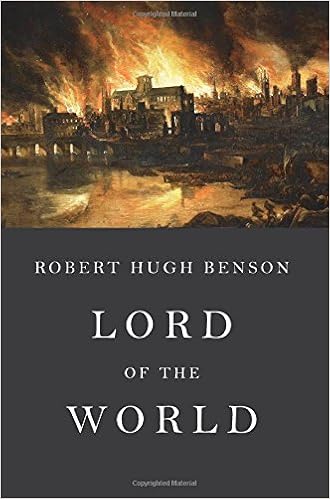
Since there is no study guide out there for this book, I wrote up my own. Nota bene: This book is really too hard for high schoolers. You simply have to have a larger and deeper context to draw from when trying to comprehend all that is in it. It is a deeply flawed and yet brilliant book.
Here is my rinky-dink Study Guide. It isn't really a study guide proper though. I just wrote a bunch of questions and some comments to provoke discussion with our little book club. Here it is:
Since there is no study guide out there for this book, I wrote up my own. Nota bene: This book is really too hard for high schoolers. You simply have to have a larger and deeper context to draw from when trying to comprehend all that is in it. It is a deeply flawed and yet brilliant book.
Here is my rinky-dink Study Guide. It isn't really a study guide proper though. I just wrote a bunch of questions and some comments to provoke discussion with our little book club. Here it is:
Study Guide for Lord of the World:
When was this book written and what time period is it set
in?
Imaging the future, what does the author come close to
guessing pretty accurately and what does he assume to be the same as in the
future?
What aspects of the novel reflect the author’s time
period: (my answer: attitude towards women, women still wearing
hats with veils, liturgy being in Latin and as elaborate as a high Latin Mass,
communication is still by telegraph and newspapers, no A/C.)
What is futuristic in the book? (my answer: volors, electric lights, living
underground, placards on buildings that announce news).
In what ways does Mabel’s worldview parallel modern views on
euthanasia, globalism, and 1st world dominance over other parts of
the world?
Mabel and Oliver are both good people who are intelligent
and idealistic. What is it they lack
that prevents them from seeing the truth?
Why does Father Francis leave the faith?
What do you think the author is saying about the power of cultural influence
in determining our inner spiritual lives?
What does the role of the mother in law reverting to
Catholicism and then dying play in the novel?
How does the author’s imagined future foreshadow things like
the Soviet Union, the rise of cult personalities like Hitler and Lenin? The Holocaust?
How morally consistent is Mabel? Oliver?
Mr. Francis? Felsenberg? Write a
paragraph for each, explaining their reasoning.
There is a lot wrong with this book. For one thing he hardly never mentions Africa
once. It is as if it didn’t exist. Benson also seems to be anti-Semitic. Why does he pick the name Julian
Felsenberg?
He also has a thing against the Masons. What were the Masons at that time and why
does the Catholic Church not like them? Did you know there was an anti-Mason party at
one time in U.S. History? Here’s an
interesting link: https://en.wikipedia.org/wiki/William_Morgan_(anti-Mason)
Are Masons still
perceived as a threat? Why would the
Catholic Church be so against Masons?
Benson also seems to mistrust Democracy. This may be related to his anti-Mason stand
(just my own theory!) because many of our Founding Fathers were Masons. The Church had a hard time switching gears
from monarchy to democracy; (see this Wikipedia article: https://en.wikipedia.org/wiki/Relations_between_the_Catholic_Church_and_the_state
How do Benson’s views reflect this? How is it that the Church can change in terms
of political views and still remain faithful to her spiritual and moral
teachings?
How does the author’s depiction of the adoption and
corruption of so much of Christianity for the new religion reflect the defects
of a purely humanitarian understanding of existence?
What is so ironic about having Mr. Francis explain
Catholicism to Mabel? Why is it that he
is satisfied with his reason for losing his faith whereby Mabel sees in his
explanation a reason to sympathize with the Catholics?
Compare and contrast the faith life of Father Percy Franklin
with the faith life of Father Francis.
What makes Father Francis lose his faith and what makes Father Percy
keep his?
Do you see a parallel between decision made by Pope John and
decisions made by Father Percy (who becomes Pope Sylvester)?
What is the great internal contradiction of Humanitarianism?
Given all the flaws in this book, why would Pope Francis say
it is one of his favorites and encourage people to read it?
Why does the author tell us the ending through the eyes of a
new character, the Syrian priest?
In my opinion, Mabel a better person than Oliver even though
she killed herself. What do you think?
What exactly happens at the very end?
What is the Catholic understanding of the end of the world?
You might want to check out some of the following sections
in the Catechism of the Catholic Church in relation to this book:
Section # 676 – on the Anti-Christ and secular messianism
Section # 770 – the role of the Church in history
Section # 2425 – communism vs. free market
Monday, November 9, 2015
The Funniest Midsummer Night's Dream
We went to the American Shakespeare Theater in Staunton, Virginia this weekend. You should go! It was excellent! I have never enjoyed a Shakespeare comedy so much.
First of all it is in a replica of the Blackfriars Playhouse that Shakespeare actually used. This was apparently his indoor theater. Anyway, you step from the modern lobby into a Tudor style theater with a small stage and seats that go right up to the stage as well as two rows of balconies around the rectangle shape of the room. They keep the lights on all during the performance and there are barely any props and no setting. The play is solidly on the shoulders of the actors and these actors were amazing. They didn't need lights or atmosphere. They burst onto the stage with complete control and fluency.
Actually before the play, the actors are up on the balcony playing instruments and singing songs to entertain us while we wait for the beginning of the show. They had a snack and drink cart right on the stage. In fact some of the audience sat on the stage along the side walls. They'd been forewarned they might be made part of the play. What amazed me was somebody sat up there with their 5 year old daughter who was completely mesmerized the entire time! And this play was very long. It started at 7:30 and ended at 10:30 with just a 15 minute intermission (during which the actors came out and did vaudeville acts!)
Here's an illicit photo I took before the usher told me to stop.

First of all it is in a replica of the Blackfriars Playhouse that Shakespeare actually used. This was apparently his indoor theater. Anyway, you step from the modern lobby into a Tudor style theater with a small stage and seats that go right up to the stage as well as two rows of balconies around the rectangle shape of the room. They keep the lights on all during the performance and there are barely any props and no setting. The play is solidly on the shoulders of the actors and these actors were amazing. They didn't need lights or atmosphere. They burst onto the stage with complete control and fluency.
Actually before the play, the actors are up on the balcony playing instruments and singing songs to entertain us while we wait for the beginning of the show. They had a snack and drink cart right on the stage. In fact some of the audience sat on the stage along the side walls. They'd been forewarned they might be made part of the play. What amazed me was somebody sat up there with their 5 year old daughter who was completely mesmerized the entire time! And this play was very long. It started at 7:30 and ended at 10:30 with just a 15 minute intermission (during which the actors came out and did vaudeville acts!)
Here's an illicit photo I took before the usher told me to stop.

The actors were all tremendous, they really were, but the guy who owned the play was the guy who played Nick Bottom. He was pitch perfect! The scene when they are acting out the play about Pyramus and Thisbe was done so well. As B. said, as we were leaving the theater: I've never laughed so hard for so long at a show. The actor had the whole room completely in control. I mean everyone was in uproarious laughter and then he'd get funnier! And the laughter would be even more uproarious! Now it was pretty slapstick and it did get a bit bawdy, but nothing too awful. Well, maybe it did, but by that time I had tears streaming down my face and my stomach was starting to ache, so it didn't matter.
To tell you the truth, I like Shakespeare's comedies the least of his plays but this one was done so well.
So I am really glad we did the overnight trip. Staunton is a charming little town. It is a college town because of Mary Baldwin College. It has a small, quaint downtown area that has coffee shops, used bookstores, pizza places, music and antique stores. The Catholic church of St. Francis of Assisi is right up near Mary Baldwin College and a beautiful old church that is apparently being restored as there was lots of scaffolding around it. We went to the 5:00 Mass before the play and the priest was a charming old Irish man.
I'd love to go back again and see a tragedy or a history play. Maybe next year for our 28th wedding anniversary!
Saturday, November 7, 2015
Friday Recap - 11/6
Ugh. This is what I get for housecleaning. I deep cleaned my little powder room, scrubbing it all over. Somehow stepped in some water on the floor and went skidding. Pulled my right leg hard. Limping around now.
Monday - I got up and wrote for NaNoWriMo - things are going well!
All Souls Day - didn't get to my mom and dad's graves but I visited them a couple weeks ago. Did get to Mass in the evening. That was lovely.
J left later for work - reduced hours at marina for the fall - he only works 35 hours a week now. They extended his contract for Nov but still won't hire him permanently.
Element - Fe - iron
Just did cursive practice
Read plot summary of Midsummer Night's Dream and took a little on line quiz about it.
B finished up 1.5 of of her Geometry
S did some math homework
Both worked on history reading and notetaking
Cleaned out fridge and freezer in prep for new one coming on Tuesday
Worked a lot on Latin prep
B did more History - not sure if S did
S worked out with P.T.
I am sure they did more academic stuff but can't remember.
J took B to her rehearsal - she is now make up crew for A Christmas Carol
Will flew home for a visit this week. I think he leaves Friday morning.
Tuesday - Good: more than 5000 words so far! But I am having trouble with dialogue. I am basically just sketching vignettes that fit in with overall plot but need to be fleshed out and stitched together. Bad: my darn leg still hurts!
Saint: St. Martin de Porres
Element: cobalt
Cursive practice
For some reason S was humming Just the Two of Us by Bill Withers so we watched a youtube video of that.
S did a couple of problems in Alg II, B started on 1.6 video
S and B finished up notetaking sheets for History class.
Took to history class
Will was home for new fridge delivery. We've got a hulking new stainless steel fridge. I am the only person on the planet who things stainless steel is ugly but you can not get fridges without it anymore. So we've got one and it is just as ugly as I thought it would be. However, the water and ice machines work, the doors aren't broken and it is a million times quieter than our old fridge.
After history class no one wanted to do school work. Instead they hung out a lot with Will.
I worked on Latin prep.
Ran to store and got dinner makings/stop gap shopping
Make spaghetti for dinner.
After dinner B and S took Speech quiz on line.
B studied for history test. Not sure what S did.
Wednesday - this is the book that is inspiring my NaNoWriMo novel!
https://onethousandwordsaweek.wordpress.com/2015/10/25/a-tree-grows-in-brooklyn-an-appreciation/
With Will being home we aren't getting much done.
Can't remember Wed. a.m.
B rewatched Geometry video
S supposedly did some math homework
S and B had speech class at noon
W went in with Rick to work
S to math tutor
B to voice only there was no voice! I really gotta check my calendar before I take off.
S studied a bit of Latin before his bass lesson
J was too late coming home from work to take B to her rehearsal so I had to.
Managed to bake some chicken for homeless shelter as well as family.
Come and get it dinner
I gave up on getting anyone to do school work after Will got home. I think they stayed up late jamming with him.
I miss unschooling, B was showing me all the sign language she's learned from youtube videos, then she and S were playing uke and melodica together. Sounded great!
Novel writing is going well
Planning for Latin has me in a panic, though.
No science done this week at all and S and B really need to be studying for big history exam which they have not.
Thursday - Our 27th Wedding Anniversary - unfortunately it's just going to be a hectic day!
Got up early and planned more Latin
Took chicken to church
Stopped and picked up chocolate for my Latin 1 class since they did so well on their exam.
Got gas
Came home, worked on novel
showered - finally got kids up @ 10
Left list of stuff for them to do.
B and I off to Aquinas.
Grappling with Latin issues - won't go into it.
Will had his friend who is in his first year discerning vocation with the Marist Brothers in Wash. DC over.
Rick and I went out to eat at a new Italian restaurant. It was nice.
Friday
Will flew back to Boston
Took S to math tutor
Tried to write more on my novel but I've had two days where I only reached half the goal.
Watched a bit of Natural Law lecture - actually a re-watch.
Went to Mass
Ate at Chipolte
Came home and since the kids still really needed to study history that's what they did.
I went to Adoration - supposed to be from 2:00 -3:00 but no one showed up at 3 and then no one showed up at 4. Finally at 4:30 Father Pat came in. He said he'd be back by 5 so I stayed. It was really wonderful. I don't think I've ever focused on praying for 3 hours straight. What a wimpy Christian I am. But once I got over the anxiety of things not going as I planned, I let go and just prayed. It was like a little retreat! Alleluia! I asked Father Pat why they don't do things like another parish where they have someone to organize things to make sure someone is always there but he said the woman who used to do for so many years, moved so no one took up the job. So then I gulped and said I would volunteer to coordinate.
Gotta write more on my novel!
This weekend we go see Midsummer Night's Dream at Blackfriars Playhouse.
Monday - I got up and wrote for NaNoWriMo - things are going well!
All Souls Day - didn't get to my mom and dad's graves but I visited them a couple weeks ago. Did get to Mass in the evening. That was lovely.
J left later for work - reduced hours at marina for the fall - he only works 35 hours a week now. They extended his contract for Nov but still won't hire him permanently.
Element - Fe - iron
Just did cursive practice
Read plot summary of Midsummer Night's Dream and took a little on line quiz about it.
B finished up 1.5 of of her Geometry
S did some math homework
Both worked on history reading and notetaking
Cleaned out fridge and freezer in prep for new one coming on Tuesday
Worked a lot on Latin prep
B did more History - not sure if S did
S worked out with P.T.
I am sure they did more academic stuff but can't remember.
J took B to her rehearsal - she is now make up crew for A Christmas Carol
Will flew home for a visit this week. I think he leaves Friday morning.
Tuesday - Good: more than 5000 words so far! But I am having trouble with dialogue. I am basically just sketching vignettes that fit in with overall plot but need to be fleshed out and stitched together. Bad: my darn leg still hurts!
Saint: St. Martin de Porres
Element: cobalt
Cursive practice
For some reason S was humming Just the Two of Us by Bill Withers so we watched a youtube video of that.
S did a couple of problems in Alg II, B started on 1.6 video
S and B finished up notetaking sheets for History class.
Took to history class
Will was home for new fridge delivery. We've got a hulking new stainless steel fridge. I am the only person on the planet who things stainless steel is ugly but you can not get fridges without it anymore. So we've got one and it is just as ugly as I thought it would be. However, the water and ice machines work, the doors aren't broken and it is a million times quieter than our old fridge.
After history class no one wanted to do school work. Instead they hung out a lot with Will.
I worked on Latin prep.
Ran to store and got dinner makings/stop gap shopping
Make spaghetti for dinner.
After dinner B and S took Speech quiz on line.
B studied for history test. Not sure what S did.
Wednesday - this is the book that is inspiring my NaNoWriMo novel!
https://onethousandwordsaweek.wordpress.com/2015/10/25/a-tree-grows-in-brooklyn-an-appreciation/
With Will being home we aren't getting much done.
Can't remember Wed. a.m.
B rewatched Geometry video
S supposedly did some math homework
S and B had speech class at noon
W went in with Rick to work
S to math tutor
B to voice only there was no voice! I really gotta check my calendar before I take off.
S studied a bit of Latin before his bass lesson
J was too late coming home from work to take B to her rehearsal so I had to.
Managed to bake some chicken for homeless shelter as well as family.
Come and get it dinner
I gave up on getting anyone to do school work after Will got home. I think they stayed up late jamming with him.
I miss unschooling, B was showing me all the sign language she's learned from youtube videos, then she and S were playing uke and melodica together. Sounded great!
Novel writing is going well
Planning for Latin has me in a panic, though.
No science done this week at all and S and B really need to be studying for big history exam which they have not.
Thursday - Our 27th Wedding Anniversary - unfortunately it's just going to be a hectic day!
Got up early and planned more Latin
Took chicken to church
Stopped and picked up chocolate for my Latin 1 class since they did so well on their exam.
Got gas
Came home, worked on novel
showered - finally got kids up @ 10
Left list of stuff for them to do.
B and I off to Aquinas.
Grappling with Latin issues - won't go into it.
Will had his friend who is in his first year discerning vocation with the Marist Brothers in Wash. DC over.
Rick and I went out to eat at a new Italian restaurant. It was nice.
Friday
Will flew back to Boston
Took S to math tutor
Tried to write more on my novel but I've had two days where I only reached half the goal.
Watched a bit of Natural Law lecture - actually a re-watch.
Went to Mass
Ate at Chipolte
Came home and since the kids still really needed to study history that's what they did.
I went to Adoration - supposed to be from 2:00 -3:00 but no one showed up at 3 and then no one showed up at 4. Finally at 4:30 Father Pat came in. He said he'd be back by 5 so I stayed. It was really wonderful. I don't think I've ever focused on praying for 3 hours straight. What a wimpy Christian I am. But once I got over the anxiety of things not going as I planned, I let go and just prayed. It was like a little retreat! Alleluia! I asked Father Pat why they don't do things like another parish where they have someone to organize things to make sure someone is always there but he said the woman who used to do for so many years, moved so no one took up the job. So then I gulped and said I would volunteer to coordinate.
Gotta write more on my novel!
This weekend we go see Midsummer Night's Dream at Blackfriars Playhouse.
Sunday, November 1, 2015
Howards End - Book 51
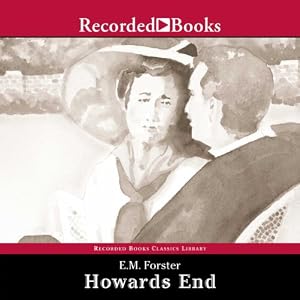
Howards End is a novel by E.M. Forster. He wrote A Passage to India and also A Room with a View. For some reason, I've never been attracted to certain turn of the century writers who are rather existential (it seems to me) as they turn their eye on the social manners of the upper class. I've never liked Henry James or Edith Wharton and I put Forster into this class as well. There was just something stuffy and too self-absorbed that I found irritating. I don't know why this should be. Austen, Gaskell and the Brontes all deal with issues around social class and manners (though I do find the Brontes hard to take at time, being as overwrought as they always are). I saw the movies a Room with a View and A Passage to India but never read the books. I found the movie A Room with a View better than a Passage to India mostly because I couldn't buy the main premise of the latter plot line.
Anyway, I never did see the movie Howards End even though it has Emma Thompson and Anthony Hopkins in it. I got the audio of Howards End out of the library and I've been listening to it. And I am still ambivalent about it all even though I concede that Forster was a good writer. Some of his little observations and witticisms are quite clever and insightful. He keeps the reader from identifying too strongly with the characters though, because the narrator of the story sometimes makes these sly little asides, which contribute to that existential feel, that we are just watching a play, and not completely absorbed into the life and loves of the people we are learning about in the novel.
It seems to me the novel self-consciously tries to be deep. And it tries too hard. I just never bought the idea that Margaret, the most fully developed character in the book and the one the reader identifies with the most, could fall in love with Henry Wilcox because Wilcox remains a two dimensional representative of the business class, those uppity nouveau riche who want to run everything and have no real soul. And since I couldn't believe that, the rest of the novel seemed forced. And the whole coincidence with Jacky Bast seemed contrived. It was just a bit too coincidental. And then we have the other coincidence of Leonard Bast stumbling into Howards End just at the time Charles Wilcox is there. It is all a bit too set up. And I just didn't buy Helen and Leonard either, at all, though I thought the author portrayed Bast's remorse well. Leonard also was too two dimensional.
By the way, I wonder if Forster was inspired a bit by Elinor and Marianne of Sense and Sensibility? Margaret is the older, calmer, more practical sister and Helen is the impulsive, passionate one that doesn't care what others think.
But really what I found most annoying was that we are never given Henry's deepest thoughts except in way that always reinforces his stuffy, narrow class reactions to things. I really wanted to like Henry because I liked Margaret so much, but I just don't think Forster quite pulled it off. It is the narrator telling us what Henry is feeling, as opposed to just letting the reader experience Henry's mortification, etc. I am sure the author deliberately wanted us to feel that layer of alienation, but since we come to care for Margaret, it limits understanding why Margaret should love him so. Margaret is an idealist, it is true, so she doesn't always see clearly about what is really going on. Though she is also pretty astute and honest as well. I don't know. The way the characters are presented bothered me a good deal.
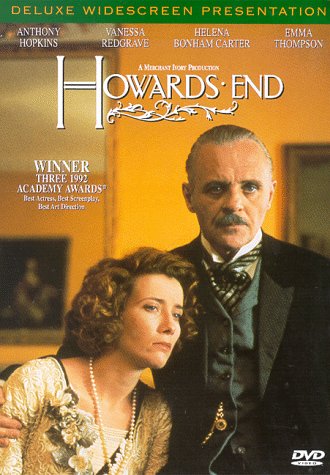
I was disappointed in the ending too. It seemed in the end people like Bast and Charles don't matter. Push them out of the picture, Margaret has won. Henry is broken and relies on her just as her sister does. She'll take care of them.
I think I've just read too many books about British upper crust snobbery lately, so I am feeling dismissive about their overblown sense of self-importance which is what this book seems to be about. It wants to talk about England and her destiny.
I still would like to see the movie though. I am hoping that Anthony Hopkins might be able to put together a better Henry Wilcox than I got from listening to the book.
I am glad I read this book so that I am not so ignorant about Forster. While I can admire some things about his writing, he is not my cup of tea. He kind of reminded me of D. H. Lawrence maybe. Trying to be deep when you essentially have an existential outlook that says nothing really matters means you wax poetic futilely because really there is nothing worth waxing poetic about in the end. You want to say something, but really you are just about puncturing other people's bubbles.
Bah.
For more book reviews go to Read 52 Books in 52 Weeks.
Subscribe to:
Posts (Atom)