Just thought I'd post my loose plans for today. Life is crazy during this plague time. I think I'll try to update at end of day.
Read - when I can
Watch Word on Fire mass after lunch
Clean kitchen
Cook Breakfast and dinner but we are hopefully doing pizza take out for lunch - if that still exists in the outside world!
Spend a few minutes working on the horror that is our mud room
Plant potatoes, broccoli, spinach. lettuce and onions (might be doing this over the next few days)
Take a nice walk somewhere
All day - take care of D hopefully with some pinch hitting from S and B.
4 p.m. rosary with the Pope!
Record video this evening.
Thursday, March 19, 2020

Monday, March 16, 2020
The Secret Garden - Book 7
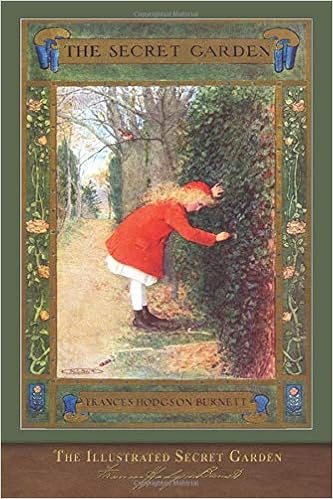
The Secret Garden by Frances Hodgson Burnett was a reread for me, but I hadn't read it in many years. It's a perfect book for spring! It's utterly charming and a nice relief from our current anxieties (though it starts off with a deadly cholera epidemic!). Because of the time in which the book was written there does seem to be a bit of racism going on, though I do think it is mixed in with the classicism of the age as well. Other than that, the story is really charming and almost ecstatic when it comes to the wonders of spring, when all the plants, trees and flowers begin to bloom. The healing of the two children, Mary Lennox and Colin Craven, comes from their connection with nature and from the almost magical qualities of the Yorkshire peasant lad, Dickon and his wise and loving mother. The book begins with Mary Lennox and slowly shifts in perspective to Colin. It's got a most satisfying ending. Enchanting!
Two thumbs up! For more book reviews go to Read 52 Books in 52 Weeks.
Sunday, March 8, 2020
The Rise and Fall of the Third Reich - Book 6
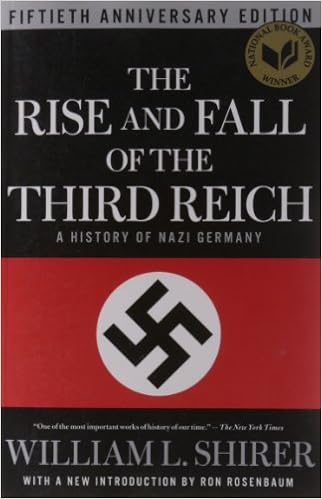
The Rise and Fall of the Third Reich is a mammoth book, 1,280 pages long. It was published in 1960. The author was a reporter in Berlin in the late 1930s and very early 40s so he was an eyewitness to the rise of Nazism and saw and heard many of Hitler's speeches. He witnessed the changes in Germany society as Hitler and his henchmen rose to power. This book is a detailed and well-written account of the whole horrible tragedy.
The author starts out trying to explain why Hitler turned out the way he did by tracing his childhood in Linz, Austria. I think though we don't have quite enough information to solve the mystery of why Hitler became as evil as he did. One thing that influenced him for sure was the rampant and open antisemitism that made the Jews the scapegoat for all the evils that befell Germany after World War I. Hitler wasn't the only one who espoused these views, he just was the one capable of taking them to the horrendous logical extreme of such views.
There was a real milieu of antisemitism, bad science based on social Darwinism, the glorification of nationalism to a fever pitch, largely influenced by the resentment of the overly harsh, vengeful terms of the Treaty of Versailles. The Allies from that first world war scapegoated the Germans and so the Germans turned around and scapegoated the Jews and Slavs among others. Extreme economic problems because of inflation and then the Great Depression did not help matters. Hitler with his weird megalomania, his belief that HE alone was the one to bring Germany to its fullest glory. Caught up in the nationalistic romance of Wagner and embracing the 'Will to Power' of Nietzsche, Hitler manipulated everything into his own cult, where his charismatic leadership and his obsessive manipulating for power got him first the chancellorship, then dictator and finally the supreme and total leader of the German nation.
The European response, especially as manifested in Chamberlain's appeasement policy, was also partly responsible for allowing Hitler's power to grow. Chamberlain might not have had much problem with the antisemitism aspect. There were prominent Brits who weren't unsympathetic to Hitler. And by responding so wimpily to Hitler's aggression, his military build up and then his land grabs, actually added fuel to the fire. And in fact, set things on their course, especially with the appalling betrayal of Czechoslovakia which really capitulated into the invasion of Poland. Again and again, the victors of World War I, absolutely terrified of another war, meekly let Hitler bully his way into a better and better position of power.
Hitler was the most selfish being ever. He cloaked himself in love for Germany and yet he did so much harm to that nation. His treatment of the Jews, his blood thirst, his demonic hatred, brought about one of the most evil events in all history. But it couldn't have happened without the German people, seduced by his vision of glory, cooperating.
This book was a long, hard read, but I am very glad I read it. It took me more than 2 months to finish it. Starting from Hitler's childhood, through his adoption of the Nazi party and then subsequent take over of it, his failed Beer Hall Putsch, his writing of Mein Kampf in jail, his rise to power through the hot mess of the Wiemar government, his becoming chancellor and then consolidating his power through brutal means, his build up of the military, and then the chain of takeovers, starting with the Rhineland through Poland, which triggered the Allies into war and then the catastrophe of the complex two front war, the diabolical 'final solution' and finally the slow collapse of Germany. We get it all in this book, in clear detail. This books is considered a classic of its kind and I can see why.
For more book reviews, go to Read 52 Books in 52 Weeks.
Monday, March 2, 2020
Jo's Boys - Book 5
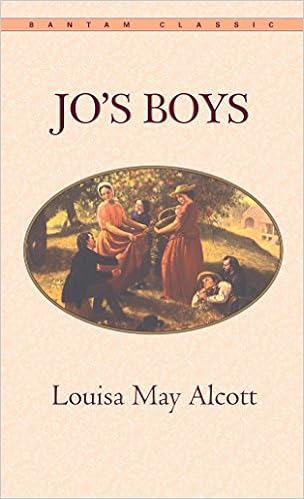
Jo's Boys is the final of three books by Louisa May Alcott chronicling the story of Jo March and her family. This was a reread for me. I read it out loud to my youngest about 6 or 7 years ago. It's a very enjoyable continuation of all the characters we met in Little Women and Little Men. We find the students now college age, and we see how they turned out: their romances, their careers, their moral struggles.
I enjoyed the book very much. Some of the moralizing lecturing was a bit much and I cared about some of the students more than others. It was really interesting though to pull out references to early feminism and the right to vote for women. The college that Laurie founds is co-ed and we meet women encouraged to get a college education and go into careers. It seemed to me that this book was more overtly religious than Little Men.
Two unfortunate associations though dimmed my enjoyment of this book a bit. One was the frequent reference to how wonderful Germans and German culture was. Alcott seemed to be quite star struck by it. Professor Bhaer is a wise and lovable man and that seemed to be extrapolated to all of Germany. But while reading this novel I was also reading The Rise and Fall of the Third Reich. And so Alcott's rosy portrayal of all things German really jarred. I kept saying to myself, Poor Louisa May, just wait 50 years. I even looked up the timing and Jo's Boys was published in 1886 and yes this was a time of rising German nationalism, along with antisemitism. Perhaps Alcott was ignorant of this aspect of the culture, she never mentions Jews at all in the three books. The other thing that bothered me was knowing that Alcott wrote an article in a paper supporting the No Irish Need Apply laws. She didn't like Catholics, I don't think. She thought the 'Irish race' inferior.
So those two things sort of diminished my enjoyment. I liked Little Men better because I could focus on the educational theories displayed there.
However, overall the book is a sweet conclusion to the Little Women series.
For more book reviews, go to Read 52 Books in 52 Weeks.
Subscribe to:
Posts (Atom)