Saturday, April 30, 2011

Spring Cleaning My Mud Room or Clean House, Where Are You?

Inspired by Willa and Mystie, I decided to tackle my disgusting mud/laundry room.  Not cleaned for almost a year, I think.  Really, really gross!

So gross, I could only bear to take one picture and notice how I didn't take pictures of the insides of the closets, especially the one that houses the kitty litter box. (You didn't want to see that anyway!)  There are no close ups because, it was too painful for me.  So I quick snapped this and got to work.


Things I did:

Put away the load of laundry that was sitting on top of the washer

Ran two load of clothes in the hamper and thrown on the floor.

Hung up coats and snowpants that were thrown in a heap.

Put hats, gloves and scarves in cute little basket.

Here's the really disgusting part:  started working on those hampers in the way back that were full of old miscellaneous clothes, out grown, torn, stained, don't know what to do with kinds of things.  As I was cleaning I saw all these little, well what looked like mouse droppings.  Ugh!  And right back where the cat uses the litterbox.  I grumbled about how useless my cat is.  But upon closer viewing I realized that they were hundreds of little tiny bugs!  Eek, so you know what I did?  I threw all the clothes away.  Just chucked 'em.  Nobody has been missing them anyway. . . . 

Vacuumed thoroughly.

Took  a minivan full of cardboard recycling to the recycling center.

So here are the after pictures:

Bugs were living here but now they're gone!

Shot of slightly cleaner/tidier laundry room.  Could still use more work though!


Look!   Mittens, hats and scarves!  Probably should actually put these in storage for summer.


Hung up coats and lined up boots.  I didn't take a picture of the floor but that's where all the wrapping paper goes and it is nice and tidy too, now!

Friday, April 29, 2011

Weekly recap 4/24 - 4/20


This week we:
Recovered from celebrating Passover and Easter


Caught a lot of stinkbugs and flushed them down the toilet

Wondered if the proliferation of toads in our front garden is due to the invasion of aforementioned stinkbugs?

Weathered the weather, whether it be warm, cold, wet or dry (often all in the same day).

Enjoyed the blooming dogwoods and azaleas.

This dogwood was sooo sickly the first few years of its life.  Now look at it (it's the pink tree peeking through!)
 Becky was not at all interested in anything of a schoolish nature.  We did touch on the times tables a bit.

Sean and I worked through a Spectrum test prep book to see what he needs to know in the math portion.  Did some Khan Academy on fractions.

Josh and I went to Latin.  Becky went to art class.  Josh had the week off from Biology.  But then, suddenly realizing he has a whole year cumulative test in two weeks plus, as a master procrastinator, he has successfully avoided do the vocab cards for 14 out of 24 chapters (all due the day of the test) and has only half filled out his lab sheets, we determined (read me, his mother determined) he had no more time for computer and had to get his tail moving if he wanted to complete this course with any shred of dignity!  How's that for being unschooling about things!  But really if a teen freely commits to a class, they need to tow the line with the requirements.

Josh also rode his bike into town one day and he also mowed the lawn so he got some exercise.

Sean and Becky before leaving for the Easter Vigil
Sean got gamemaker and has been programming some games.  He's still very into his video/computer games. Sean and I went out to lunch on Thursday and had a fine time.

Here are the books we're currently reading:

Product Details
Wonderful! For our high school studies


Product Details
Back to this after our Lenten break

Product Details
Easter Read Aloud
Product Details
On to Volume Two
Sean has been reading these:


Product Details
A Sean picked book


Product Details
A Mommy picked book
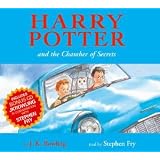
Becky has been listening to this audio book all week:

Product Details
Stephen Fry is excellent!


Today, Friday, I'm going back to the foot doctor.  My heel spur seems to have been healed by the cortisone shot I got 2 weeks ago.  Hurrah!  It is lovely to be able to walk without pain hobbling me!  This afternoon we've got tennis lessons.

Thursday, April 28, 2011

I believe in cursive

Don't try reading this if you don't know cursive!  You'll have to rely on someone else to tell you what it says!

Here's a link to an article about how cursive is being pushed out of school curriculum.   I think this is a really bad idea.


  • Not knowing cursive means you are just that much more illiterate.  It means you can't read your own language when written in cursive.
  • Not knowing cursive means that you can't read anything from the 'olden' days.  You can't thumb through old letters, for example and understand what's been written.  I found an old letter that my grandfather had written to my father on his birthday (maybe his 16th?).  It was so beautiful, so loving, from a devoted and proud father to his son.  If I couldn't read cursive, I would have missed that connection to the past.  I would be cut off from it.
  • Writing in cursive is great for dysgraphic/dyslexic kids.  You don't have to worry about reversing letters!
  • Writing in cursive is often quicker than printing.  My oldest daughter fought me on cursive so I gave up but guess what, she's in college now and writes all her notes in cursive!
  • My oldest son was diagnosed dysgraphic when he was 12.  Guess what the therapists did to correct the situation?  Well, all kinds of crazy therapeutic exercises that had him crossing the midline.  But they also took Handwriting Without Tears and made him do cursive!  And it helped, enormously.  He went from someone who dreaded writing, really it paralyzed him, to someone with confidence in his capabilities.  
  • Ever looked into Waldorf education?  You know how they have 'form' drawing?  Well, it's basically cursive penmanship practice.  There can be something therapeutic about practicing those loops!
  • Writing in cursive can be aesthetically pleasing.
  • You do still have to sign your 'John Hancock' for financial and legal documents.  Really most adult signatures are in cursive.  They are far more stylish that way!
  • I think you have to learn cursive in order to read cursive.  If you just try to give them lessons in reading it, it just doesn't stick, in my experience.  Learning cursive can take at least a couple of years to really consolidate things.  It's difficult for most people.  But I think it is well worth the effort.


  • Where would Ken Burns have been, without all those lovely letters written home during the Civil War?  How about all those journals and diaries?  Shut off to our children who don't know cursive!

    I know writing in cursive isn't a life and death matter.   My husband never got the hang of cursive and always prints (which is by the way barely legible even so).  However, he can read it!  My middle son loathes cursive, but maybe he'll change when he gets older, like his older sister.  But I do think education is about empowerment; about equipping our children with the ability to learn and denying them cursive doesn't empower them and it does, in my opinion. limit them.  It's a shame.

Poetic Knowledge - Book Study - Chapter Three

Well, I tremble as I begin this post.  I don't have a strong grasp on this material.  I don't feel like I've processed it and can even regurgitate it let alone comment on it!

So I think what I'm going to do, which may or may not be useful, is to just go through the chapter and talk about the things that jumped out at me.  We'll see how this goes. . . .

On thing I am finding difficult in this book is the use of terms I thought I knew but are used in a different sense here.  For instance 'gymnastic' and 'appetite.'  Gymnastic doesn't mean what Olga Korbut did at the Olympics, instead it means our physical engagement with the world.  It's experiencing reality bodily, like dancing to music, or feeling a breeze touch your face.  If I'm grasping this right, poetic knowledge is a first knowledge; our sensory-emotion response to encountering experience.  So that having to engage physically for poetic knowledge makes sense.

Appetite doesn't mean how hungry you are but rather one's emotions.  Taylor quotes Maritain, "Appetite . . . tends toward things as they are in themselves."  I think by this he means that say, when we love something, we  appreciate it/him/her for what they are in and of themselves and not for how we can use them, for example.

Taylor, it seems to me, is a bit disorganized in this chapter.  It is entitled Connatural, Intentional and Intuitive.  Where is the nice chart from the last chapter to define and clarify what he is talking about?  One has to really comb through the chapter to get at a definition of these terms.  Let me make an attempt:

Connatural is to participate in some way with something's nature.  The habit of noticing things keenly cultivates this connaturality.  This results in a sympathetic knowledge of something.

Intentional means. . . well I realize as I'm typing this I never did get what intentional means to Taylor in the context of poetic knowledge.

Intuitive means the spontaneous awareness of reality (that's one way Taylor explains it.)

One thing that jumped out at me was the idea that connaturality gives one a sympathetic understanding of something.  There is a connectedness between the observer who is really an 'experiencer' (observer sounds too distant) and what is being experienced.  When I read this my first reaction was that this was the opposite of what existentialism leads to, a feeling that one can never really know or feel union with another.  But then later Taylor quotes McInerny who is discussing Maritain (keeping up???) and says that the appetite is existential because it doesn't 'know' in the sense of possess, something but appreciates it for what it is of itself.

Another thing that I appreciated was Taylor's mention of how often understanding of something, that might even be known in a scientific way, can come together in a poetic experience, like when we are busy doing something else in our leisure and then suddenly the answer to a problem we've been chewing on seems to appear out of nowhere. I think everyone has had that experience.  This little example made me think about how all the ways of knowing, intuitive, poetic, scientific all work together in some unknown way in our minds and this is so much a given in our lives that it seems strange to step back and analyze it.

Yet another thing that made an impression on me in this chapter was Taylor's discussion of the habit of poetic experience, something that poets do that enables them to create these wonderful pictures and evoke emotions and be so on the mark, true to experience.  But I liked Taylor's distinguishing between experiencing what is real via poetic knowledge versus getting all romantically-mystical about it.  For instance a poet might convey the sensation of experiencing the beauty of tree, that's poetic knowledge, but if the poet starts going on and on about 'treeness' and trying to move into some spiritual understanding of trees, that is not poetic knowledge.  Poetic knowledge is a first knowledge that doesn't draw conclusions.  It doesn't work in competition with other ways of knowing, but complements them.

I felt edified by Taylor's distinction between the mystical and poetical.  Mystical means that one is interacting with an outside spiritual force.  Poetical is grounded in reality, meaning the here and now that can be experienced.

I also liked the connection between science, metaphysics and poetic knowledge; that they all begin in 'marvel.'

And I thought Taylor makes an important distinction between subjectivity and subjectivism.  Subjectivism means there is no reality outside of what the individual experiences.  This in my mind leads to relativism and that existential loneliness or alienation I was talking about earlier.  Subjectivity is when someone experiences reality as something passionately apprehended.  It is the way a person takes an objective truth and makes it his own, not his own truth but his own understanding or relationship with the objective truth.  At least that was my understanding of Taylor's point.

My favorite part of the chapter, and the part that resonates the most with unschooling and poetic knowledge was when Taylor talks about how the modern overemphasis of the scientific knowledge as the only way of knowing has transformed learning from an act of leisure to an act of work.  Learning nowadays is all about labor to acquire facts which is why a factory model for schools seems to make sense to so many.

I just remembered another thing that made an impression on me but I am running out of time so I can't bother to rife through the pages looking for it, is the idea of time flowing differently as we experience things.  When we are in love, we can spend hours with the beloved and it feels like no time at all.  A child absorbed in play has no idea of time passing.  And we can also experience sorrow in this way as well.  Poetic knowledge, this intense, nondiscursive encounter with reality is transcendental.  It glimpses into the eternal.

And finally, leading from that last insight, Taylor hearkens back to Homer's idea of poetic knowledge revealed in Odysseus's experience at Alcinious's banquet.  Taylor talks about the poetic experience of  celebration.  This made me think of the opposite experience that many teens and college students have of 'partying.'  Partying is about getting so drunk or stoned in order to manufactured some kind of heightened experience.  It really is the opposite of a celebration because it isn't honoring something like a guest or an event but it is very cut off and lonely and is done in a sort of desperation.  Party-ers become addicts and alcoholics and behave destructively.  They have no self-control when it comes to sexual relations.  There is no true connection or sympathetic experience.  I wonder if the reason so many teens engage in this behavior is because in their lives poetic experience has been so undervalued and so atrophied that they search for such an experience in all the wrong places.  Poetic knowledge sees the eternal, the big picture, the ennobling.  To have that aspect of one's mind so underfed make life very impoverished as a result.  So they grasp at anything that might imitate what they are starved for.

Wednesday, April 27, 2011

Wordless Wednesday - 4/27/11

Another grueling day:  Becky's eating cereal and watching Peanuts.

Tuesday, April 26, 2011

Fun Old Timey Strewing - 1897 Sears and Roebuck Catalogue

While looking for a book I uncovered this old gem:


I remember when I was young, my mom got this book as a Christmas present.  I loved looking at it as a kid.  After she passed away, we sorted through her books and I picked this one.  I promptly put it in storage.  I'm so happy I found it again.  It's been on our strewing coffee table and everybody from my husband to my youngest has enjoyed looking through it.

A new-fangled gasoline stove!


Veterinary instruments!

How about a restorative tonic?

Must be the first book catolog.  Sears carried lots of books.


Including this handsome Encyclopedia set


For all your firearm needs

I think this bed lounge looks like something out of a saloon in the Wild West!


It's a shame hats went out of fashion

Look at that harness!  Only $6.95!

Monday, April 25, 2011

Math Monday - Multiplication Chart

I strewed this chart this morning by taping it up on our wall of learning.   I got this from http://math.about.com

Oops!  Guess I needed a flash for this picture!  Too dark!


I showed her how you could pick one number along the very top row and another number in the very left hand column and when you followed them both to where they'd intersect, you get the answer if they are multiplied.  "Neat!"  She said, "Kind of reminds me of Battleship!"

A close up!  Now you can see what I'm talking about!


Sunday, April 24, 2011

Books 20, 21, 22, 23 and 24!

Here are links to my book reviews for this week.  Since I finished five books this week I decided I'd just provide one link at Robin's Read 52 Books in 52 Weeks blog.

Book 20 - It Happened in Italy

Book 21 - Dion; The Wanderer Talks Truth

Book 22 - Dante's Inferno

Book 23 - Pinky Pye

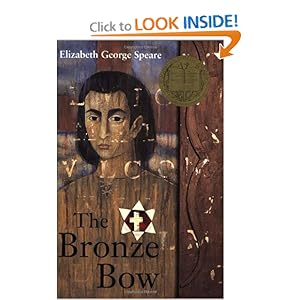
Book 24 - The Bronze Bow

The Bronze Bow - Book 24

The Bronze Bow


The Bronze Bow by Elizabeth George Speare was my Lenten read aloud for Becky and Sean.  I think Spears' writing is amazing.  She manages to convey so much depth, paint such an accurate feeling of the time period and create such wonderful, realistic characters.  And she does all this while keeping it appropriate for middle schoolers on up.  I think it is a tremendous book, a little dark but that makes the ending so much more powerful.  My nine year old really didn't 'get' the ending.  She wanted everything tied up neatly, so she missed the point a little.  But it still was a gripping story that she enjoyed and which carried her back to the time of Christ and really brought him and the place and people where he lived alive.

Excellent read!

Read 52 Books for 52 Weeks.

Saturday, April 23, 2011

Pinky Pye - Book 23

Pinky Pye


Pinky Pye by Eleanor Estes is a cute book about the Pye family who get to take a summer vacation to Fire Island where they manage to acquire two new pets.  This book is a sequel to Ginger Pye.  My 9 year old, Becky and I, are utterly charmed by Estes' books and have now begun to read Estes' other popular series, The Moffats.

Two thumbs up!

See 52 Books in 52 Weeks for more book reviews.

Dante's Inferno - Book 22

Gustave Dore created incredible illustrations for The Divine Comedy.  Works of art in and of themselves!

Okay, so my week was dominated by Italians!  We finished reading The Inferno this week in our high school studies.  I'll have to admit that this is my first sweep through Dante's Inferno.  I'm 51 and I have never read any Dante before, though of course, I've heard about him for forever!

My 16 year old son and I enjoyed reading this together.  He read from the translation by Dorothy L. Sayers and I read from the one by Longfellow, with beautiful illustrations by Gustav Dore.  Sayers had wonderful explanatory notes and also these great maps and graphs that helped you visualize the landscape of hell.

I did not realize that Dante had been called the "master of the disgusting."  The further one travels into hell the more gruesome and repelling things become, which makes sense, of course, but doesn't make for pleasant reading!  I also really didn't like Dante's characterization of Ulysses.  He's puts him in hell for all the wrong reasons, because he suffered from 'wanderlust!'  Of all things!  Poor Odysseus was forever trying to get home!   Also he's in hell because he tricked the Trojans with the Trojan Horse!

Here's a link to the wikipedia page on Dore, who is an amazing artist.
There is so much to this poem of course, that we really weren't getting any depth of meaning from it.  We used this study which was good for reading comprehension but didn't give us the background we needed to really understand the many layers of meaning in this poem.  We watched The Teaching Company lecture series on Dante's Divine Comedy which really made the whole thing come alive.  I really wouldn't have appreciated it much at all without the excellent help of Professors Cook and Herzman.

For more book reviews see 52 Books in 52 Weeks.

Dion; The Wanderer Talks Truth - Book 21

Dion: The Wanderer Talks Truth

Coincidentally this past week, I also read another book by an Italian-American, Dion, you know, the guy who sang Runaround Sue and The Wanderer.  He wrote this book with Mike Aquilina.

Dion grew up in an Italian neighborhood in the Bronx, so he's got a similar style of expressing himself as in the previous book I just read, except that he's much more articulate and can convey beautiful and profound thoughts.  I didn't realize that Dion had been a heroin addict for 14 years.  He lived the rock n roll lifestyle.  He married his childhood sweetheart when they were still pretty young.  At one point the marriage was quite rocky and in an effort to keep things together he consented to move from New York to Florida because his wife wanted to be near her parents who lived there.  Under the influence of his father in law, Dion managed to quit heroin and eventually became an evangelical Christian.  He spent years church shopping trying to find the 'right' church.  He got into studying the Bible.  Puzzled about all the different denominations, he got into a discussion with a Presbyterian minister who quoted St. Augustine at him.  From there Dion eventually found himself back at the Church where'd he been baptized (his parents had only been cultural Catholics who didn't even go to Mass on Sundays).

This book could really be subtitled Dion's Apologetics.  The end of the books is really inspiring.  I love Dion's critique of John Lennon's song "Imagine."  And the two letters to a friend that Dion include,s in which he's defending the Catholic Faith are wonderful.  Dion, it turns out, is a soulful, prayerful, joyous and wise man.

For more reviews visit 52 Books in 52 Weeks.

It Happened in Italy - Book 20


It Happened in Italy: Untold Stories of How the People of Italy Defied the Horrors of the Holocaust

It Happened in Italy by Elizabeth Bettina, is the story of how so many Italians protected the lives of almost 80% of the Jews living in Italy during World War II.  In other occupied areas of Europe 80% of the Jews were exterminated, mostly in concentrations camps.  Not so in Italy.  The author is an Italian-American who has close ties to relatives in Campagna, Italy.  Even though she'd spent countless summers visiting her relatives there, she'd never heard about how thousands of Jews were saved in this little town!  No one talked about it.  She stumbled upon the story and now her life's work is getting the hopeful message out that many, many Jews were saved by the courage and cunning of many ordinary Italians.

Giovanni Palatucci saved  about 5 thousand  Jews from deportation by the Nazis.  He was caught, arrested and sent to Dachau where he died at the age of 36, weeks before the camp was liberated.  He was recently beatified by the Catholic Church.


One of the people responsible for saving many Jews from the Nazi's was Giovanni Palatucci.  He was a chief of police responsible for immigration.   Italy's borders were open to fleeing Jews until 1940.  He was in charge of keeping their records.  He falsified many records to help the Jews emigrate to the U.S. and other places of safety.  For the Jews he couldn't aid in that way he sent to his uncle, the bishop in Campagna, who who protected the Jews sent to a 'concentration camp' there for these Jews.  This concentration camp, however, was nothing like the ones in Poland and other places.  There were no gas ovens,  no forced labor, no uniforms or Jewish stars, no starvation diet.  The Jews were free to come and go in the village.  They set up a synagogue  in the convent next to the church in Campagna.  The inmates played bridge and soccer, had brises, weddings, picnics.  One Jewish woman gave birth to a baby but was unable to breastfeed, so an Italian woman in the village became a wet nurse for the child!  There was another concentration camp, Ferramonti, in another part of Italy run much the same way.  Jews who were native to Italy were never put into camps but were allowed to live at home.  When the Italians switched sides and joined the Allies, the Germans came in and began to deport Jews.  Thousands of Italians helped the Jews to escape and hid them in small mountainous villages all over Italy.


Bettina, the author, galvanized by these stories, began a mission to document them all.  She searched everywhere to find survivors so they could tell their story.  Since most of the survivors are in their 80s and 90s she felt a real urgency in getting the story out.  She also organized trips to take these people back to Italy to revisit the villages where they were so well taken care of and protected.  The stories are amazing, yet a common thread runs through them, the kindness, courage and decency of ordinary Italians who were willing to risk so much in order to protect them.

Bettina is a New York Italian and I think she must write exactly as she talks!  She's chatty and emotional.   Whatever her writing style lacks in terms of eloquence, she makes up for with her warm and big-hearted vivacity.

This was a very interesting book that relates an aspect of the Holocaust that hasn't been focused on much;  very sad and heart-warming at the same time.

For more book reviews go to Read 52 Books in 52 Weeks

Sunday, April 17, 2011

Highlights of the Week 4/10/11 - 4/16/11

Becky's latest art work from her class.  The flash made the pretty colors look washed out!
After being a little more formal last week and appreciating it so much, I was hoping to continue that pattern.  Alas, it was not to be.  Monday I was preoccupied with taking my aunt to the doctor Monday morning.  Monday afternoon, Becky had her American Heritage Girls meeting, which was very good for her.  She got to be a flag bearer in the opening and closing ceremonies which pleased her very much.  But this means I was out of the house most of the day and don't really know what Sean or Josh did.  Josh and I did manage to work on Latin homework here and there.

A page in Becky's AHG journal - for the Living in the USA badge.


Tuesday - Latin class (for Josh and me) and Art class (for Becky).  Sean and Will went to Mass in the a.m.  Seano did cursive practice and math on his own.  Tuesday afternoon Josh had a biology fieldtrip to learn about Bluebird monitoring, something he already knew about since he's helped me do it for the last three years!  Tuesday evening, Josh and Sean went to the 4H monthly business meeting.  Becky refused to go.  Sigh.

One day, Becky decided to make a river, so she dug this long trench and then turned on the hose at the top of the hill and voila!  Her own river!
Wednesday - my birthday!  I started reading Pinky Pye to Becky which made us both happy!  Josh and I spent time cramming in more Cantos from the Inferno.  Becky and I went to our homeschool group monthly meeting which is petering out sadly, attendance-wise.  However, she and a friend played checkers and then Becky went home to their house and made Easter egg stamps there.  Will picked her up there and took her to vision therapy, while Josh, another teen and myself studied Dante and watched a Teaching Co. lecture on him.  Very, very interesting stuff.  I did not like Dante's characterization of Ulysses at all!  First major disagreement with him.  What did Sean do all day?  I feel like I've been neglecting him!  Wednesday evening we had a birthday dinner (Rick brought in a steak dinner from a restaurant).  Josh went to CLC.

Sean's comic characters appeared on the whiteboard one day.


Thursday - did some formal stuff - read from Saintly Solutions and The Bronze Bow.  Becky and Sean did some cursive.  Becky and I read about fractions and she did 5 problems on the whiteboard.  Then we learned the whole conjugation for the verb specto, present tense.  Sean wrote out the paradigm for present, imperfect and future for 1st conjugation verbs.  I think he did math????  Don't really know!  Thursday afternoon turned crazy. I took Becky and Sean to their friends' house which is about 20 to 25 minutes away.  Then I wound up taking my aunt over to my sister's house (about 20 minutes from me) to see if she could shower there.  She could but she didn't think it was worth the effort.  At age 88, she's quite content with thorough sponge baths!   Got her back home just in time to go pick up Becky and Sean again but got caught in horrendous traffic took me over an hour to get to their house.  There was some kind of terrible accident.  On the way Will called to see if I could pick him up at the Metro, luckily I was stuck in traffic near there, so I was able to segue over and get him.  Then we had to drive back home.  Got home 15 minutes before Josh and I were supposed to be at a Workcamp meeting.  Made very quick dinner and then headed out again.  Got Josh all signed up.  Came home, collapsed!  Josh started out the day well, working on academics in the a.m. but I again I'm not sure what he did, since I spent so much of the day away from home.

Look!  Our lettuce is sprouting!


Friday - Josh went to Biology study group and class.  Sean and Will went to Mass.  I went to the foot doctor's where I got a very painful shot.  I've been suffering for weeks and weeks with plantar faciitis and a heel spur.  Came home, read to Becky and Sean, got them and Josh to first tennis lessons of the year.

Brothers at play!  Josh put that goofy look on his face for my benefit.
Saturday - we were going to have a fun day visiting my sister in Winchester, VA but the weather is very rainy and windy and so we called it off.  Instead I've been putzing around nursing my foot.  Rick finished reading the 3rd Harry Potter book to Becky so everybody is camped out in the family room (including my aunt!) watching the movie version.  They watch the movie after finishing each book.  Becky reports that Daddy will only read up to Book 4 to her.  He thinks book 5 and 6 are too old for her and she'll have to read them herself one day.  She's pretty bummed about that.  But they're just starting book 4 now, so that disappointment is a few weeks away.

Saturday, April 16, 2011

Unplanned by Abby Johnson - Book 18

Unplanned: The Dramatic True Story of a Former Planned Parenthood Leader's Eye-Opening Journey across the Life Line

I read this book in a day basically (on my Kindle).  It is a straightforward telling of how Abby Johnson went from being a director of a Planned Parenthood clinic to joining the pro-life movement via Coalition for Life.  She bears all in her telling and it is very disturbing and very moving in many places.  She is generous and kind to those who think abortion helps women (which was her passionately held former opinion) but she clearly states why her conviction now is that abortion is evil and doesn't help women at all, in fact, it victimizes them further.   The Planned Parenthood mentality that is exposed in this book is almost cult-like.  Scary!

She also explains why extremist, angry pro-lifers harm more than they help.  She definitely was converted through the loving example of the Coalition for Life people and their constant, untiring prayers for her.

I found this book utterly absorbing.  It is well-written.  It isn't a deep theological book, but a simple chronicle of a woman's metanoia from being part of a culture of death into embracing the culture of life.  It is a spiritually moving book that will leave an impression on you!

(See 52 Books in 52 Weeks for more reviews)

Redeemed by Heather King - Book 19

Redeemed: Stumbling Toward God, Sanity, and the Peace That Passes All Understanding
I read this book on my Kindle!


Apparently, I'm still on my conversion memoir kick!  This book is the story of how an ex-drunk, ex-lawyer, ex-wife became Catholic and how she tries to live out her faith every day in the hidden, seemingly pedestrian life, of a single, barely-squeaking-by, woman living in LA.  I loved this book.  It is off-beat, profound, joyous and thought-provoking.  I think King is a little off on some of her theology but as we are all works in progress and I'm probably off on some of my own take on things, I gave her some slack!  King's unique perspective also put some aspects of the faith in a new, refreshing light for me.  This book made me feel grateful; grateful to King for sharing her journey in such a compelling way and grateful to God for blessing her with the gift of writing and the gift of seeing grace in suffering.

King also wrote the book Parched which I also highly recommend!  King has a wonderful blog as well.

(See 52 Books in 52 Weeks for more book reviews)

Poetic Knowledge - Book Study, Chapter Two

This chapter is entitled:  The Philosophical Foundations.  Here, Taylor traces the philosophical development of the study of poetic knowledge, beginning with Plato through Aristotle, St. Augustine and finally Aquinas.

I have to admit this book is straining my intellectual capabilities.  I simply am too distracted by life right now and also too unfamiliar with a lot of what Taylor is saying.  This is deep stuff!  Hard to wrap my brain around.  As I read though I find myself saying 'yes!' a lot and also underlining and writing exclamation points and asterisks in the margins.  So much of this is very inspiring and great food for thought.  Since this material is overwhelming me a bit, I feel the need to read it very slowly and more than once.  Unfortunately, my life and the weekly time schedule for the study group are not cooperating!  So I'm probably going to have only a superficial response.  One way I think I'll narrow the focus of this book study is to view everything in the light of whether it jives with Catholic Unschooling or not.  Since this blog is about that topic anyway!  Seems only fitting!

In talking about educating the young, the Greek philosophers presumed a background of immersion in Homeric poetry.  So poetic experience was taken as a given.  Poetry and art integrate both universal truths and immediate appeal.  The scientific knowledge of something is basically mechanistic, for instance knowledge of music theory vs. experiencing the beauty of hearing a piece of music.  But the poetic experience is a "penetrating gaze into the transcendent nature of things."  In my own words, a poetic experience ennobles the mind.  For instance, I am not very mathematically inclined (to understate the matter greatly!).  So for me mathematics is a process of memorizing facts and formulas and learning to plug in numbers.  I have no understanding of how math works.  However, every once in a while someone will be able to explain something to me and for a tiny moment I'll have a glimmering of understanding and for that moment I feel amazement and almost joy!  I can only really know mathematics in a scientific, mechanistic way.  But when I hear people talk about the beauty of mathematics, I sort of understand what they are saying because of those occasional glimpses I've gotten.  People who are mathematicians understand math more deeply and I think often in that poetic way.  It isn't just music theory to them, they can hear the symphony!

Taylor talks about the how leisure is necessary for poetic knowledge.  I found this fascinating.  The word 'school' comes from the word skole in Greek (schola in Latin) which means leisure.  You can't experience the world poetically if you can't rise about the workaday grind of survival.  Once though, you have basic survival needs met, you need time to take in the beauty and wonder around you in life.  This made me think about the word for school in Latin, which is ludus.  Ludus also means games!  I wondered how they could use the same word for both!  I think it must be because the opportunity to have a dedicated time for study and the opportunity for fun, depends on the existence of times of leisure in one's days.

In Plato's Republic all the educational experiences revolve around songs, poetry, music and gymnastics.  These were seen as ways to draw the student to the Good, The Beautiful and the True.  In other words Children learn first through poetic knowledge and this knowledge will lead them to wisdom.  Taylor talks about how Socrates' vision of education is a living and organic one that expands like the rings of a tree instead of the more linear conception of it nowadays.

Taylor defines the poetic experience as one that initiates in 'wonder.'  Wonder is akin to fear in that it is dealing on a sensory level with the unknown.  We come across something that takes us aback, either a sudden dangerous situation or sudden astonishment at, say, rounding a bend in the road and suddenly having a glorious view of a rainbow in the sky.  This connection between wonder and fear reminded me of the old fashioned way of talking about man's relationship with God; having 'fear' of the Lord.  Fear is awe and also a consciousness of being before something that is Unknowable.

A little unschooling aside here!  Taylor cites one of my favorite quotes that support the ideal of natural learning or 'unschooling,'  Aristotle noted:  "All men by nature desire to know."  This little phrase always pops to the top of my consciousness when I hear other mothers say things like "my kids wouldn't do anything but play video games, if I didn't make them do school work!'  I don't think they realize that they are denying their own children's humanity by viewing their children in this way!    If they could trust in the fact that their children are humans who have certain attributes, like all other human beings, they could relax a bit and let their children unfold the way God intended them to.  Children seek food, shelter, love, encouragement.  They are inquisitive, they love to imitate the adults in their lives, they love to explore, ask questions, play.  Unfortunately these characteristics are often only valued if they serve an immediately utilitarian function.  I discovered through my own experience homeschooling my children, how micromanaging one's child's education makes them shut down and turns off that natural and energetic curiosity, causing the children to seek refuge in things like video games.  In others words, in my experience, children  often resort to more mindless things when they are not given the freedom to learn naturally.

St. Augustine further developed the concept of poetic knowledge.  He understood that while it begins in wonder, it also involves knowledge of what is being experienced.  To enjoy something requires a certain knowledge about it.  One has to possess it in a sense to enjoy it.  To quote Taylor:  "through delight in contemplation of the object for itself" [Me:  that is, not for a utilitarian purpose] love has attained possession. [ love here is really the same think as when we say 'I loved that movie!"  meaning we really enjoyed the movie.]  So St. Augustine can say, "There is no enjoyment where there is no love."  Taylor says:  "Enjoyment is spontaneous, surprising, unplanned, and immediately captivating to the senses and emotions as well as to the mond; in other words poetic."  I bolded the word unplanned because again I see a connection here with unschooling.  One can not plan enjoyment in learning.  Teachers try very hard and often students are cooperative because 1)they are human and curious about things 2) the teacher often tries to be fun and lively to engage their interest but very, very often these things fall flat and not much knowledge is retained at all.  Which why children are so constantly having to review things over and over again until numbing boredom sets in.  The knowledge simply doesn't obtain to the mind when it is forced.

Another quote that I find jives with the idea of unschooling:

     Unlike the scientific mode of learning that proposes methods and systems for acquiring knowledge, the tradition that has been thus far reviewed reveals rather a way of knowledge, like a path or winding road, with interesting detours off the road, more than the superhighway of modern education.  It is more akin to the natural human response to discovery of the world.  It is a way of leisure and reflection of what is there, the way things are, and when one is considering the kinds of knowledge, it is seen that here is a natural order after all the corresponds to the learner and his universe, beginning with what is known, immediate and accessible, and proceeding to the unknown.

Wow!

Taylor goes on to explore St. Benedict's influence and rules and how they reflect a valuing of poetic knowledge.    St. Benedict created a way of life for his monks that allowed the cultivation of a mystical or poetical experience of God.  This way of life gave rise to much beauty, for instance, beautiful medieval architecture and Gregorian Chant.

Taylor spends a lot of time explaining the connection between the senses, the way in which we gain knowledge of the world through our bodies and our souls or minds.  Poetic experience is an integrated experience, so it involves all the the human, body, intellect and soul.  Taylor has a nifty chart that breaks down the understanding of how Poetic Knowledge works (which is kind of ironic!) These are, in order:  we encounter something through our senses, we have an emotional response, our will becomes engaged and then finally we process the experience in our intellect.    This portion of the chapter was really difficult for me to follow!  However, one thing I did get from it was the idea of the 'loving will.'   Taylor quotes from Conrad Baars:

"The basic activity of the will is love.  Love is the passion of the intellect.  The loving will is a blind power that follows the enlightenment of the intellect . . . . . .[The will}. . .  .approves the known being as valuable in itself. . . Therefore, the loving will is characterized by the activity of passivity.  The core of love is:  let it be, because it is good as is.  Love as it is in the will] is respect and adoration of the loved being.  Love allows the being to be, and it enjoys its being.
I found this passage beautiful because I think it reflects God's love for us, in that he loves us as his children with all our blemishes.  He waits for us to come to him, with an always open door.  He gives us the choice to follow his will.  I also think that this reflects an unschooling mindset to not impose on one's children preconceived notions of what they should be and what they should choose to learn but let's them discover the right way for themselves, trusting that with love and encouragement they will choose wisely.  

Sunday, April 10, 2011

Highlights of the Week 4/3/11 - 4/9/11

The big news is that Joshua turned 16 on Monday!  He got a bow and arrows and had fun shooting them into a big target.  But he did manage to get two of the arrows wedged into the backyard fort wall!  He also got a new butterfly knife as well as a butterfly pen and comb!  LOL!  And he also got some card game. . . has the name Magic in the title.  Don't know what it is but he's into them and was teaching Becky how to play the game.


____________________________________________________________________
Becky read me her diary.  I didn't even know she was keeping one!  She only has about ten entries starting last year.  She read me each entry and then laughed at her own misspellings from last year.  That is really something.  Her spelling has gotten so good since she's really started reading.  Seano was complaining we were out of crackers, so I told him to write it down on the shopping list pad that is stuck on the front of the fridge.  He's a pretty good speller himself but he was being lazy so he asked,' how do you spell crackers?' and Becky piped up and told him.  This is from a girl who only started reading a couple months ago and has never had a formal spelling lesson!  And her entries in her diary, though not many, definitely got longer and expressed more complex thoughts.  It was amazing!  I had nothing to do with this!
____________________________________________________________________
Another cute thing that Becky's been doing this week is 'making orange sherbet.'  What she does is take orange juice, places it in a plastic disposable cup (I had bought a package for a party that we wound up not attending).  She actually cuts these so they aren't tall, only about half size.  Then she pours in the orange juice, covers it with foil and secures with a rubber band and lets it freeze.  She's been treating herself to her sorbet all week whenever she wants a snack.  She also requested I get one of the slice and bake cookie rolls from the store.  All week she's been slicing off some cookies, just enough for everyone to have two, baking them and then distributing them to every one.  If someone is not home to have their cookies, she leaves them out on a plate with a note stating who they are for.
____________________________________________________________

I keep seeing all over the internet that April is National Poetry Month.  Inspired by this and also my seeming lack of knowledge of poetry (everyone keeps posting their favorite poems, 99% of which I am unfamiliar with), I gathered all the poetry books I could and put them in a basket by the coffee table.  I also mentioned at the breakfast table one morning that I was going to memorize a poem this month and I thought it might be fun for us all to pick one poem and memorize it.  Silence was the only response I got!  But today Becky came up all excited to recite a poem she has memorized; one from the My Very First Mother Goose:

Boys and girls come out to play,
 The moon doth shine as bright as day,
Leave your supper and leave your sleep, 
 And join your playfellows in the street,
Come with a whoop, and come with a call,
Come with good will or not at all,
Up the ladder and down the wall,
A tuppeny loaf will serve us all,
You bring milk and I'll bring flour 
And we'll have a pudding in half an hour. 
 ____________________________________________________________
Sean has become completely obsessed with Sonic the Hedgehog, the game Worms and anything to do with game design and development.  It is all he talks about!  However, he has gotten up every single morning in time to go to Mass.  He's been reading (at my request) articles from a history magazine.  He started up his new Latin Primer B though I think we only worked in it one day this week.  He still enjoys doing math at Khan Academy and was studying about complementary angles this week.  Since the doctor told him he needs to exercise more he's been running a mile on the elliptical or riding his bike around the pond path every day.
________________________________________________________________
Becky and I are trying to grow lettuce indoors.  I can't figure out if we are going to transplant them or try to keep them growing indoors.  We'll see!

This picture is dark because when we finally got around to planting the seeds it was after dinner.

 And just for fun, here's a toad we found in our front garden:

Saturday, April 9, 2011

Why Shoot a Butler? by Georgette Heyer - Book 17

Why Shoot a Butler?

I am a huge fan of Georgette Heyer!  Here's a shot of my collection of her books.  I love her regency romances. I'm not into Harlequin stuff but Heyer writes so wittily and is so knowledgeable about the Regency time period, her books are wonderful treats!  She also has written some very well respected historical novels that are chock full of real history.  I was pleased to discover that she also wrote murder-mysteries.  These are in the line of Agatha Christie mysteries.  Why Shoot a Butler? is set in either the 20's or 30's.  It had all the proper folk in the book, lords of the manors, butlers and valets, society women and a handsome sleuthing barrister gentleman.  So if you are into British mysteries well written with a light touch, you'll enjoy this book.

I will say, though, this book of Heyer's didn't impress me as much as her work in the other genres.  For one thing I don't like it when mystery writers withhold knowledge from the reader.  We, the reader, identify with Mr. Amberley but we are not told everything that he knows so we have to wait until the very end when he explains the whole mystery to everyone.  I like it better when you are learning right alongside of the sleuth, trying to figure out who done it.  Also, Amberley is given to short, smart-alecky interactions with everyone, which suits his character.  However, at the end, he went on for pages explaining every detail of the whole mystery.  I found this a bit cumbersome.

(For more book reviews see:  52 Books in 52 Weeks)

Ginger Pye by Eleanor Estes - Book 16

Ginger Pye (Young Classic)


Ginger Pye was Becky's next Mommy read aloud after Heidi.  This is a delightful book about a little Fox Terrier and a brother and sister, Jerry and Rachel Pye.  The story has so much warmth and charm to it and the author was so great at conveying the world through the children's eyes.  Two thumbs up if you want a gentle, amusing, heartwarming, intelligent read!

(Oops!  Forget to put in the link to 52 Books in 52 Weeks!)