Saturday, April 30, 2016

Catholic A2Z - Z is for Zeller (Plus BONUS!)


I am cheating here (again!).  I could have put Dom Hubert van Zeller under 'v' but I just couldn't pass up that lovely Z in Zeller!
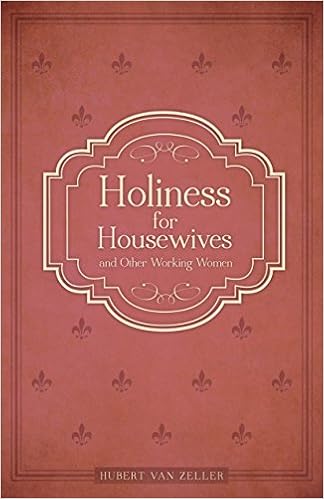


I remember many years ago being overwhelmed by lots of babies and toddlers and the discouragement that comes with realizing I would never, ever be a good housekeeper.  I just didn't get that homemaking gene.  So all my motherly life I have had to struggle against the current of my own tendencies and try to do things just alien to my nature.  It's a silly little cross to bear, but a cross nonetheless.  When someone first told me I should read Holiness for Housewives, I thought:  WHAT?  A monk giving me advice on being a stay at home mom???  But I bought the book anyway and wow.  I just remember how much love I felt coming from it.  Dom van Zeller must have loved his mother or his sisters (or both!) very much.   Or somehow the Holy Spirit gave him a gentle wisdom in this regard that truly comforted me.  Ever since I've been meaning to read other books by Dom van Zeller but have not.  My to-be-read pile is the size of Mount Everest!

************

Wrapping things up today, I would like to say THANK YOU to the A to Z April Blog Challenge folks who created this opportunity and community!  God bless you!

BONUS!

And I just thought I'd mention in this last April A to Z blog challenge post, the other blogs I really enjoyed over the course of this month:

The Doglady's Den - if you are a dog lover - this is for you!  I loved learning about the different types of dogs and was very pleased she featured Shelties for the letter S as my own little Tillie is one.

The Squirrel Nutwork - loved reading about nature in my own neck of the woods.

Travel with Archie - I enjoyed this informative trip around the U.S. A. learning about various cities, some of which I've visited and some I want to now that I've read about them!

My Two Blessings - I have so much affection for Robin, whom I've never met, but who brought the Read 52 Books in 52 Weeks Challenge into my life.  She has been a blessing to me!  Robin loves the written word, through books and through her love of writing.  Check out her blogs!

Kristin King Author - This AtoZ challenge is a fascinating focus on Irene Kucholick, who survived WWII and life in Soviet dominated East Berlin.  Don't miss this!

History RoundAbout   - My friend Kathryn talks about her job as archivist in England.  I learned so much!

I wish I could have visited more blogs.  April has been a crazy month for us with a long term house guest, a massive bathrooms renovation starting up, plus the regular homeschooling teenagers thing and my outside teaching duties.  It's been tough posting every Monday through Saturday!

And now onto May when I officially begin studying for my Masters in. . . you guessed!  Catholic Theology!

Friday, April 29, 2016

Catholic A2Z - Y is for Year


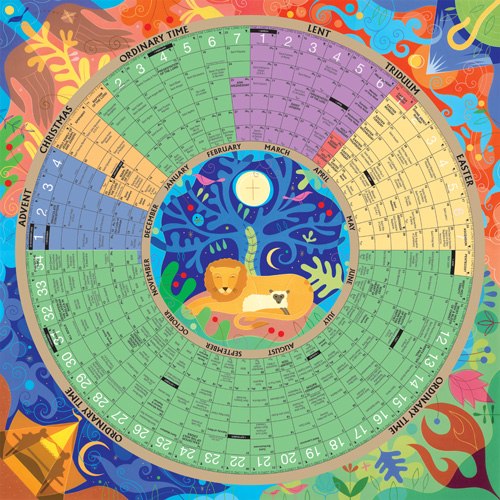
One thing I love about being Catholic is living out the liturgical year.  I love that nearly every day we are celebrating the memory of some saint who has gone before us.  I love the change of the seasons, Advent, Christmas, Ordinary, Lent, the Triduum, Easter, Pentecost, Ordinary time again.  And there's all sort of special days that dot the calendar all through the year.  I find one lives life at a deeper level, steeped in history and in a spiritual dimension that goes beneath the surface living of every day life.

A Catholic Liturgical Year Calendar


Children delight in living the liturgical year.  It is a joyful and meaningful way to pass on the faith.


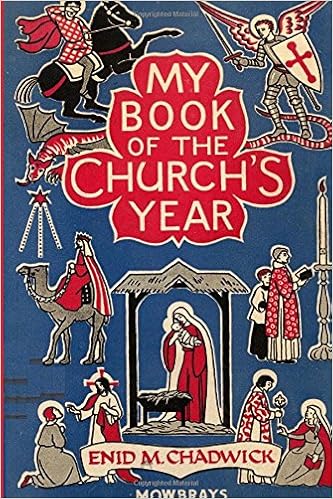
A really sweet, old-fashioned children's picture book that explains all this is  My Book of the Church's Year by Enid M. Chadwick.  I think this book might even be Anglican, it really emphasizes English saints, but it does a wonderful job of conveying the idea of celebrating throughout the year.  You can see the whole book displayed here.


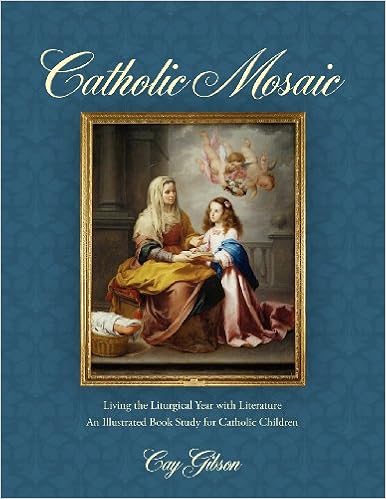
Another charming and more extensive way to introduce your children (and maybe yourself!) to the Church year is Catholic Mosaic by Cay Gibson.  This is a study guide that lists lovely picture books you can read out loud to your family throughout the year about the various seasons and saints.  This is a simple yet very effective way to learn about the Catholic faith.


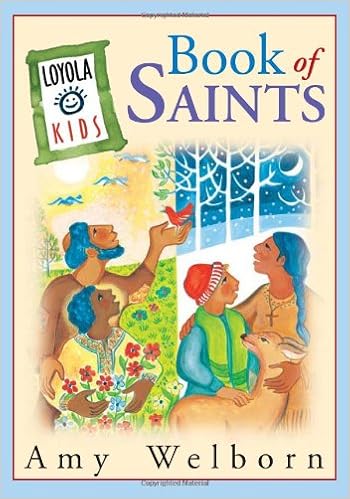
For older kids, we used  The Loyola Kids Book of Saints by Amy Welborn a lot over the years.  I'd get up in the morning and look through this book to see if it was the feast or memorial of a saint and then read the short passage out loud to my kids over breakfast.  Now that I only have teens, we just go to the Saint of the Day site and listen to someone else read about the saint!

A nice book to help with celebrating various church feasts via crafts and desserts, is The Catholic Parent Book of Feasts.  Most people are familiar with things like Advent wreaths and Lenten fasting, but this book is chock full of ideas including special prayers, ideas for poetry and other activities (like creating a Mary garden), lots of recipes and lots of very short blurbs on the significance of the different saints' days.  And, for instance, if you are planning out the upcoming month, it is easy to thumb through it to get an idea or two to incorporate into family life.


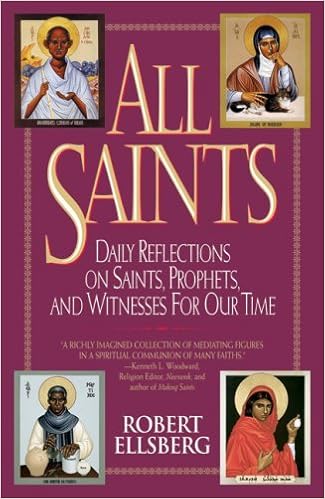
For adults, I enjoy All Saints: Daily Reflections on Saints, Prophets and Witnesses for our Time.  This isn't an orthodox book, in that some of the people aren't Catholic or even Christian, so it doesn't technically follow every single Church feast day as such, but I find it well done and informative.


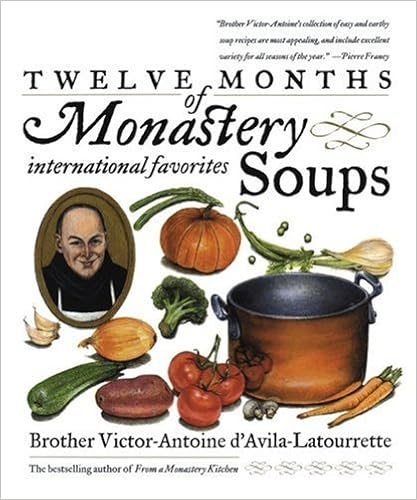
Another delightful book geared more for adults is Twelve Months of Monastery Soups.  Alas, I am not much of a cook and my family isn't especially into soups, but someone gave this to me as a gift and I love to thumb through it and enter the world of the monastery where everything moves to God's rhythm and every daily action is replete with devotion to God.


Thursday, April 28, 2016

Catholic A2Z - X is for Xenophon

I thought long and hard about what to put for the letter X in this blog challenge.  At first I thought I'd talk about St. Francis Xavier, except I've never really read anything about him.  Then I thought I'd do something with "Xtians" or how X is like a cross, but I just couldn't seem to get anywhere with that in terms of Catholic reading.   What kept coming to me is Xenophon!  But Xenophon was a Greek who lived before Christ, so how could that figure into my blog challenge theme?


Well, I think Xenophon does fit, but it takes some explaining!

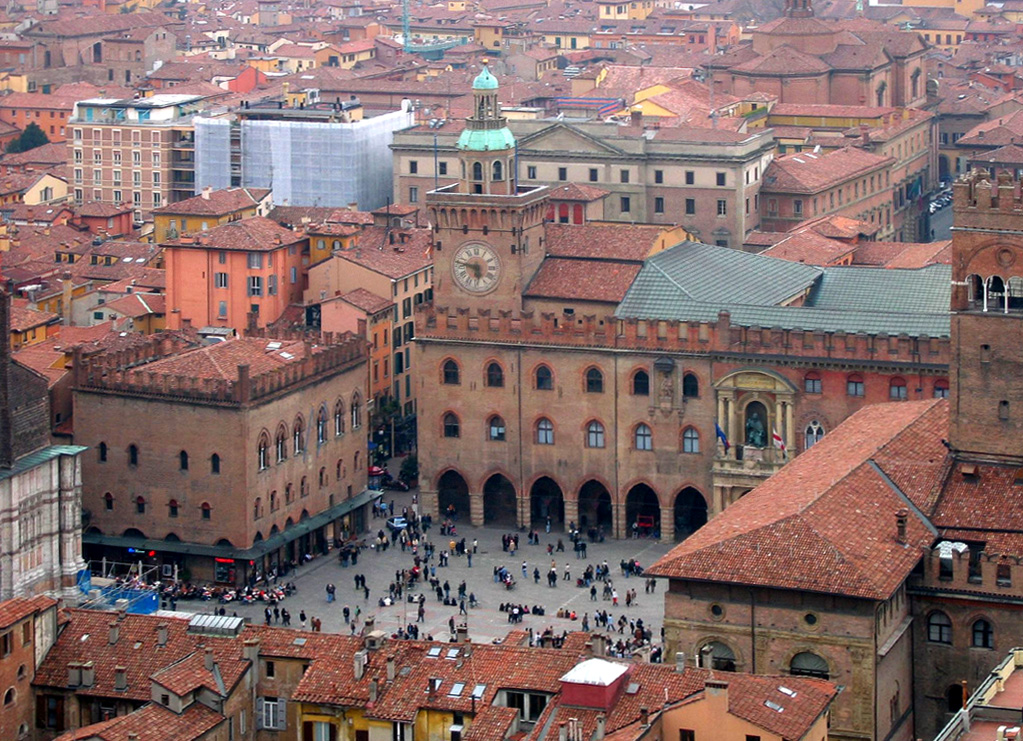
Our present day university system originated in the universities started by the Catholic church way back.  The oldest is the University of Bologna established in 1088.  Oxford University started in 1096.   These universities were outgrowths of the monastery schools of the Middle Ages. So the university originated with the Catholic Church.

The University of Bologna


A hallmark of classical learning is the study of classical languages, Latin and Greek.


Right now I am teaching a Latin course to middle/high schoolers.  We are using a textbook written back in the 1950s by a Father Henle; a past president of Georgetown University among other claims to fame.  The interesting thing about his Latin 1 textbook is that it prepares the student for reading his Latin 2 textbook, which is a simplified and abridged De Bello Gallico, or The Gallic Wars by Julius Caesar.  Caesar's book was traditionally the first Latin book read by students because of its plain writing style and gripping story line.

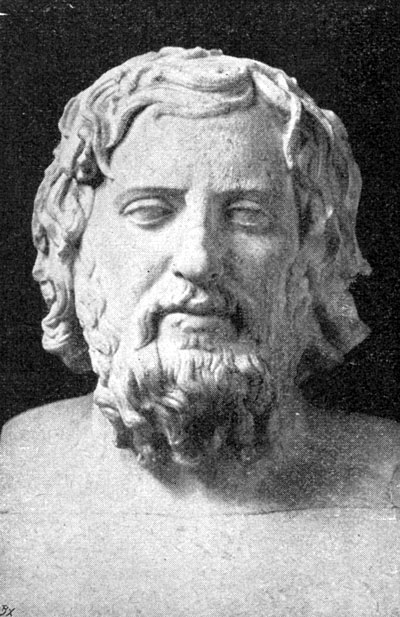
Xenophon

Well, did you know that when students study Greek, the first book they usually study (at least traditonally) was Anabasis by Xenophon for the same reasons; plain style, gripping story?  Xenophon was a minor officer in a mercenary army that fought for a Persian guy named Cyrus.  He (Cyrus) was trying to take over his brother's rule.  So there the army was in the middle of Persia when catastrophe struck.  The leader and many of the officers were killed in a ruse.  Xenophon rose to leadership as the army of 10,000, caught in hostile territory, had to figure out how to get out of Persia in one piece.  It is a thrilling adventure story based on a historical event.


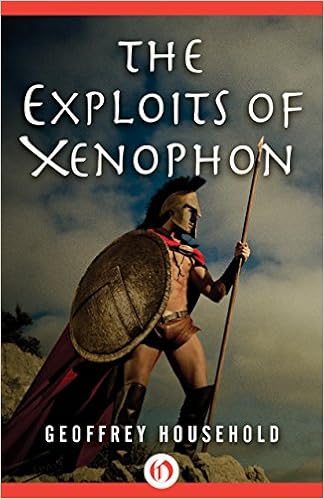
In my own Catholic homeschool, I attempted to be somewhat classical.  Once, after having read that little factoid that the Anabasis was the first book students tried in Greek, I happened to be at a used books sale (I am addicted to books!) and I found a lovely gem called The Exploits of Xenophon by Geoffrey Household.  I took it home and read it and then handed it off to my at-the-time 12 year old son who was going through an Ancient history jag.  Though we might not be reading it in Greek, at least we know the story!  He read it and enjoyed it as much as I did.  I can highly recommend it for middle school on up.
So there ya go!  X is for Xenophon!


Wednesday, April 27, 2016

Catholic A2Z - W is for Women


There is, in the secular popular culture, a view that the Catholic Church is anti-woman because it will not ordain women as priests.  I will not deny that both history and current events show us lots of subtle and often openly vicious misogyny in all cultures around the globe.  Some of customs of the Catholic church have reflected the historical bias in Western cultural norms.  However, I will assert that the teachings of Christ and the Church herself (Bride of Christ that she is!) has always been a place of reason and freedom for women, seeing no division when it comes to salvation through Christ.  And while most worldly careers are things both men and women can do interchangeably, there are vocations they can not interchange.  Instead these things reflect the differences our Creator gave us, so instead of being interchangeable, they become complementary roles.  To put it very simply, women do the lion's share of bringing forth new souls for God, and a very, very tiny percentage of men are called by God to act in Jesus' place in offering His Body and His Blood at the Holy Sacrifice of the Mass.  

Laura Wolk
If you want to read an interesting article that explains the Catholic Church's attitude toward women, and its inherent attractiveness to women because it so justly acknowledges their humanity, read this recent Crux interview with Laura Wolk.  None of this fits well on a bumpersticker, so it is a little hard for us modern types to understand.

Many of my previous posts in this A to Z series reference intelligent, discerning, creative women who have converted to Catholicism.  Raissa Maritain, Heather King, Kimberley Hahn, Karen Edmisten, Edith Stein, Sigrid Undset, Gertrud von Le Fort and I probably missed somebody.  What do these women understand that the current popular zeitgeist doesn't?

Polish Madonna

And of course, one of the biggest inconsistencies in the argument that the Catholic church is anti-women is Our Lady, the most powerful woman in history!

The truth is the more you learn of Catholicism the more you see the love for women that Jesus has and that love reflected (albeit imperfectly) in His Church.

From the beginning of Christianity women and slaves were quick to convert to this new faith that revealed the truth that God is love.  From St. Felicity and Perpetua who were venerated early as saints to  St. Lucy, who to this day has her own holiday in some European countries, to St. Joan of Arc who led an army, to St. Catherine of Siena, advisor to popes, to the first businesswomen, that is, nuns who ran hospitals, schools and huge monasteries that supported themselves through their own vineyards and farms, woman have made their mark on the Church.  The more you know, the more you realize that while the Catholic understanding of the role of women in the world doesn't fit well into the Gloria Steinem zero sum game view, there is indeed a powerful role women have always been able to play in the living out of our faith.

So I thought I'd just list some books I've read about women in today's world, who embrace Catholic teaching and who are making their mark on the Catholic church (at least in the U.S.):


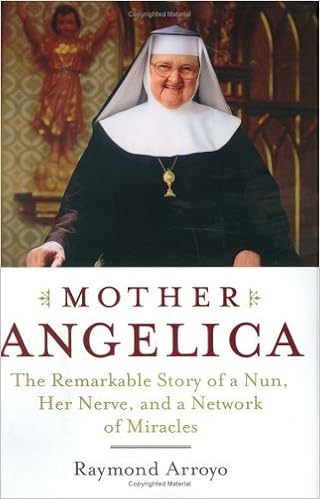
Mother Angelica; the Remarkable Story of a Nun, her Nerve and a Network of Miracles.  This book tells the story of a how Mother Angelica, who recently passed away, founded the largest religious global network in the world.


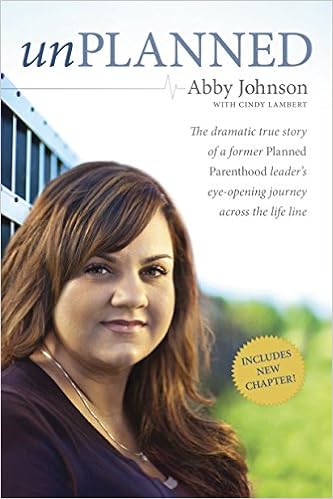
Unplanned  How does a woman go from being a manager of a Planned Parenthood abortion facility to an impassioned pro-life activist?


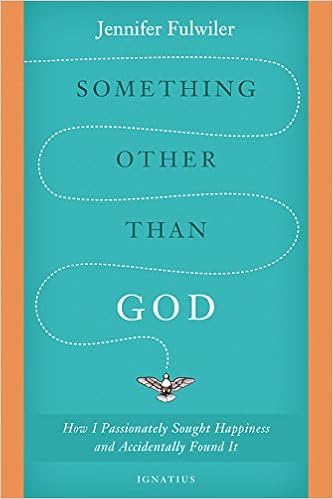
Something Other than God  A life-long atheist tells her story of conversion.


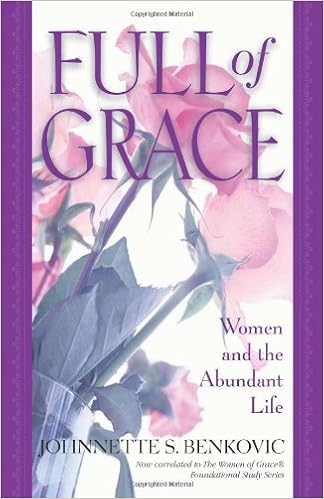
Full of Grace; Women and the Abundant Life by Johnette Benkovic, host of a popular show on EWTN, strives to understand, explain and encourage women in their femininity as understood by the Roman Catholic Church.


The Long Loneliness  Dorothy Day, founder of The Catholic Worker and Hospitality houses for the poor, wrote a moving memoir of her conversion.  Day died in 1980.  There is a movement for her canonization.


Strange Gods  Elizabeth Scalia explains how to avoid modern day idolatry.  Scalia also runs the wonderful Aleteia site.


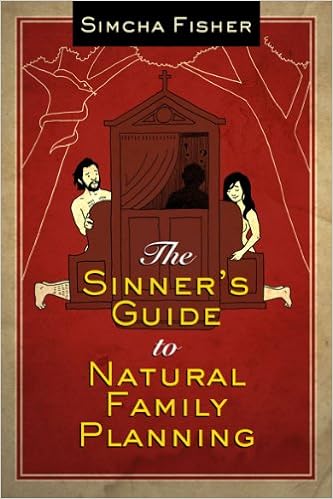
A Sinner's Guide to Natural Family Planning  Simcha Fisher explains NFP to those who struggle.  Fisher is bitingly funny at times.


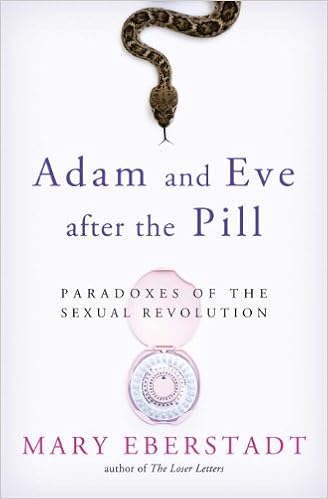
Adam and Eve After the Pill  Mary Eberstadt's excellent and incisive analysis on how contraception has further exploited women and reaped all sort of unintended and degrading consequences.


Sexual Authenticity by Melinda Selmys, a lesbian, tells her story of conversion to Catholicism and how she reconciles her understanding of sexuality with Church teaching.


My Sisters, the Saints   Colleen Carroll Campbell is a modern woman trying to do it all - career, family, God.

There are just some examples of today's modern woman embracing Church teaching in a fresh, innovative and faithful way.

Happy reading!

Tuesday, April 26, 2016

Catholic A2Z - V is for Von


I've got two authors for the letter V.

Gertrud von Le Fort is someone I just discovered last year, when I read her marvelous The Song at the Scaffold.  This book is based on true events that happened during the French Revolution.  Here's a review I wrote.


The other author is Maria von Trapp of The Sound of Music fame.  She wrote the delightful story of her life in the well loved book The Story of the Trapp Family Singers.  This book makes a great read aloud for the family.  And then you can cap off your read aloud by watching the musical! (Though be aware the actual story is very different from the musical version).


Monday, April 25, 2016

Catholic A2Z - U is for Undset


Sigrid Undset won the Nobel prize for literature in 1928.  She is one of the world's greatest women authors.  She was born in Denmark but lived in Norway for most of her life.  The work for which she is most famous is the trilogy set in medieval Norway, Kristin Lavransdatter.


The first book in the trilogy is about the title character's childhood up until her marriage to the dashing and dangerous Erland.  The second volume is about her troubled marriage and the third volume continues the telling of her story until her death.  These books are incredible for the way they bring the time period alive.  They are also profound studies in character and in the complex relationships humans have with each other.  I read the first book in my Women Authors class in college and wow, did it make an impression!

Undset started out very much as a secular writer.  She wrote the Lavransdatter trilogy before she converted to Catholicism at the age of 42.  Her subsequent books were influenced by her new faith.  Her book Catherine of Siena is hailed as one of the greatest saint biographies ever written.

Alas, I read the first half of this and then got distracted.  Must, get. back.
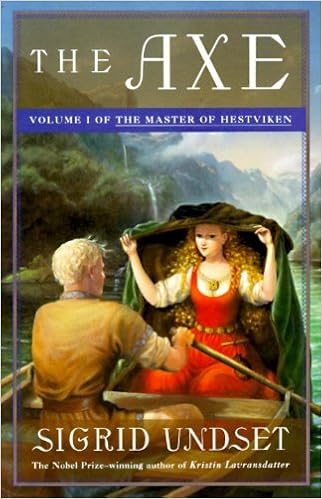
While I appreciate Undset's unparalleled writing skill, I admit what I've read of hers so far strikes me as rather bleak.  I do want, at some time, to read her other trilogy written after her conversion, The Master of Hestviken.


Undset was a prolific writer and wrote many other books besides.

A really clever, well done animated short gently making fun of Undset's tendency to melodramatic tragedy is the wonderful The Danish Poet.  I highly recommend it for your viewing pleasure.  It is narrated by the great actress Liv Ullmann.

Saturday, April 23, 2016

Catholic A2Z - T is for Teresa


Another name, besides Francis, that Catholics rock (and I can't even believe I didn't reference Pope Francis in my F is for Francis post!  I deserve a dope smack!) is the name Teresa or Theresa or Therese (all variations of the same name).

The great Bernini sculpture showing St. Teresa of Avila in one of her mystical ecstasies.

The Teresa that started it all is St. Teresa of Avila.  She was a Carmelite nun of the 16th century known as a mystic and a great reformer.  She inspired two other saints, St. John of the Cross and St. John of Avila.  Her two most famous books are considered masterpieces:  The Way of Perfection and Interior Castle.  She was (along with St. Catherine of Sienna) named the first woman doctor of the Church.

St. Teresa of Avila inspired the conversion of another saint, Saint Teresa Benedicta of the Cross, who before she became a Carmelite nun was Edith Stein, a brilliant Jewish woman and a doctor of philosophy who worked with the great Husserl, the brilliant phenomenologist.  She was rounded up by the Nazis and died at Auschwitz.

Dr. Edith Stein also know as St. Teresa Benedicta of the Cross

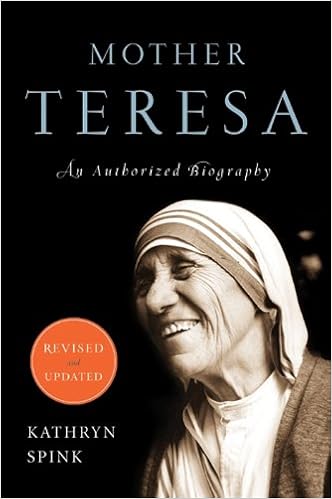
Another great Teresa, of course, is Blessed Mother Teresa of Calcutta, who rumor has it will be canonized this coming September.   Two great books about her are Something Beautiful for God and Kathryn Spink's biography.  


But the Teresa I want to focus on is St. Therese of Lisieux.  She was a French Carmelite nun who died at the age of 24 and she wrote one of the great spiritual works of modern times and has inspired countless men and women to holiness.  She also was named a doctor of the Church.  Her great masterpiece is Story of a Soul.


I tried several times to read Story of a Soul and never could read it cover to cover.  I'd pick it up and read a bit and then set it down again.  I felt like somehow I couldn't appreciate St. Therese the way other people could.  I went to a day long retreat once on St. Teresa of Avila and St. Therese and I got a lot of out it.  So I was determined to actually completely read the book.  Alas, my aspirations out ran my capabilities at the time, and once again I gave up.   This is not a hard book to read! I couldn't understand what the stumbling block was.  I was confused and disappointed by my inability to attend to this great classic.

A young St. Therese

Finally, while at a homeschooling conference, I spied an audio version for sale at one of the vendor stands.   Maybe this would be the ticket!  So that summer as I drove my kids to various places like the pool and summer day camps, etc, we all listened to Story of a Soul.  And that was the clincher.  Somehow hearing the words worked better for me then trying to read them.  And it spawned a lot of conversations with my kids and lo and behold there was much less bickering going on during car rides!  The audio version I had wasn't particularly great either; frankly, it is a bit amateurish, but that didn't seem to matter in the least.  It was still a great blessing.

St. Therese, pray for us!


Friday, April 22, 2016

Catholic A2Z - S is for Shakespeare

Did you know there is a very strong theory that Shakespeare was Catholic?


Stratford Upon Avon was in an area that was a Catholic stronghold during the Reformation.  There is evidence that Shakespeare's father paid the fine imposed on Catholics if they didn't attend the Church of England services.  Shakespeare's mother came from a recusant family who actually had members who were killed for their Catholicism.  And there is much more.

Here Father Dwight Longnecker lists 10 reasons why Shakespeare was probably Catholic.


Peter Milward, a Jesuit at Sophia University in Toyko has written several books touching on this topic.  One of them I inherited from my aunt after she passed away.  Alas, I have not read it yet.


You can get Milward's book, Shakespeare the Papist, on google books here.

And if you have an hour or so of your time, you can watch Father Milward give a talk about Catholic King Lear here.

Another author who has written about this is Joseph Pearce.  I have read his book, The Quest for Shakespeare which makes very good arguments that Shakespeare was indeed Catholic and it presents a far more cogent picture of Shakespeare than other things I've read, like Will in the World (which struck me as just a collection of every theory about Shakespeare put into one volume, no matter how cockamamie it might be).  I can highly recommend reading The Quest for Shakespeare which is an absorbing and well written analysis.


Pearce has written two other books on Shakespeare.  Through Shakespeare's Eyes and Shakespeare on Love.  I've got both on my to-be-read list (a list, alas, which is far too long!).

As luck would have it, I just happened to stumble on this article yesterday which compares Hamlet's monologue to Psalm 8 to show how they parallel in structure.

Shakespeare's birthday is tomorrow!    Happy birthday, Will!  And requiescat in pace!


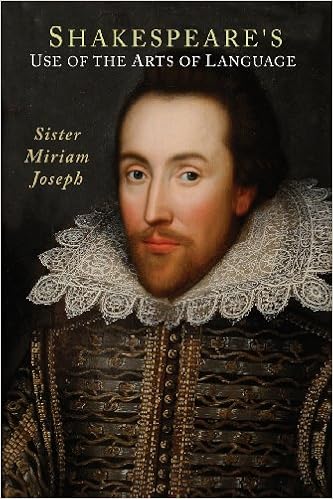
Bonus Catholic Shakespeare book!  Sister Miriam Joseph, a well respected scholar of classical learning, wrote a wonderful book entitled Shakespeare's Use of the Arts of Language.  I am planning to use this with my last homeschooling student at some point in her high school career.  Check it out!

Thursday, April 21, 2016

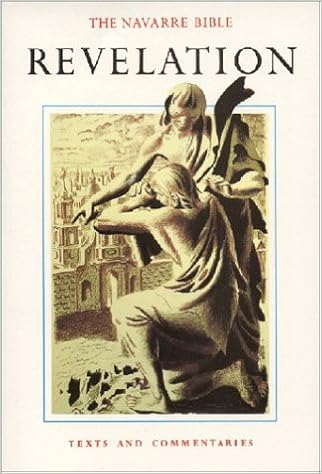
Catholic A2Z - R is for Revelation


I once participated in an ecumenical scripture study on the book of Revelation.  We met at a Methodist church and the people were all lovely.  The woman who led our group was just a wonderful human being, so kind and devoted.  Going into the study I knew next to nothing about the book of Revelation except what I had drawn from popular culture, like the fact there was something sinister about the number 666 and that sort of thing.  But I soon discovered that you really can't be ecumenical about this last book of the Bible (I mean ecumenical between Catholics and Protestants; you can be among Protestants).  The Catholic Church reads this book completely differently from the way Protestants do.

If you are familiar with the Left Behind series (and I am only vaguely familiar; I've never read them) that, apparently, is much more reflective of the Protestant/pop culture take on Revelation.  The Church reads Revelation primarily as a work of literature, written in the apocryphal tradition of Ezekiel and Daniel and as something John, the author, wrote to comfort fellow Christians who were being persecuted.   At the time this type of literature was very popular.  We don't look through its pages trying to discern exactly when the end of the world will happen and exactly in what order things will fall out when Jesus arrives again at the Second Coming.  The book is rich with complex and bizarre symbolism and it is read as such, but it is not necessarily read as something that is providing literal clues to how the end of the world will come about.

Here is a link to the Catholic Bishops Conference on Revelation.  And here is a great orthodox Catholic scripture study on it.


One reason why Protestants* might misread (in my view) the book of Revelation is that most have rejected the Holy Sacrifice of the Mass.  The Mass actually has a lot to do with the book of Revelation!  And once you begin to interpret the book in light of its relationship to the Mass, the Protestant approach becomes an obviously impoverished and incomplete one.  Sorry Protestants, but honestly that was my reaction as I slowly learned about the difference between the Catholic take versus the Protestant one.  The Catholic view is much more profound, complete and cohesive.  For an absolutely excellent, mind-blowing study on this topic, please read The Lamb's Supper by the Dr. Scott Hahn.  But a warning!  Once you read this, you'll never go back to the Left Behind way of seeing things.


Speaking of Scott Hahn, he and his wife wrote a wonderful book the title of which begins with the letter R!  Rome, Sweet Home is the story of their conversion to Catholicism from Presbyterianism.  As a teen, Hahn was rabidly anti-Catholic.  He went on to become a Presbyterian minister.  His wife is the daughter of a Presbyterian minister.  He converted first and then she did.  The book is a really compelling read, full of some painful honesty about what a hard conversion this was.  (It also happens to have a section in it that explains really well the Catholic reasoning behind our rejection of birth control.)


*Forgive my oversimplification here.  I know that there are many varieties of Protestants, from high Anglican to Pentecostals.  Since this is just a short blog post, I am painting with a very broad brush but with no intent to disrespect the actual distinguishing differences in various denominations.

Wednesday, April 20, 2016

Catholic A2Z - Q is for Quo Vadis


Yesterday's post was about Paul, but today's is more about Peter, as that great Apostle figures importantly in the epic novel Quo Vadis: A Narrative of the time of Nero.


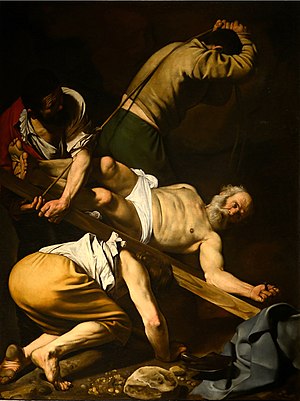
Tradition has it that during the persecution of the Christians under Nero, Peter attempted to flee Rome and certain martyrdom.  As he was traveling he had a vision of Christ meeting him on the road.  "Quo vadis, Domine?" Peter asked.  "Where are you going, Lord?"  And Christ replies, I am going back to Rome to be crucified again.  Then Peter knew he must return and face his death.

The Crucifixion of St. Peter by Caravaggio

The novel Quo Vadis won the 1905 Nobel Prize for literature.  It was written by a Polish author, Henry Sienkiewicz.  In it the author brilliantly recreates the world of Nero and the Roman empire falling into decadence.  The main character is Marcus Vinitius, a tribune, who travels in Nero's privileged court of characters.  He meets and falls in love with Ligia, a beautiful young woman who is a Christian.
Ligia by Polish illustrator Piotr Stachiewicz

Some great things about this novel:  Siekiewicz does a majestic job of recreating the world of the Roman Empire.  I think this book must have inspired Hollywood's take on Rome in all its many depictions.  This book presents the grandeur, the nobility, the sordid cruelty, and the complexity of this historical period and really makes it come alive.

The second great thing about this book is that Siekiewicz marvelously describes the depravity and cruelty of the Roman culture and yet he never gets explicit.  Modern writers could take a lesson from his writing skill.  My skin was crawling at times and at other times the tension was so taut, and yet the book remains PG rated.

Nero watching Rome burn.

The third great thing, and to me the greatest of this epic book, is the change and growth we see in Marcus.  The character development is masterful.  Marcus starts out completely immersed in the Roman patrician outlook; both what is good and what is bad about it.  He falls in love with Ligia, but really it is more like lust at first.  He must possess her.  But as he learns more about her and her faith, he goes through different stages.  For a long time, the reader can not understand how he or the situation could ever change to resolve the couple's alienation.  For a time Marcus feels nothing but rage at Ligia for rejecting him.  But as circumstances shift and Marcus becomes more and more exposed to this Christian sect, miraculously he experiences a profound conversion.  The slow unfolding of this is just phenomenal.

This book is long and the translation I read had lots and lots of Latin in it.  But even so, it is a page turner, very hard to put down.  I do think there is more than one translation into English and the quality of each might vary.  The edition I read was from the 1920s as I recall.

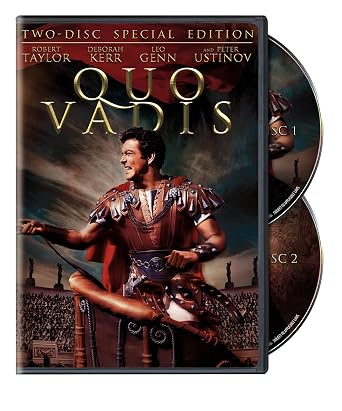
They've made several films based on this story.  I saw parts of the one made in 1951 with Robert Taylor.  I know it is a favorite with many, but really I found it pretty schlocky.  It doesn't convey the depth the book does.  So please, read the book!