Tuesday, September 24, 2019

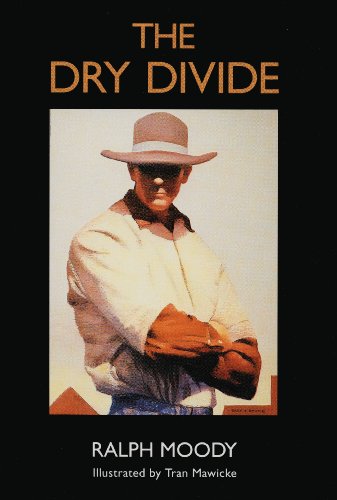
The Dry Divide - Book 41


The seventh book in the Little Britches series by Ralph Moody, The Dry Divide begins right where the previous book let off.  I highly suspect that these two books were once one but maybe some publisher decided to break them up.  In fact, unless I am recalling wrong, Moody explains what the phrase ' shaking the nickel bush' means in the beginning of The Dry Divide (but maybe I am muddling the two books together). 

Anyway, this is the book in which Ralph, now called Bud, finally makes it.   At the beginning he is destitute.  He hopped a freight train with only a dime in his pocket, trying to get to friends in Littleton, CO for the 4th of July rodeo, but the train conductors discover him and boot him off in a tiny railroad depot on the border of Kansas and Nebraska.  Things are desperate.

Luckily almost at once he gets swept up in a crew to work on wheat harvesting with a bunch of other down on their luck men.  The farmer's name is Hudson and Bud and the others soon discover that Hudson is a brutal man on the verge of insanity.  Everyone's terrified of him, including his pregnant wife, 5 children and his younger sister in law, Judy, who helps out.  

Judy and Ralph are drawn to each other and July confesses to him that Hudson is trying to harvest this failing farm he's received from the bank which has pretty much a lien on everything he owns.  Bud realizes the likelihood of actually getting paid for any work is nil, especially since Hudson is crazy and is going about the work in a driven, destructive way that will guarantee failure.  Because he's so violent no one can give him advice. He hates Bud who stands up to him.  All the men are about to flee (two of them do) so Bud gets the idea to go talk to the banker in town and get the lien put in his own name.  He thinks he can get the men to join him in harvesting the wheat, enough that the banker would at least get some money back and the men would get some pay.

But just as Bud is trying to put this dangerous plan into action (Hudson seems likely to try to kill him), Hudson beats his horse (he's extremely cruel to the animals) so much the horse falls on him and crushes him to death.  Everyone breathes a sigh of relief, including his poor stunned wife.  So now Bud takes over the operation.  The men, all colorful characters, and Judy, become a team.  When Bud realizes that they actually will be getting some money for the harvest and that the banker trusts him, he comes up with another scheme, to becomes a hauling business for the other farms to get their wheat to the silo at the train depot.  

Much of the book is highly technical.  The various deals with the bankers, how they budgeted things out, how they acquired horses and trained them, how they finesse their operation so as get enough wagons, how they got contracts with the neighboring farmers, etc.  Bud, even though the youngest, is the brains behind it all.  He and Judy are the main team, Judy has an old car, knows the local people and the area and is the bookkeeper.  But Bud has to deal with the quirks of the men in his team.  Doc is a colorful medicine salesmen who tends to go on benders whenever he gets some money.  Paco doesn't speak English but is great with horses, two Swedish brothers who don't talk much turn out to be blacksmiths who are extremely helpful in the enterprise, there's an old man from Ireland who can't help much but needs employment anyway, and another guy named Bill who turns out to be a steady worker.  Bud figures out the best way to use each man.  

Through much backbreaking work and lots of planning, fast talking and tirelessly pushing things along, Bud makes it work.  If Bud and Judy aren't married in the next and last book in the series, I'm going to be really mad.

Even though so much of this was too detailed and technical about things I have no clue about, like training horses to drive in and out of gulches, and the design of the machinery for threshing wheat, etc I really think that this book might be really valuable in that it gives us a peek into how people did things back in the day.  All the skills they needed just to get by is amazing.  We've lost all that.  They had so much knowledge about weather, farmings and animals that the regular person today knows nothing about.  How the bankers and small town economy worked and just a myriad of details in this book evoke a forgotten time.  

I am really enjoying this series, as I've said again and again!  So glad I finally got around to reading it.  For more book reviews go to Read 52 Books in 52 Weeks.


Sunday, September 22, 2019

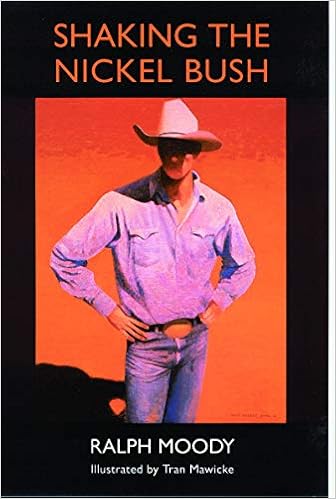
Shaking the Nickel Bush - Book 40


Shaking the Nickel Bush is the next novel in the Little Britches series.  It's quite a story and while I feel some of the novels in this series are a bit too drawn out in relating what's going on, this one didn't have that feel.   This is dramatic story of a 19 year old young man who is in dire straits and struggles, using all the ingenuity he has to try to pull himself up by his own boot straps.  It's arduous, and must have been scary. But Ralph always recounts his adventures in a stoical way.   The book starts with a diagnosis of diabetes which in 1918 was pretty much a death sentence and it ends with hopping a freight car with bullets whistling past his ears.

Ralph didn't get into the military for World War 1 but he wanted to be part of the war effort so he leaves MA and goes to Delaware to work at a munitions plant.  While there he meets a talented sculptor and informally apprentices with him.  This talent is crucial for the second half of Shaking the Nickel Bush.

But Ralph keeps getting skinnier and skinnier and something is not right.  He winds up in a hospital in Boston where they diagnose him with diabetes.  This is devastating but his family physician isn't 100% convinced by the specialists.  He advises Ralph to go west, maybe to CO or better yet, AZ where he can be in a warm climate, soaking up lots of sunshine.  He knows Ralph loves horses, so he advises him to go live a outdoors life doing something he loves.  He does put him on a strict diet avoiding starches and sugar except for 'gluten' bread.  This was some special bread which I've tried to research but can't.  But mostly he's to eat lots of chicken and fish and fresh vegetables.  The diet is very hard to follow in the land of corn bread, biscuits and beans.

When Ralph arrives out west he realizes three things:  he didn't bring enough money, there aren't enough jobs and he is rusty anyway in working with cattle since he hasn't really done it since he was 10.  He can't get a job and for a while is reduced to hobo status.  But he hears about a job being a stunt cowboy for the silent westerns Hollywood is churning out.  They film in AZ which just became a state because they don't have to follow the animal welfare laws of CA.  The stunt riding is horribly dangerous to both the men and the horses.  They use completely destitute drunks mainly as the men.  Ralph however is in luck.  The guy running the operation knows some folks that Ralph knew back in CO.  They strike up a friendship. This allows Ralph, who had been a trick horse rider in his childhood, to observe the safest ways to do stunts on horses.  He winds up being able to make lots of money in just a few days and he is one of the few that makes it out of there without any broken bones or permanent damage.

Now he's got money.  He meets up with another down on his luck young man, Lonnie.  They team up in a hilarious but also pathetic way.  Ralph thinks he is going to die in six months anyway and his biggest concern is getting money back to his mother until his younger brother finishes an apprenticeship and can begin to earn money for the family.  He and Lonnie get the idea of buying an old car and driving the back roads of Arizona and the adjacent states to hire out as cowhands.  But the car eats up all their money and they can't get far without it breaking down.  Back to impoverishment. 

During his down times, Ralph likes to sculpt horses.  He gets the bright idea of going into these small towns and targeting the local bankers to make busts of them.  Word gets around and he and Lonnie (though Lonnie never does much except sponge off Ralph) become the Cowboy Artists of the West.  Ralph works hard to drum up business and spends lots of time sculpting.  He gets some real money saved up.  He and Lonnie's plan are to separate just before the 4th of July.  Ralph plans to go back to Littleton, CO for the 4th of July rodeo.  Lonnie is heading home to Wyoming.  But Lonnie has become a real problem.  He is an immature, impulsive kid who likes to blow through Ralph's money.  Ralph hides his money but he's too clever by half and things don't end well.  At the end, Ralph is destitute once again.

I am really enjoying this whole series, but I think this particular story might be my favorite. 

For more book reviews, go to Read 52 Books in 52 Weeks.


Sunday, September 15, 2019

The Three Taps - Book 39

Somebody needs to republish this book!


The Three Taps is a mystery novel published in 1927 by Father Ronald Knox.  He wrote several popular mysteries back in the day and even was included in some collaborative detective novels written by many popular authors at the time, including Agatha Christie and Dorothy L. Sayers.

The Three Taps is oop except you can get in on Kindle.  But if you want a real book, you have to buy it used somewhere.  This mystery introduced Father Knox's recurring detective, Miles Bredon of the Indescribable Insurance Company.  In this case a wealthy man name Mottram dies at an inn out in the country where he liked to stay on fishing holidays.  The man died of asphyxiation from a gas tap left on in his room.  Suicide by gas, or accidental death because of gas had become a trope.  I didn't really understand everything about the three taps in the room and quite how they worked.  Another trope is the locked room mystery.  The room was locked so it must be a suicide except somehow the tap got turned off in the locked room, yet the man still died?  Neither suicide nor murder seem to fit.  And with each uncovered clue, things get even murkier.

Converging at this Inn is an old war colleague of Miles', now Scotland Yard detective, Leyland (can't remember his first name).  Miles wants to find the death a suicide so his company doesn't have to pay out, but Leyland thinks it's a murder.  We also get to know Miles' wife Angela.  Miles and Angela have lots of witty repartee.  Angela is a hoot.  We also have another witty gentleman in Mr. Pulteney, an older man who frequently stays at the Inn to fish in the river gorge nearby and knew Mottram.  And we have the two main suspects, Mottram's alienated nephew who runs a shop in the town and Mottran's secretary, Brinkman. 

Lots of twists and turns and very British all around.  An enjoyable mystery with lots of clever charm.

For more book reviews go to Read 52 Books in 52 Weeks.

Sunday, September 1, 2019

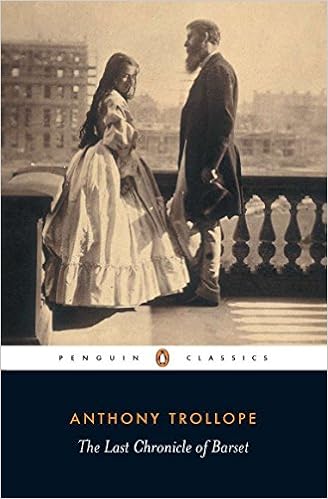
The Last Chronicle of Barset - Book 38


This book is so good!  This is the sixth and final novel in the Chronicles of Barchester series by Anthony Trollope.  The novels weave a colorful, rich tapestry about the lives of many of the inhabitants of Barsetshire and their many loves, heartaches, escapades, trials and triumphs.   This last book in the series ties everything up bringing in characters from every one of the other novels.

There were so many themes and story lines going on, I started cataloging them.

Marriages:
Bishop and Mrs. Proudie
Archdeacon Grantly and Susan Grantly
Rev. Josiah Crawley and Mrs. Crawley
Dobbs Broughton and Maria (Clutterbuck) Broughton

Mrs. Proudie is a virago and domineers her husband in a terrible way that leads to ruin.  Both Mrs. Grantly and Mrs. Crawley know how to deal with their eccentric, prickly husbands who are both deeply flawed and yet lovable.  Both women are wise and honest.  They know when to speak and when to remain silent.  Their loyalty is unwavering.  Mrs. Broughton is a shallow thing who married for money it turns out her husband didn't have.  She has no control or even a real relationship with her husband, two utterly vapid and selfish people. 

Courtships:
Johnny Eames and Lily Dale
Major Grantly and Grace Crawley
Johnny Eames and Madalina Demolines
Conway Dalrymple and Clara Van Siever

Grace Crawley is the lovely eldest daughter of Rev. Josiah Crawley and his wife.  Rev. Crawley being a great scholar, had educated her highly (homeschooling!).  She takes the best from both her parents' characters.  Major Grantly has a lot of hurdles put in his way just has he has fallen in love with Grace and plans to ask her to marry him.  The difficulties make him even more determined to marry her.  Conway Dalrymple and Clara Van Siever are a rather funny side story kind of thrown into the novel for good measure.  Poor Johnny Eames still loves Lily Dale and he longs to marry her and is always crushed when she rejects him, but he manages to stave off boredom of London living by carrying on flirtations that almost but don't quite get him into desperate scrapes.  So he is faithful in his way but it is a weakness in his character.  But he's a good foil to Adolphus Crosbie who loses his flirting game and will suffer all his life for his poor judgment. 

Other relationships:
Archdeacon Grantly and Major Grantly - there is conflict between the father and son.  Archdeacon Grantly doesn't want his son to marry the daughter of a poor curate who has been accused of stealing.  But Major Grantly is determined to marry Grace.

Mr. Harding and his daughters and granddaughter, Posy - Dear, dear Mr. Harding is here in the novel largely in the background but he is as loving and simple as ever.

Dr. Arabin and Mr. Crawley - the friendship between Arabin and Crawley is a complicated one, mostly because Crawley hates that Arabin is rich and he isn't.  He was competetive with Arabin when they were at school together and he was the better scholar but now Arabin has money and Crawley must beg him for money. 

Mr. Robarts and Mr. Crawley - Poor Mr. Robarts, he has the best of hearts but he can never best Crawley in an argument.  Yet, he sees what is good in the man and genuinely pities him.

Ironically named hero:
Dr. Tempest - the most even-handed, fair, steady, good but exacting character!

Delightful new hero:
Mr. Thomas Toogood - a lawyer who is hero!!!  Another Atticus Finch!  Well not quite.  But Mr. Toogood finds out that his wife's distant cousin, Mr. Crawley is trouble with the law and resolves to help the man out, no matter the sacrifices he must make.  He is the cleverest for he is the first to realize what probably happened and he pursues the line of inquiry until he's tied up the case. 

Most tragic figure:
Dr. Proudie - poor thing, such a weak man who has been browbeaten and domineered over by his ruthless and manipulative wife.  But still, she's a more complex figure at the end of the story.  Her flaws were great and for all her ambition, she is a failure.

Adolphus Crosbie runs a close second.  His stupid marriage has ruined him.  Good!

Weird thing that kept bothering me:

 Why does Trollope never mention people like Mr. Harding and Eleanor and Susan's mother?  Same with the Archdeacon, he only remembers his father and not his mother.  She's never even thought of.

Major Grantly just lost his brand new wife in childbirth.  Now it's 3 years later and he's head over heels in love with Grace Crawley.  No one ever, ever speaks of his first wife!

***************

The Last Chronicle of Barset was an excellent ending to a wonderful series.

I absolutely loved reading the Chronicles of Barchester and I highly recommend them.  For more book reviews, go to Read 52 Books in 52 Weeks.