Monday, December 23, 2019
Classics Club Spin #22 Is . . . .
No. 13! Which on my list means I get to read The Tempest by William Shakespeare by January 31st. I am up for it! It's funny because a few weeks ago a booktuber, whose channel is named Totally Pretentious* asked for help narrowing down what he'd read next and one of his choices was The Tempest. And I voted for that. I joked that he could read it for me and I'd watch his review. You see, I saw an incredible production of the The Tempest at the National Shakespeare Company several years ago. I really wasn't very familiar with the play. I read a short summary of it before going but that was it. I absolutely loved seeing that play. The production was gorgeous! The acting was wonderful! And ever since then I've been thinking to myself I really ought to sit down and actually read the play myself. So now I will! And I just so happen to have a No Fear edition of The Tempest on my shelves, no doubt, left over from when my kids took a high school Shakespeare course at our homeschool co-op.
*His name is Lukas and he's a PhD candidate in Psychology and an incredible reader. I really like his channel a lot. Just a super smart, thoughtful, nice guy who really enjoys the intellectual life and learning about high culture (art, opera, etc).
Check out The Classics Club!
Sunday, December 22, 2019
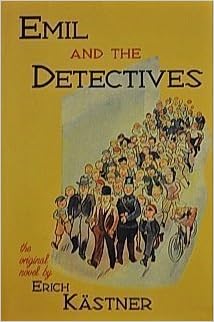
Emil and the Detectives - Book 54
Emil and the Detectives by Erich Kastner is a classic German children's novel. It was written in 1929. I had heard about it over the years some place, not sure where! But I saw it at a used book store recently and purchased it for a dollar. It was a quick read and a fun one though the fact that it is set in the late 1920s in Berlin cast a shadow over the whole story.
Emil is a young man (maybe 11 or 12?) who is traveling from his small town to Berlin to visit his grandmother and cousins. He hasn't been there for a while as he and his mother don't have a lot of money. His father has passed away and his mother works as a hairdresser in the living room of their apartment. Emil is a very smart and sweet young man, who is very attached to his mother. The grandmother is also rather poor and Emil's job is to bring seven pounds (money) to the grandmother. This money has taken a while to slowly save up. While on the train Emil falls asleep and is robbed. He knows who did it and desperately follows the man, getting lost in Berlin and not sure how he can rectify the situation. However, the code of boyhood and lots of helpful city boys come to the rescue.
The whole story is charmingly told.
I am currently reading The Rise and Fall of the Third Reich and the idea of a bunch of boys banding together to fight crime in a city that was actually torn by violent political strife at the time (and which never enters the story) is an eerie and ironic reflection of what really went on with the storm troopers and the Hitler Youth.
Emil is a sweet young man and he'll be just old enough to be drafted into the Nazi army and go to war when the time comes.
The story is a fun and clever one. The author inserts himself into the plot as a reporter which was a fun touch.
I'm glad I read this book, I'd heard about it over the years. It's kind of an artifact of prewar Germany when perhaps people thought life was more innocent and simple.
For more book reviews go to Read 52 Books in 52 Weeks.
A Time of Gifts - Book 53
A Time of Gifts On Foot to Constantinople: From the Hook of Holland to the Middle Danube by Patrick Leigh Fermor is an amazing memoir of a young man's trek across Europe in 1933-34. Fermor's love for life and his exuberant enjoyment of all he experiences makes for a wonderful tale of adventure. He's a young man of 18 who has been released from the confines of formal education (he could never settle down enough to follow the rules) and from training for army life. Now he's free and he has gotten it into his head he's going to be a poet. He plans to walk across Europe as fodder for his muse. His good-natured mother lets him do it. He begins in Holland, proceeds through Belgium and then into Germany and Austria, some Czechoslovakia before entering Hungary. Hitler has just come to power and all of Europe and, indeed, the world, is on the cusp of devastating war and formerly unknown levels of evil. But Fermor is having the time of his life. He meets all kinds of people on the way, many hospitable and friendly. He explores all kinds of art and history and architecture.
Fermor has an amazing talent for the English language. His descriptive powers are marvelous. We get to experience things as a 19 year old, but also has an older man looking back 40 years to his youth and also looking back on his time during World War II.
The book is a delight to read. I am so happy I've discovered Fermor and plan to read the next book which continues his travels.
Five stars!!! Two thumbs up! For more book reviews go to Read 52 Books in 52 Weeks.
Sunday, December 15, 2019
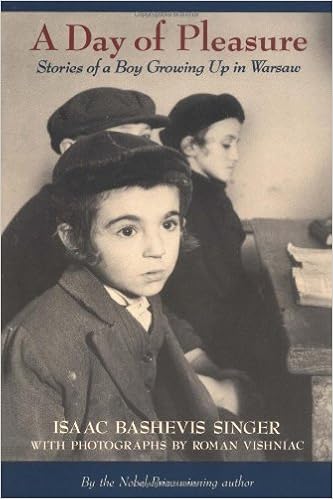
A Day of Pleasure - Book 52
A Day of Pleasure and Other Stories for Children by Isaac Bashevis Singer was a pure pleasure to read. This was a re-read for me. As I read, I recalled the stories I'd first encountered many years ago. Singer wrote in Yiddish and so all these stories have been translated into English, many by him with some other translator. Singer won the Nobel prize for literature in 1978. He wrote many adult novels too but they have many of the same features and same mood as these children's stories.
The first third of the book is actually short chapters of memoirs of Singer's own childhood in the Jewish ghetto of Warsaw, just before and during World War I. His father was a Hasidic rabbi. His world is steeped in the Torah, the Talmud, Jewish neighbors and customs, Jewish folklore, grinding poverty, study and simple pleasures. During World War I, the economy got so bad the family was in danger of starving to death, so they returned to their tiny village Biloray where Singer's grandfather was rabbi.
All these stories have a sweetness to them, yet they are realistic, clear and intelligent. Many have supernatural elements involving witches, house imps (with a name in Yiddish), dybbuks, Elijah visiting to help, angels, miracles, dreams. Many of the stories feature Hanukkah, many feature young innocent love.
The whole book is full of poignancy because all this takes place before the Nazi occupation and the Holocaust. Singer himself immigrated to New York in 1935 because he feared what was happening next door in Germany. And of course, he was right. So a deep sadness fills these stories even as they reflect the innocence of childhood and a basic belief in a God of Creation who gave us this beautiful world. Singer is looking back on a lost world and culture that was brutally obliterated by almost inconceivable evil.
Two thumbs up for this exquisite book! For more book reviews go to Read 52 Books in 52 Weeks.
Classics Club Spin #22
My twenty to choose from:
1) Utopia by St. Thomas More
2) Interior Castle by St. Teresa of Avila
3) The Story of Art by E. H. Gombrich
4) Civilization by Kenneth Clark
5) Out of Africa by Isak Dinesan
6) Vindication of the Rights of Women by Mary Wollstonecraft
7) Margery Kempe
8) Kathleen Norris
9) Kathleen Thomas Norris
10) Wise Blood
11) Things Fall Apart
12) Testament of Youth
13) The Tempest
14) Metamorphosis by Ovid
15) The Faerie Queen
16) Short Stories by Louis Borges
17) Dark Night of the Soul
18) Ascent to Mount Carmel
19) The Moviegoer or some work by Walker Percy
20) Pensees by Pascal
1) Utopia by St. Thomas More
2) Interior Castle by St. Teresa of Avila
3) The Story of Art by E. H. Gombrich
4) Civilization by Kenneth Clark
5) Out of Africa by Isak Dinesan
6) Vindication of the Rights of Women by Mary Wollstonecraft
7) Margery Kempe
8) Kathleen Norris
9) Kathleen Thomas Norris
10) Wise Blood
11) Things Fall Apart
12) Testament of Youth
13) The Tempest
14) Metamorphosis by Ovid
15) The Faerie Queen
16) Short Stories by Louis Borges
17) Dark Night of the Soul
18) Ascent to Mount Carmel
19) The Moviegoer or some work by Walker Percy
20) Pensees by Pascal
Sunday, December 8, 2019
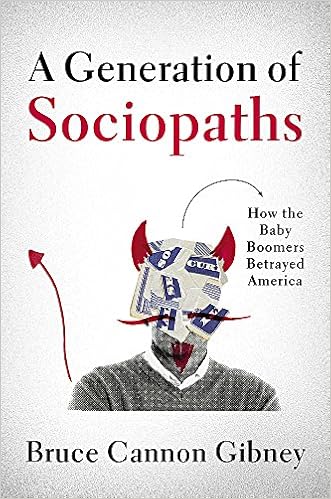
A Generation of Sociopaths - Book 51
A Generation of Sociopaths; How the Baby Boomers Betrayed America by Bruce Cannon Gibney is a take down of that generation (born roughly between 1946 - 1964) whose bad behaviors, cultural influence and government policy mismanaged our country into towering national debt and a whole host of bad outcomes that do not bode well for the next generations. Gibney's thesis is that the boomer generation had more sociopaths than any other and this influenced the way they wielded power once they gained adulthood. Apparently there has been a study (or maybe two) asserting that more sociopaths can be found in this particular generation. Buying into this idea and using it as a filter to analyze all the failed policies this generation seems to have perpetuated, Gibney gives a really sweeping and harsh condemnation of pretty much anything this generation did.
I myself think the baby boomers (and I am one of them) have perpetuated lots of harmful policies and cultural norms. Sociopathy is described in the DSM-V and Gibney takes each characteristic (no empathy, no impulse control, not able to foresee consequences of behavior, manipulative, etc) puts it at the front of a chapter before he launches into a particular dysfunctional law or attitude of the boomers. So for instance he takes on no fault divorce and how the rate of divorce was at an all time high at the height of baby boomer influence. This shows how unstable they are. However, to me a huge blind spot in his book is that he never references abortion in this same light. In fact he asserts that abortion is a moral good. But might it not be pretty obvious that any generation that say, ' my body, my choice' and is willing to snuff out the life of their offspring in utero, probably isn't going to really put their children's needs or desires before their own?
The strongest parts of this book, I thought, were in the author's very detailed analysis of both what caused the national debt to grow to unimaginable proportions and how it really is a shaky, scary situation that no boomer seems to take seriously. He also details all the financial scandals, growing lack of oversight and integrity and loosening of laws to the benefit of the rich and older generation (i.e. the boomers). Gibney really seems to know his economics and finance history. He's a rich venture capitalist himself, who made it big because he was friends with the founder of PayPal. He does seem to me to be balanced in his recounting and analysis. While he is center-left politically, he is pretty even handed in criticized both Republicans and Democrats. It's not so much partisan for him as generational. And he goes on and on about it.
I did agree with much of what this author posited. However, I think he went overboard in too sweeping a way which essentially weakens the force of his argument. He is definitively trying to whip up anger. He must say the word 'sociopath' hundreds of times in this book. At the end of the book, after excoriating the boomers page after page, he says, hey but I don't think we should rise up violently against them. Gee, thanks, Gibney!
I thought the book was weakest when he was trying to explain why the boomers might be sociopaths. Because they bottle fed, listened to Dr. Spock and stopped spanking their children, watched TV and dodged the draft during Vietnam. I honestly thought he was a bit off his rocker when making these arguments, which again, further weakened this book.
Like I said, I actually agree with the author on many points and I truly appreciated his analysis of some of the issues, all the financial stuff, and other issues as well. So in spite of this being a really hard book to read, both because of the detailed financial, tax, economic stuff but also because it was just such a bleak take down of my own generation, I think this is a worthwhile book to read. The guy can really write. He truly has moments of brilliant insight and a stunning turn of phase at times. And he offers practical solutions to some of the corners the baby boomers have painted the nation into.
For more book reviews, go to Read 52 Books in 52 Weeks.
Sunday, November 24, 2019
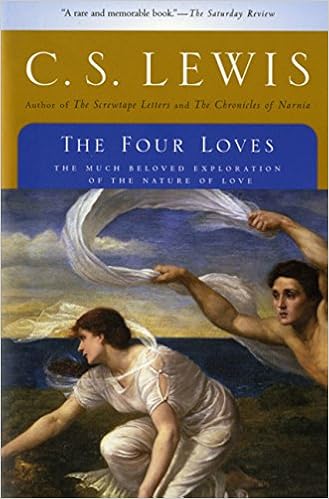
The Four Loves - Book 50
The Four Loves by C. S. Lewis was a reread for me. I first read it about 10 years ago when using the Lightning Lit British Christian authors study guide with my oldest two teens. I remember reading it and being amazed at all the new ideas it presented to me, having never really thought deeply about love! But I didn't actually remember the content much, it turns out. I started this book a few months ago when I believe it was Classical Carousel who hosted a group read. I started it and then somehow it got swept up in a pile of papers I didn't get around to working through until months later (the curse of having TOO much counter space, I have found!!!). So I unearthed again just in time for Non-fiction November.
I enjoyed the first chapter which talks about love in a very philosophical manner as being of two varieties: gift-love and need-love. Lewis then proceeds to discuss the four types of love; these types are based on Ancient Greek categories: affection, friendship, eros and charity. Lewis then examines each type in light of gift-love and need-love. While his analysis was thought-provoking and there is a lot of wisdom in his observations, I was put off quite a bit by his characterizations. Maybe he went on as he did about the 'natural loves' (as opposed to supernatural love - God) in order to emphasize the last love of charity which is of divine origin. First of all I think all love is from God. The 'natural' as well as the supernatural. God created nature and saw it was good. I was not comfortable with Lewis talking trash about affection (which is something that arises from being in a family or just being near someone due to circumstances, say a neighbor or a co-worker), or friendship (which he gives the best characterization to I think because in his own life it had the deepest effect, what with being in World War I which must have been a huge bonding experience with the other soldiers and also being a bachelor for so long in academia. We all know about his regular group of friends that met for years at the Eagle and the Child pub.) With Eros, I just bristled a bit at his long lecture on why we should laugh more about sex. Um, maybe this was an issue back in 1950s but it hardly is now. And then his idea of sex being a pagan sacrament first with sort of a Christian overlay? I honestly didn't understand that. Didn't God create Adam and Eve before the fall? Sex makes us co-creators with God of new children whom He sent his son to suffer and die for in order to redeem. It is thoroughly Christian in my view from the get go, if it was always part of God's plan.
The best chapter was the final one on Charity. It really packs a powerful emotional charge. There are many passages that stand out. I definitely had the least number of quibbles with it. However, I think in many fundamental ways I simply have a different view and experience with love. I would like to read more Catholic approaches to this topic, to see if I jive more with them or if maybe I'm just ignorant (probably!) and need some schooling in the subject!
For more book reviews, go to Read 52 Books in 52 Weeks.
Sunday, November 17, 2019
Eden's Outcasts - Book 49
Eden's Outcasts; the Story of Louisa May Alcott and Her Father by John Matteson was an excellent biography of the author and her remarkable father. I thoroughly enjoyed it. I knew a bit about her life and a bit less about her father but this book remedied that lack; it is an in depth study of both. This book was recommended as the first read in a year long readalong: A Year with Louisa May. I've been wanting to read more by Louisa May Alcott for a while so I am excited by the prospect of reading through much of her work in the course of a year (November 2019 through October 2020). The first actual read by Alcott is in December with Little Women (appropriate for December since the famous first line is about Christmas).
I was only vaguely aware that Bronson Alcott was one of the famous Transcendentalists of Concord, MA. He was a long time friend of Emerson (who was really a good friend and a good man; this book made me want to read more of his work. I only recall reading bits of Emerson in a survey of American Lit way back in high school). He also was friends with Thoreau and Hawthorne. Even though I am a nature lover, I never got on well with Thoreau that much, finding him a bit pompous. But I have come to really love Hawthorne's works.
This book begins with Bronson's youth, then his marriage to Abba May (Marmee!) and the birth of their four daughters. Bronson was a philosopher who pretty much lived in the clouds. He attempted to start a commune called Fruitlands which failed terribly. He went through some really tough times mental health wise. He never was able to earn enough to support his family They lived in real poverty. In fact Emerson helped him out on numerous occasions, financially. Abba had to take in or go out to work and it was a never ending struggle to keep a roof over their heads. They moved frequently.
Alcott treated his kids like a social experiment. He analyzed them continuously. He was an unceasing moralizer. He wanted so much to believe in the goodness and capacity for the divine in mankind that he was forever on the watch for moral failings. Life was one long struggle to sanctify oneself. He kind of was the opposite of some Protestants who think we are nonredeemable sinners who can only be saved by grace. Whereas Alcott was about man constantly monitoring his (and his family's) every thought and emotion as he works to perfect himself. Everyone kept journals as a matter of course which they were all allowed to read, so no privacy there.
While Alcott means well and has some really great points, it took me a long time to like him very much. He did have sincere affection for his wife and daughter but he was always so caught up in his own mind that he couldn't really translate it into actually being much help or comfort. He was a bundle of contradictions. He was a great abolitionist who actually thought blacks were inferior. He was a lifelong vegetarian (even vegan) who was fine with John Brown's murdering people in the name of abolition. He hated commerce and money and yet he charged for his 'conversations;' really his own kind of lecture. He did love children and loved to study and watch how they learned. I do really like some of his educational philosophy.
Louisa May Alcott was the most difficult of his children and he really didn't appreciate her talents until after she came home from being a nurse in the Civil War. She was only there for six weeks yet it really changed her life in an enduring way. She'd finally earned her father's respect (at age 30) and she almost died of typhoid. In fact she went insane for a while from the fever and possibly from the mercury poisoning the doctors gave her in an attempt to heal her. She suffered from that mercury poisoning all her life and it eventually turned her into an invalid who died when she was 54.
Louisa was indelibly tied to her father though. They shared the same birthday and Louisa went into a coma before she could hear of her father's death, dying two days after him. She admired him deeply and he came to really treasure her.
There was a lot to love about the Alcott family. And they were in the thick of a uniquely American blossoming of philosophy and literature. I found it fascinating. Matteson wrote an excellent, balanced and sympathetic biography.
Two thumbs up!
For more book reviews go to Read 52 Books in 52 Weeks.
Sunday, November 3, 2019
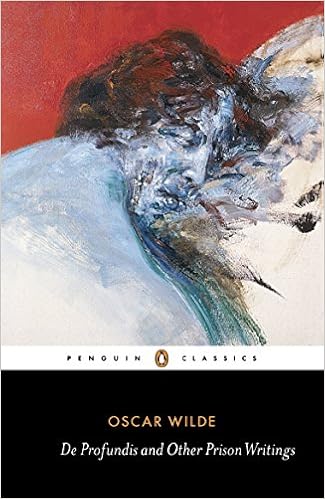
De Profundis - Book 48
![]() |
| I actually read a free kindle version that only had De Profundis and not the other writings. |
De Profundis is really a long letter written to Oscar Wilde's lover, Lord Arthur Douglas. Douglas was the one who precipitated Wilde's trial and imprisonment. There is reason to think he, though 16 years younger than Wilde, influenced Wilde to do really degenerate things. And he sponged off Wilde financially causing his bankruptcy. And yet after Wilde's release from prison when he was living in poverty in exile in Paris, and Douglas came into his inheritance, Douglas would not help Wilde out at all. He completely rejected him. Poor Wilde, Douglas was a scumbag and Wilde's obsession with him is tragically pathetic.
The Latin phrase 'de profundis' means 'out of the depths' and refers to the divine office reading for the dead. Wilde, during his two year imprisonment was full of self-pity even as he strove to overcome his bitterness and make his tragic fall about something higher. It vacillates between noble ideas of art and faith and feeling sorry for himself for being so (in his eyes) unjustly condemned. On the one hand some of his writing absolutely soars like a gorgeously sung aria, but on the other hand, his narcissism bleeds through, his tragic flaw that was Wilde's undoing is there on display quite poignantly.
The saddest thing is that the letter ends on a high note, with Wilde hoping his art will never abandon him and yet, he really was finished. His last few years were spent in poverty and exile, drinking beyond his means, literally begging for money on the streets of Paris. His wife had died. His mother died while he was in prison, her death possibly hastened by his downfall. He was never allowed to see his children again. Though when he cries out about that in De Profundis, I felt angry at him! Because he did not care enough about the children to be faithful to their mother or to even spend time with them. He would go off for months and not bother to even spend Christmas with them some years. He was too busy leading his double life and diddling with teenage prostitutes. I think he liked the romantic idea of childhood, but his narcissism prevented him from any sort of healthy love. He could be kind and charming when in the mood and his sons had that memory of him. His oldest son was killed in World War 1. His youngest though went on to live a long and successful life.
Just as I was reading this book, one of my sisters unearth old footage of my father's Navy squadron from World War II. He was a fighter pilot and participated in both the Iwo Jima and Okinawa battles. He was shot down in one of them, though I don't know which. Luckily he was only in the water a couple of hours before a ship saw him. But when I think of all the sacrifice so many unknown men made, when I think of other prison accounts like St. Paul's or Nelson Mandela's, or someone like Father Walter Ciszek spending decades in a Soviet prison and gulag and how lacking in self pity they were and they were indeed, unjustly imprisoned, Wilde comes off as a real wimp. Poor little rich boy. Today is All Soul's Day though and I find myself praying for Oscar Wilde. He could glimpse the beatific vision, but he was so lost in his own narcissism, he wasted so much. On his death bed, he converted. May he rest in peace!
For more book reviews go to Read 52 Books in 52 Weeks.
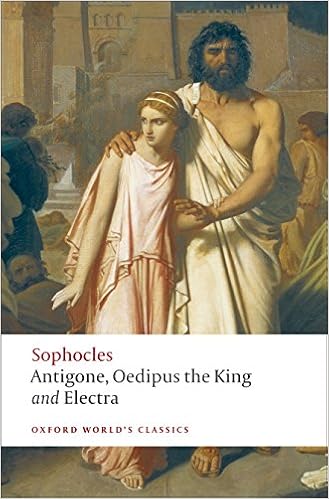
Antigone, Oedipus the King and Electra - Book 47
I read this collection of plays by Sophocles.
Antigone is the first play in this book, though chronologically it takes place after the events of the 2nd play, Oedipus the King. However, apparently Sophocles wrote it first so the Oxford World's Classics ordered them according when Sophocles wrote them and not when they occur in the time line of the trilogy.
Antigone to me is about the fact that natural law is higher in authority than man made law. If the man made law jives with the natural law, that law written on the human heart that people naturally intuit, then the man made law is just. If the man made law contradicts the natural law, then one's allegiance is to the natural law.
Backstory: Oedipus Rex and his wife/mother Jocasta are now dead. Their four adult children live, two men and two young women. The brothers take different sides in a civil war and wind up killing each other on the battlefield. The two sisters, Antigone and Ismene are now bereft of their brothers. Creon their uncle has assumed the throne and he immediately promulgates a law that Polyneices the brother who fought against Thebes, should not be buried according to the rites deemed crucial to entering the underworld. Antigone defies this proclamation and tries to bury her brother anyway. Ismene makes a plea for the authority of Creon, whether right or wrong. Antigone was engaged to be married to Haemon, Creon's son. Creon is insecure in his power and leadership since he has just ascended to the throne so he is fairly paranoid that people will defy him. He first hears Antigone's defiant statement of guilt for doing the forbidden act of burying her brother. Then he hears his son, who starts off being obedient and respectful but gets so incensed at his father's pigheadedness, he winds up breaking with him. Then the blind seer Tieresias comes in and also gives a pretty blunt warning. Even though Creon doesn't want to lose face in front of the prophet, as soon as he is gone, he turns to the chorus and admits that now he's frightened and he better undo what he's done. But alas too late. He had sealed Antigone up in a cave to starve to death. When he hurries to release her after his change of heart, he finds a tragedy. Antigone has hung herself. And his son Haemon is weeping over her body. In a rage at his father he lunges at him and then realizing what he's done, he turns his sword on himself and kills himself right in front of Creon. Creon's wife Eurydice hears of the suicide and runs into her palace to kill herself. Poor Creon.
Why did the translator sometimes use God with a capital G and sometimes use god? I found that odd.
Oedipus the King
Problems I have with Oedipus. First of all he shouldn't have murdered anyone on the road from road rage! Doesn't this show a bad side to his character? Why isn't this enlarged upon? It's the idea that he accidentally killed his father, which he was actively trying to avoid doing, which seems to be a greater sin than just losing his temper and murdering 5 people on the road one day. This strikes me as off!!! Also, didn't he notice that Jocasta was old enough to be his mother? I mean I think that if I had been warned that I might marry my mother, even if I assumed (from incomplete knowledge) that this wasn't my mother, I'd have sort of categorically refused to marry anyone who was that old!
I really think that what is missing here is the idea of sin. Oedipus had no intent to do the things he was actually fated to do. So he is innocent in that 1) it was fate, not him 2) he tried avoid all this happening But still even though he isn't at fault (except for killing the man on the road who turned out to be Lias his father) he is condemned and shamed, etc. I get that the ironic twists and turns are what the play is about, but this lack of intent bugs me.
Electra
I had not read this play before so I didn't really know the plot. However, I was a little bit familiar with the murder of Agamemnon when he returned from Troy by his wife and lover. I don't think I really knew about Orestes and Electra.
It's all about vengeance. They kind of leave the sister of Electra hanging. She serves as the same type of foil to Antigone's sister had served; the voice of prudence and conformity. Also this features a sister's issue with a brother! Electra wants her exiled brother Orestes to come back and kill their mother and lover who had murdered Agamemnon. The irony that jumped out at me was Clytemnestra's excuse for killing Agamemnon was due to the fact that he was forced to sacrifice a daughter to the gods to save many. But she doesn't care about any of her other children. Another bit of irony was that Electra who has been obsessively holding on to the idea that Orestes will come back and avenge their father's murder, but then doesn't recognize him. And she doesn't recognize the tutor she gave him to as a baby to smuggle out.
And again, the weird reference to God, ex. 'I pray to God', but then gods and names of specific gods. Was this an example of the translator christianizing the text?
I am glad I read this! This fulfilled my Classic Club spin. Hooray! Slowly working through that list of 50 classics!
For more book reviews, go to Read 52 Books in 52 Weeks.
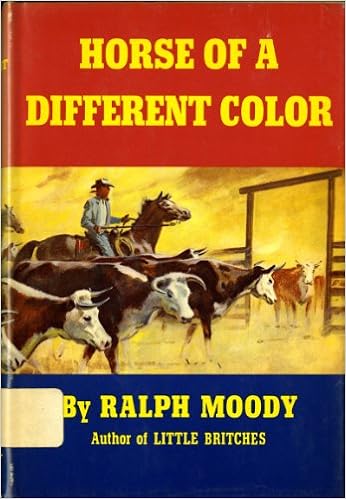
A Horse of a Different Color - Book 46
The final book in the Little Britches series, Ralph Moody continues his rags to riches (well solvency, not quite riches) ups and downs as he tries to gt himself out of debt while becoming a drover and meat processing business, first to the railroad work crews and then to local farmers.
This book really continues the story of The Dry Divide in that it takes place in the same area of Cedar Bluffs. He wound up there after getting kicked off a train he was hitching a ride on completely broke but hoping to meet up with friends in Denver. However, he was tossed off the train and soon became a farm hand. I won't recount what happened in The Dry Divide except that he wound up going into business as a harvester and wheat hauler. However, he was up to his ears in debt and dealing with the local bankers in mortgaged property and stock. Ralph (called Bud) has an indefatigable entrepreneurial spirit. He tries to go into business with Bob who is an irresponsible braggart. This doesn't lead to good things. Eventually he gets sued by the bank and must declare bankruptcy. Then Ralph must come up with a way to start all over again. And he does!
This book, as is typical in this series, is full of technical details of how Bud financed everything, how he set up his business, how the stock market in 1920 was doing in terms of livestock, how he dealt with the railroad and got the contract that pulled him out. A lot of times the technical detail just went over my head, since these things are so unfamiliar to me. I do think these books could have used some editing. However, at the end of the book everything gets tied up neatly and it ends on a high and hopeful note.
Many of the books have a little romance thing going on between Bud and a girl. These never move much and they don't continue from book to book. His main helper from The Dry Divide simply disappears in this book. I thought he was going to wind up marrying her. Instead we suddenly hear about a sweetheart from back home in Medford MA. So that aspect of this series was just a little odd for me.
This series is often compared to the Little House series by Laura Ingalls Wilder. Little Britches in the masculine counterpart, except a couple decades later in time. However, I think the Little House books are better written. Little Britches though is a very interesting series and I'm glad I read it. Even though all the technical details of everything from ranching, farming, wheat hauling, butchering, stock market and financing are out of my ken, I appreciated how much real history they conveyed. I feel like I know a lot more about the nitty gritty details of managing life back in the day. So that information is highly valuable stuff.
All in all, I really enjoyed this series of books. For more book reviews go to Read 52 Books in 52 Weeks.
Sunday, October 27, 2019
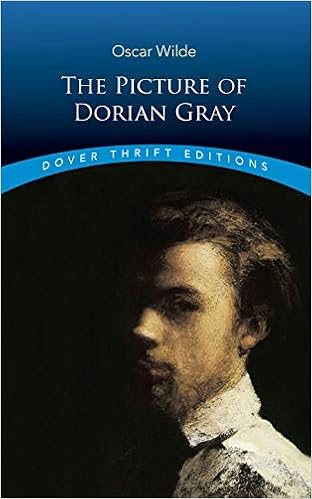
The Picture of Dorian Gray - Book 45
I read this book as part of the booktuber world's Victober, when you read lots of Victorian writing during October. I had actually read this book back a long, long time ago but had been wanting to reread it anyway, so Victober provided a good excuse.
The Picture of Dorian Gray by Oscar Wilde is a richly written, clever and well paced novel about three friends, Dorian Gray, a young,handsome innocent, Basil Hallwood, a painter, and Lord Henry Wooten, who basically plays a debonair Mephistopheles who lures Dorian into a life of evil. Lord Henry is extremely witty and always turns everything on its head, morally speaking, through his entertaining play with paradoxes. He confuses most people who laugh at him and consider him a good guest at a dinner party, but to impressionable Dorian he is wise and wonderful. Dorian falls under his spell. Lord Wooten grooms him and slowly seduces him into a life that thinks only of pursuing pleasure. We then witness Dorian sinking further and further into a life of selfishness and sin.
Wilde's own life is reflected in this book. Both Dorian Gray and Lord Wooten portray aspects of things characteristic of Wilde's own trajectory towards a sordid end. Dorian Gray has been influenced by Lord Wooten and by a book that Wooten gives him. Wilde had also been influenced by certain literary celebrities in the decadence movement of the Fin de Siecle era. The book that had so much further influence on Wilde was by a Frenchman Huymans, who wrote A Rebours, which basically touted that living a life of pleasure and sensation was the only way to live a life of beauty.
Wilde is also Wooten though as well. Wilde loved to groom and collect beautiful young adoring men around him to worship his wit and style. Wootens clever party repartee directly echoes Wilde's ability to be brilliantly witty.
The whole story is a morality tale that pretty much parallels Wilde's own life. He sort of predicts his own end. Dorian Gray, his conscience numbed by Wooten's influence and by years of doing selfish, sordid things, begins to realize that this is the path to ugliness and not beauty. He tries to turn his life around but he is so steeped in his own narcissism, he can't really do it. That part really reminded me of the Flannery O'Conner short story A Good Man Is Hard To Find, in that just as a character thinks they realize the true nature of evil, their completely inadequate grasp knocks them dead.
Wilde was a gifted author. His prose is gorgeous and flows like honey and is smooth as silk. But ultimately it is about bored rich people's self-indulgence that spread harm and grief to many. Poor Oscar Wilde, he gave us a lot but he has a lot to answer for as well.
In spite of the troubling nature of this book, there's a reason it is so well respected. It is a morality tale that has so many different levels to it, one could read it over and over and discover more nuance.
For more book reviews, go to Read 52 Books in 52 Weeks.
Sunday, October 20, 2019
Callista - Book 44
I stumbled upon this book while learning more about St. John Henry Newman who was canonized on October 13th (last Sunday). I didn't know he had written novels! This one was published in 1855 and was actually well received. He's fallen out of favor now, probably due to his heavily religious content.
St. John Henry Newman was a well respected Anglican priest and theologian who lead the Oxford Movement, a movement that wanted Anglicanism to grew closer to its Christian roots. Newman was an expert on the early church fathers. One famous quote from him was "To be steeped in history is to cease to be protestant." He swam the Tiber and became Catholic causing quite the stir. He became quite influential in the Catholic church as well, though for a while he was kind of left in obscurity until his new church fellows grew to trust him and recognize his genius. Many people say he is the greatest theologian since Aquinas.
Callista is set in the 3rd century near Carthage, but out in the boonies where Christianity has sort of faded for the most part due to early times of persecution. The persecutions were fairly sporadic and had much to do with who the emperor (and if he had an ax to grind against the Christians) and also on local politics and power struggles.
The main characters are Agellius, a young man who was baptized as a young child but has had not support and knows of no other Christians now that his father has passed away. His brother who also had been baptized has come under the influence of their evil step mother. His uncle, Jocundus, is a kind man who wants to do right but is very much of the Roman mindset and is very prejudiced against the Christians. Jocundus employs two Greeks, Aristo and Callista. Callista is beautiful, intelligent, spunky, clever, affectionate, witty. Agellius wants to marry her and Jocundus thinks this will help steer Agellius further from Christianity so he facilitates the match. But Callista has a mind of her own.
The story is set during the Plague of Cyprian. A terrible plague of locusts that brought on much pestilence and death hit that area while Cyprian was bishop. The people blamed the Christians and went on a rampage of persecution. Callista gets caught up in this.
The dialogue is too formal and too expository to be natural. The language is erudite. Many Latin references throughout. However the characters are surprisingly well developed, the dilemma is compellingly developed, the action keeps things moving and the theological conclusions are moving and inspiring.
I am so glad I read this novel. It is part of my #Victober line up. I am enjoying becoming more familiar with the wonderful mind and soul of St. John Henry Newman.
For more book reviews go to Read 52 Books in 52 Weeks.
Sunday, October 13, 2019
The Unmasking of Oscar Wilde - Book 43
I got this book by Joseph Pearce on my kindle to go along with my 'Victober" read of The Picture of Dorian Gray. Victober is a booktuber thing where people read lots of Victorian literature in October. I'm not doing that much because I'm too caught up in other things, but I thought I could re-read The Picture of Dorian Gray which I've had in mind to do for a while now. I had to get the book on hold at the library because for some reason I wanted to read it via a real book instead of via kindle or audio. So while I waited I got The Unmasking of Oscar Wilde.
Poor Oscar Wilde. He really was of two minds and he never successfully (understatement!) integrated them. Most of his writing has a high moral tone, fairy tales full of wisdom, plays that explore right and wrong and yet, he at the same time, was living a life that descended more and more into reckless depravity. Until he was finally caught and ruined.
Wilde was a brilliant scholar and literary man. His first written work was in poetry and art criticism. His poetry, while popular, was not particularly original. He really gained celebrity via his witty bon mots and his outlandish, dandy style of dressing. He became the guest to have when high society was having dinner parties. He worked hard on this persona. He loved attention and notoriety. Before he ever wrote the works that he is really known for now, he was asked to give a speaking tour of the USA which he did. He traveled all over the U.S. as well as up into Canada for over a year. In fact his first play debuted in New York, however, it fell flat. He hadn't gotten into the play writing groove yet.
Weirdly, Wilde's descent into decadence began on his honeymoon. He had already been influenced by the likes of Baudelaire and now with his brand new, innocent and adoring wife, he read a book by a French author, Huysmans, who led the decadent movement in France. This book entitled A Rebours (Against the Grain) advocated for abandoning moral principles in pursuit of sensation and pleasure. This book inspired The Picture of Dorian Gray. After this Wilde seems to have had his first homosexual encounter with a Canadian, Robert Ross, a man who became an English publisher (I think, if I am recalling correctly). This man actually became a life long friend and was at Wilde's side when he died. After this introduction into this lifestyle, Wilde became hooked and by degrees became more and more addicted to sex. He befriended a handsome young man named John Gray who became the model for Dorian Gray. His affair with Gray lasted a while but then Gray began to become unhappy and disillusioned. Wilde began to neglect his wife and two sons. He loved gathering disciples of young men around him who looked up to him as their mentor in all matters artistic and 'edgy.' During this time though, strangely, Wilde, was writing very moralistic stuff that people couldn't really understand because it contrasted so with his lifestyle. The Picture of Dorian Gray, The Selfish Giant, The Happy Prince, Lady Windemere's Fan, A Woman of No Importance and much poetry were rife with Christian imagery and moral lessons. He finally was introduced to Lord Alfred Douglas who was Wilde's undoing. A very handsome and unstable homosexual, Douglas became Wilde's obsession. They would solicit young boys as prostitutes, often sharing them. They traveled to Algeria to partake of the 'exotic' boys there. Wilde was becoming more and more reckless and degenerate.
Douglas' father, Marquess Queensbury, was a volatile man who grew to hate the relationship between Wilde and Douglas. He and Douglas' mother saw Wilde as corrupting Alfred, whereas Joseph Pearce really wonders if it wasn't more the other way around. Father and son hated each other and came to blows legally when Wilde was urged by Douglas to sue the Marquess Queensbury for libel. This was not smart as the Marquess had plenty of evidence of Wilde's soliciting young boys. Wilde lost the suit and then was arrested and tried, found guilty and sentenced to two years hard labor. May I just interject here that in our day and age which is seen as less prudish than the Victorian Era, Wilde would have gotten a much harsher sentence? He was kind of like the Jeffrey Epstein of his day, except with boys. Now we realize just how much harm seducing young men does to them. I wonder and grieve for the male prostitutes and young boys Wilde and his set preyed upon. What damage they must have done!
Wilde suffered much during his imprisonment. He read lots of Christian texts and Dante was the most comforting to him. He wrote his great opus De Profundis which was a long letter to Douglas explaining everything and renouncing him. This was published after Wilde's death.
All his life Wilde had been intrigued by Catholicism. He had flirted with it heavily while at Oxford. But his father threatened him with disinheritance and in fact an older half brother who pre-deceased Wilde, basically cut him out of his will because he was afraid he'd become Catholic. So Wilde drifted away from Catholicism, even though its ethos and symbolism populated his writing. He turned instead into a pathological sex addict bringing ruin and heartbreak to his loving wife and two children.
After prison, Wilde wound up living in France where he was a social pariah. Some friends still were loyal but he had a lonely existence where he drank too much and wound up occasionally soliciting male prostitutes. He literally was reduced to begging because he could not stay within his limited income. His wife died, he never saw his children again. and then all his decadent literary circle of friends began to die. John Gray who had been the model for Dorian Gray became a priest! The man who wrote the book that inspired Wilde to indulge in decadence, converted to Catholicism! In fact all those fin de seicle decadent artistes, like Aubrey Beardsley converted and then died tragically. Wilde's own mother, whom he always loved, died a broken woman while he was in prison.
Wilde didn't last long as a has-been. His health broke down (some say syphilis, a theory Pearce rejects, and others say meningitis). He lingered for a bit but then fearing death he summoned his old friend Robert Ross, who had also become Catholic(!) to send for a priest and at the last minute, actually on his death bed, he converted to Catholicism finally.
This book disturbed me. I can't say it was a pleasant read. It is hard to read about a person embracing depravity compulsively when he ought to have known better. His selfish obsession and narcissism wreaked pain on all close to him. He was a very bad man who so obviously could have been a good man. All his life he struggled with his contradictory character. And yet people forgave him. There was something likable about him. He was incredibly witty and entertaining and he could tell a good story. He was a very complex, brilliant, selfish, confused and witty man. The best thing about Wilde was his artistic work and at least he left that to the world.
For more book reviews go to Read 52 Books in 52 Weeks.
Sunday, October 6, 2019
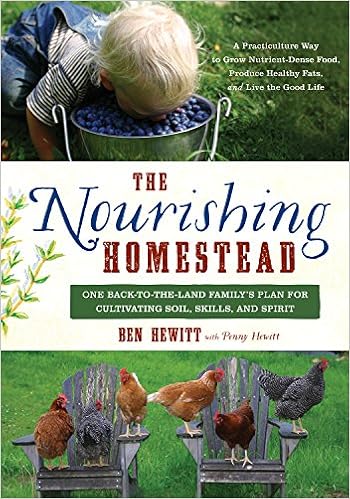
The Nourishing Homestead - Book 42
The Nourishing Homestead: One Back-To-The-Land Family's Plan for Cultivating Soil, Skills and Spirit by Ben Hewitt
This was a really interesting read. My daydream is to be a homesteader which will never happen as I am too old and so coming to it too late. But I deeply admire those who turn their back on the shallow, consumeristic, rat race world and take the path less traveled (in modern times; it used to be the more traditional way of life!). This book is part memoir and part practical guide. Ben Hewitt and his wife Penney have been homesteading for 18 years on a 40 acre farm in Vermont. They have two boys they are raising on their farm (and unschooling!). He traces their beginnings and their initial vision through how it is has evolved and shifted. They started out wanting a simple, counter culture life who didn't really know what they were doing, but have found their methods and vision have changed over the years. They have moved to a more permaculture, regenerative style of agriculture with a focus on soil health and perennial planting. When they started they were both vegetarians but now raise and harvest their own meat. For many years they were entirely off grid until they realized they could actually be a bit more self-sufficient if they could use a little bit of electricity from the grid (with back ups!). However compared to the average household in America, they use an absolute pittance because they only use it in areas where it is absolutely necessary. They went from being those who just didn't 'do' guns to gun owners who see them as necessary to their homestead.
I enjoyed reading about the evolution of their homestead and the principles they embrace and want to live out in their lives. Hewitt doesn't dismiss the physical labor aspect of it, how much is trial and error, how little disposable income they have and how finances are always looming as a consideration. But he wouldn't trade it for all the world. He makes some income writing and otherwise they are mostly self sufficient. It seems to be a deeply satisfying, family-centered, nourishing and beautiful way to live.
After introducing us to their story and their philosophy of life, Hewitt gets practical. The various chapters cover homestead design, growing nutrient dense food, soil science, raising healthy livestock, animal slaughter and processing, infrastructure, skills and tools, dealing with financial limitations, and finally raising children on a homestead. The chapter on skills and tools I found especially interesting. He talks about learning to use a chain saw, how they got and use their tractor, etc. Just lots of insider tips on how to manage things. I read this book on my Kindle but I think if I really needed to use it as a reference if I ever did get a homestead, I'd want it in book form.
If you like reading about life in the country, this book is for you! For more book reviews go to Read 52 Books in 52 Weeks.
This was a really interesting read. My daydream is to be a homesteader which will never happen as I am too old and so coming to it too late. But I deeply admire those who turn their back on the shallow, consumeristic, rat race world and take the path less traveled (in modern times; it used to be the more traditional way of life!). This book is part memoir and part practical guide. Ben Hewitt and his wife Penney have been homesteading for 18 years on a 40 acre farm in Vermont. They have two boys they are raising on their farm (and unschooling!). He traces their beginnings and their initial vision through how it is has evolved and shifted. They started out wanting a simple, counter culture life who didn't really know what they were doing, but have found their methods and vision have changed over the years. They have moved to a more permaculture, regenerative style of agriculture with a focus on soil health and perennial planting. When they started they were both vegetarians but now raise and harvest their own meat. For many years they were entirely off grid until they realized they could actually be a bit more self-sufficient if they could use a little bit of electricity from the grid (with back ups!). However compared to the average household in America, they use an absolute pittance because they only use it in areas where it is absolutely necessary. They went from being those who just didn't 'do' guns to gun owners who see them as necessary to their homestead.
I enjoyed reading about the evolution of their homestead and the principles they embrace and want to live out in their lives. Hewitt doesn't dismiss the physical labor aspect of it, how much is trial and error, how little disposable income they have and how finances are always looming as a consideration. But he wouldn't trade it for all the world. He makes some income writing and otherwise they are mostly self sufficient. It seems to be a deeply satisfying, family-centered, nourishing and beautiful way to live.
After introducing us to their story and their philosophy of life, Hewitt gets practical. The various chapters cover homestead design, growing nutrient dense food, soil science, raising healthy livestock, animal slaughter and processing, infrastructure, skills and tools, dealing with financial limitations, and finally raising children on a homestead. The chapter on skills and tools I found especially interesting. He talks about learning to use a chain saw, how they got and use their tractor, etc. Just lots of insider tips on how to manage things. I read this book on my Kindle but I think if I really needed to use it as a reference if I ever did get a homestead, I'd want it in book form.
If you like reading about life in the country, this book is for you! For more book reviews go to Read 52 Books in 52 Weeks.
Tuesday, September 24, 2019
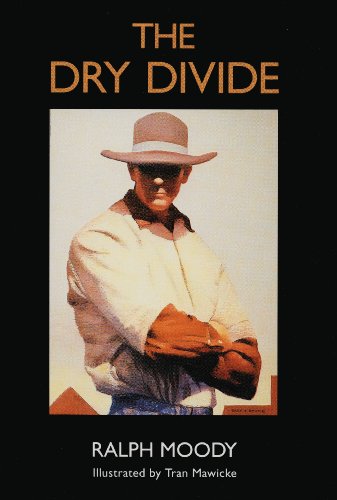
The Dry Divide - Book 41
Anyway, this is the book in which Ralph, now called Bud, finally makes it. At the beginning he is destitute. He hopped a freight train with only a dime in his pocket, trying to get to friends in Littleton, CO for the 4th of July rodeo, but the train conductors discover him and boot him off in a tiny railroad depot on the border of Kansas and Nebraska. Things are desperate.
Luckily almost at once he gets swept up in a crew to work on wheat harvesting with a bunch of other down on their luck men. The farmer's name is Hudson and Bud and the others soon discover that Hudson is a brutal man on the verge of insanity. Everyone's terrified of him, including his pregnant wife, 5 children and his younger sister in law, Judy, who helps out.
Judy and Ralph are drawn to each other and July confesses to him that Hudson is trying to harvest this failing farm he's received from the bank which has pretty much a lien on everything he owns. Bud realizes the likelihood of actually getting paid for any work is nil, especially since Hudson is crazy and is going about the work in a driven, destructive way that will guarantee failure. Because he's so violent no one can give him advice. He hates Bud who stands up to him. All the men are about to flee (two of them do) so Bud gets the idea to go talk to the banker in town and get the lien put in his own name. He thinks he can get the men to join him in harvesting the wheat, enough that the banker would at least get some money back and the men would get some pay.
But just as Bud is trying to put this dangerous plan into action (Hudson seems likely to try to kill him), Hudson beats his horse (he's extremely cruel to the animals) so much the horse falls on him and crushes him to death. Everyone breathes a sigh of relief, including his poor stunned wife. So now Bud takes over the operation. The men, all colorful characters, and Judy, become a team. When Bud realizes that they actually will be getting some money for the harvest and that the banker trusts him, he comes up with another scheme, to becomes a hauling business for the other farms to get their wheat to the silo at the train depot.
Much of the book is highly technical. The various deals with the bankers, how they budgeted things out, how they acquired horses and trained them, how they finesse their operation so as get enough wagons, how they got contracts with the neighboring farmers, etc. Bud, even though the youngest, is the brains behind it all. He and Judy are the main team, Judy has an old car, knows the local people and the area and is the bookkeeper. But Bud has to deal with the quirks of the men in his team. Doc is a colorful medicine salesmen who tends to go on benders whenever he gets some money. Paco doesn't speak English but is great with horses, two Swedish brothers who don't talk much turn out to be blacksmiths who are extremely helpful in the enterprise, there's an old man from Ireland who can't help much but needs employment anyway, and another guy named Bill who turns out to be a steady worker. Bud figures out the best way to use each man.
Through much backbreaking work and lots of planning, fast talking and tirelessly pushing things along, Bud makes it work. If Bud and Judy aren't married in the next and last book in the series, I'm going to be really mad.
Even though so much of this was too detailed and technical about things I have no clue about, like training horses to drive in and out of gulches, and the design of the machinery for threshing wheat, etc I really think that this book might be really valuable in that it gives us a peek into how people did things back in the day. All the skills they needed just to get by is amazing. We've lost all that. They had so much knowledge about weather, farmings and animals that the regular person today knows nothing about. How the bankers and small town economy worked and just a myriad of details in this book evoke a forgotten time.
I am really enjoying this series, as I've said again and again! So glad I finally got around to reading it. For more book reviews go to Read 52 Books in 52 Weeks.
Sunday, September 22, 2019
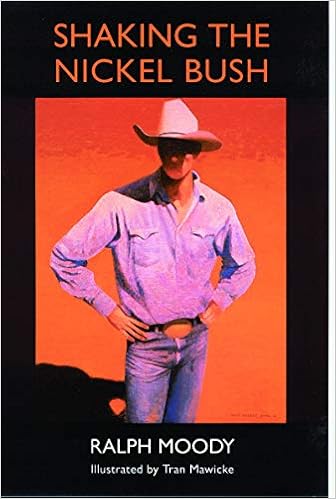
Shaking the Nickel Bush - Book 40
Shaking the Nickel Bush is the next novel in the Little Britches series. It's quite a story and while I feel some of the novels in this series are a bit too drawn out in relating what's going on, this one didn't have that feel. This is dramatic story of a 19 year old young man who is in dire straits and struggles, using all the ingenuity he has to try to pull himself up by his own boot straps. It's arduous, and must have been scary. But Ralph always recounts his adventures in a stoical way. The book starts with a diagnosis of diabetes which in 1918 was pretty much a death sentence and it ends with hopping a freight car with bullets whistling past his ears.
Ralph didn't get into the military for World War 1 but he wanted to be part of the war effort so he leaves MA and goes to Delaware to work at a munitions plant. While there he meets a talented sculptor and informally apprentices with him. This talent is crucial for the second half of Shaking the Nickel Bush.
But Ralph keeps getting skinnier and skinnier and something is not right. He winds up in a hospital in Boston where they diagnose him with diabetes. This is devastating but his family physician isn't 100% convinced by the specialists. He advises Ralph to go west, maybe to CO or better yet, AZ where he can be in a warm climate, soaking up lots of sunshine. He knows Ralph loves horses, so he advises him to go live a outdoors life doing something he loves. He does put him on a strict diet avoiding starches and sugar except for 'gluten' bread. This was some special bread which I've tried to research but can't. But mostly he's to eat lots of chicken and fish and fresh vegetables. The diet is very hard to follow in the land of corn bread, biscuits and beans.
When Ralph arrives out west he realizes three things: he didn't bring enough money, there aren't enough jobs and he is rusty anyway in working with cattle since he hasn't really done it since he was 10. He can't get a job and for a while is reduced to hobo status. But he hears about a job being a stunt cowboy for the silent westerns Hollywood is churning out. They film in AZ which just became a state because they don't have to follow the animal welfare laws of CA. The stunt riding is horribly dangerous to both the men and the horses. They use completely destitute drunks mainly as the men. Ralph however is in luck. The guy running the operation knows some folks that Ralph knew back in CO. They strike up a friendship. This allows Ralph, who had been a trick horse rider in his childhood, to observe the safest ways to do stunts on horses. He winds up being able to make lots of money in just a few days and he is one of the few that makes it out of there without any broken bones or permanent damage.
Now he's got money. He meets up with another down on his luck young man, Lonnie. They team up in a hilarious but also pathetic way. Ralph thinks he is going to die in six months anyway and his biggest concern is getting money back to his mother until his younger brother finishes an apprenticeship and can begin to earn money for the family. He and Lonnie get the idea of buying an old car and driving the back roads of Arizona and the adjacent states to hire out as cowhands. But the car eats up all their money and they can't get far without it breaking down. Back to impoverishment.
During his down times, Ralph likes to sculpt horses. He gets the bright idea of going into these small towns and targeting the local bankers to make busts of them. Word gets around and he and Lonnie (though Lonnie never does much except sponge off Ralph) become the Cowboy Artists of the West. Ralph works hard to drum up business and spends lots of time sculpting. He gets some real money saved up. He and Lonnie's plan are to separate just before the 4th of July. Ralph plans to go back to Littleton, CO for the 4th of July rodeo. Lonnie is heading home to Wyoming. But Lonnie has become a real problem. He is an immature, impulsive kid who likes to blow through Ralph's money. Ralph hides his money but he's too clever by half and things don't end well. At the end, Ralph is destitute once again.
I am really enjoying this whole series, but I think this particular story might be my favorite.
For more book reviews, go to Read 52 Books in 52 Weeks.
Sunday, September 15, 2019
The Three Taps - Book 39
![]() |
| Somebody needs to republish this book! |
The Three Taps is a mystery novel published in 1927 by Father Ronald Knox. He wrote several popular mysteries back in the day and even was included in some collaborative detective novels written by many popular authors at the time, including Agatha Christie and Dorothy L. Sayers.
The Three Taps is oop except you can get in on Kindle. But if you want a real book, you have to buy it used somewhere. This mystery introduced Father Knox's recurring detective, Miles Bredon of the Indescribable Insurance Company. In this case a wealthy man name Mottram dies at an inn out in the country where he liked to stay on fishing holidays. The man died of asphyxiation from a gas tap left on in his room. Suicide by gas, or accidental death because of gas had become a trope. I didn't really understand everything about the three taps in the room and quite how they worked. Another trope is the locked room mystery. The room was locked so it must be a suicide except somehow the tap got turned off in the locked room, yet the man still died? Neither suicide nor murder seem to fit. And with each uncovered clue, things get even murkier.
Converging at this Inn is an old war colleague of Miles', now Scotland Yard detective, Leyland (can't remember his first name). Miles wants to find the death a suicide so his company doesn't have to pay out, but Leyland thinks it's a murder. We also get to know Miles' wife Angela. Miles and Angela have lots of witty repartee. Angela is a hoot. We also have another witty gentleman in Mr. Pulteney, an older man who frequently stays at the Inn to fish in the river gorge nearby and knew Mottram. And we have the two main suspects, Mottram's alienated nephew who runs a shop in the town and Mottran's secretary, Brinkman.
Lots of twists and turns and very British all around. An enjoyable mystery with lots of clever charm.
For more book reviews go to Read 52 Books in 52 Weeks.
Sunday, September 1, 2019
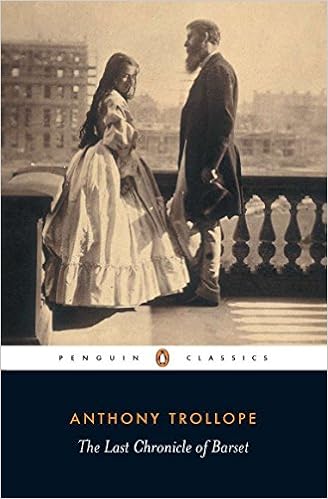
The Last Chronicle of Barset - Book 38
This book is so good! This is the sixth and final novel in the Chronicles of Barchester series by Anthony Trollope. The novels weave a colorful, rich tapestry about the lives of many of the inhabitants of Barsetshire and their many loves, heartaches, escapades, trials and triumphs. This last book in the series ties everything up bringing in characters from every one of the other novels.
There were so many themes and story lines going on, I started cataloging them.
Marriages:
Bishop and Mrs. Proudie
Archdeacon Grantly and Susan Grantly
Rev. Josiah Crawley and Mrs. Crawley
Dobbs Broughton and Maria (Clutterbuck) Broughton
Mrs. Proudie is a virago and domineers her husband in a terrible way that leads to ruin. Both Mrs. Grantly and Mrs. Crawley know how to deal with their eccentric, prickly husbands who are both deeply flawed and yet lovable. Both women are wise and honest. They know when to speak and when to remain silent. Their loyalty is unwavering. Mrs. Broughton is a shallow thing who married for money it turns out her husband didn't have. She has no control or even a real relationship with her husband, two utterly vapid and selfish people.
Courtships:
Johnny Eames and Lily Dale
Major Grantly and Grace Crawley
Johnny Eames and Madalina Demolines
Conway Dalrymple and Clara Van Siever
Grace Crawley is the lovely eldest daughter of Rev. Josiah Crawley and his wife. Rev. Crawley being a great scholar, had educated her highly (homeschooling!). She takes the best from both her parents' characters. Major Grantly has a lot of hurdles put in his way just has he has fallen in love with Grace and plans to ask her to marry him. The difficulties make him even more determined to marry her. Conway Dalrymple and Clara Van Siever are a rather funny side story kind of thrown into the novel for good measure. Poor Johnny Eames still loves Lily Dale and he longs to marry her and is always crushed when she rejects him, but he manages to stave off boredom of London living by carrying on flirtations that almost but don't quite get him into desperate scrapes. So he is faithful in his way but it is a weakness in his character. But he's a good foil to Adolphus Crosbie who loses his flirting game and will suffer all his life for his poor judgment.
Other relationships:
Archdeacon Grantly and Major Grantly - there is conflict between the father and son. Archdeacon Grantly doesn't want his son to marry the daughter of a poor curate who has been accused of stealing. But Major Grantly is determined to marry Grace.
Mr. Harding and his daughters and granddaughter, Posy - Dear, dear Mr. Harding is here in the novel largely in the background but he is as loving and simple as ever.
Dr. Arabin and Mr. Crawley - the friendship between Arabin and Crawley is a complicated one, mostly because Crawley hates that Arabin is rich and he isn't. He was competetive with Arabin when they were at school together and he was the better scholar but now Arabin has money and Crawley must beg him for money.
Mr. Robarts and Mr. Crawley - Poor Mr. Robarts, he has the best of hearts but he can never best Crawley in an argument. Yet, he sees what is good in the man and genuinely pities him.
Ironically named hero:
Dr. Tempest - the most even-handed, fair, steady, good but exacting character!
Delightful new hero:
Mr. Thomas Toogood - a lawyer who is hero!!! Another Atticus Finch! Well not quite. But Mr. Toogood finds out that his wife's distant cousin, Mr. Crawley is trouble with the law and resolves to help the man out, no matter the sacrifices he must make. He is the cleverest for he is the first to realize what probably happened and he pursues the line of inquiry until he's tied up the case.
Most tragic figure:
Dr. Proudie - poor thing, such a weak man who has been browbeaten and domineered over by his ruthless and manipulative wife. But still, she's a more complex figure at the end of the story. Her flaws were great and for all her ambition, she is a failure.
Adolphus Crosbie runs a close second. His stupid marriage has ruined him. Good!
Weird thing that kept bothering me:
Why does Trollope never mention people like Mr. Harding and Eleanor and Susan's mother? Same with the Archdeacon, he only remembers his father and not his mother. She's never even thought of.
Major Grantly just lost his brand new wife in childbirth. Now it's 3 years later and he's head over heels in love with Grace Crawley. No one ever, ever speaks of his first wife!
***************
The Last Chronicle of Barset was an excellent ending to a wonderful series.
I absolutely loved reading the Chronicles of Barchester and I highly recommend them. For more book reviews, go to Read 52 Books in 52 Weeks.
Monday, August 19, 2019
The Fields of Home - Book 37
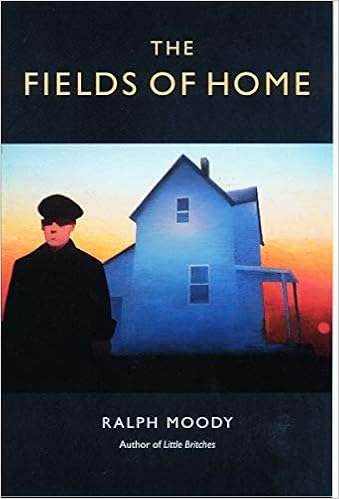
![]() |
| Again, this cover just doesn't fit. Who is that man? He's too young to be grandfather and too old to be Ralphie! |
The next installment in the Little Britches series, The Fields of Home, recounts Ralph's time working on his grandfather's farm in Maine. Ralph's family had to move back to Massachusetts from Colorado. The previous book, Mary Emma & Company, recounts their first year trying to adjust to city life. Ralph works hard to help support his family. But he keeps getting into trouble. Life in Medford, MA has a lot more rules to follow than Littleton, CO. So to keep himself out of trouble, Ralph is sent to live with his grandfather.
Only grandfather is not easy to live with! He is a cantankerous old man, who yells and criticizes before he thinks. He's got a huge chip on his shoulder and he tends to drive everyone he loves away from him. Ralph can't do anything right in his grandfather's eyes and he chaffs under his authority. One good thing that has happened to grandfather is that he has finally gotten a good housekeeper to help him, Millie, who is as prickly and grumpy as grandfather, but a hard worker and a good cook.
The farm was inherited by grandfather from his father, who established it before even the founding of the U.S. Ralph's great grandfather didn't even beget grandfather until he was 72. Grandfather has lived his whole life under the shadow of his own father's legendary toughness. Even now in old age, he wants nothing but to please his father by leaving the farm in good shape. But grandfather has suffered from malaria since he fought in the Civil War (he was at Gettysburg). His children have up and moved away, his wife has passed, he can't get along with his brother Uncle Levi and his barn has burned down. Nature is busy reclaiming fields his father once cleared. He's desperately unhappy and he spreads that unhappiness to those around him.
Things reach a real nadir when both Millie and Ralph leave him (he basically kicks them off the farm in a fit of rage). But Ralph comes back due to Uncle Levi's urging. Together they try to understand grandfather and figure out how they can help him, for the truth is, they do love him and they do want the family farm to succeed again.
I found this book so interesting because it mentioned so many little things that I am just learning about and to me are all new. I've been watching these homesteading videos and learned about this new 'trendy' thing called switchel, except it isn't new at all. In our newly planted permaculture garden we have chokeberries, something that is also now trendy, except they knew about them back in 1912. Uncle Levi comes to visit one time and brings lots of fruits from Boston including red bananas and blood oranges. The only place I've ever seen red bananas is in Whole Foods and I had never heard of blood oranges until my oldest daughter went to Italy and then suddenly they became this new trendy flavor over here. Except in 1912 farmers in Maine were eating them as treats from the city! There were so many little incidents like this throughout the book.
This book contains a wealth of information on farming and how they used to build equipment like forklifters (to clear about stones in the fields) manure spreaders, how to gather hay and stack it for winter, how to chop down trees and raise a barn. It was like reading one of those Eric Sloane books about early American farm craft.
While I really don't like the bleak covers on these Bison published editions, the inside black and white illustrations, which look original to the 1953 publication, are charming.
I am really enjoying moving through this series. People were such tough, resilient, hard workers back in the day!
For more book reviews go to Read 52 Books in 52 Weeks.
Sunday, August 11, 2019
Mary Emma & Company - Book 36
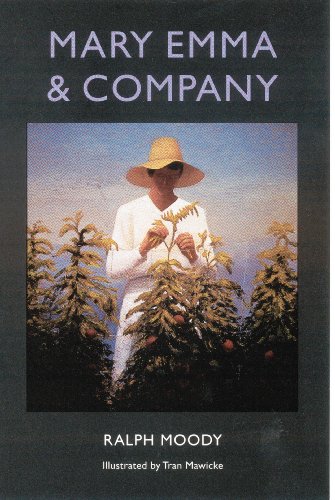
![]() |
| This cover has absolutely not a thing to do with this book. C'mon Bison Books, you can at least read the book before selecting the cover! |
Mary Emma & Company by Ralph Moody is the next installment in the Little Britches series. The Moody family has been forced to flee Colorado because Mrs. Moody (whose name is Mary Emma, though her husband had always called her Mame) does not want to have to testify against a former neighbor. They arrive in Medford, MA to stay with her brother, his wife and children. Medford is just outside Boston. Ralph, on the train trip there has been calculating how he can still work with horses in his life. He figures stores must need a delivery boy and since this is 1912, people are still using horses. However, in the city no one is going to let a boy drive horses. He does however land a job right away working for a local grocer. He delivers groceries either by foot or on bicycle, something his Uncle Frank teaches him to ride.
The main plot of the story is how the Moody family gets established there in Medford. They are extremely poor and Mother has to figure out how to keep a roof over their heads. She and Grace, the oldest daughter, struggle to set up a laundry business. They also manage to move into an old house (that has a furnace that eats coal, it is so inefficient.) It is telling that as in most childhood recollections, school plays a very minor part. Most of the adventures going on are about his job, helping his family set up their household, problem solving all the way, and adventures such as sledding in an old clay pit or trying to get all the neighborhood boys to salvage old railroads for cheap firewood.
School is actually rather miserable. The principal is convinced that Ralph with his Colorado ways is a delinquent. Massachusetts ways of doing things are a lot more regulated than Colorado ways of doing things.
I enjoyed this peep into how people did homey things in 1912 MA. How laundry was done, how furnaces worked, how people coped with winter. Children were far more capable and had far more freedom than now.
Two thumbs up. I'm moving on to the next book in the series. For more book reviews go to Read 52 Books in 52 Weeks.
The Nonesuch - Book 35
The Nonesuch by Georgette Heyer is a novel that shows her at the height of her power. It is very much in the Jane Austen mode. It's a portrayal of manners in a country neighborhood and how everyone is affected when Sir Waldo Eckridge, known as the Nonesuch, moves in to the area for a few months. A nonesuch is a colloquial term for someone who excels in social graces. He is wealthy, handsome, a great whip (meaning he can control his horses when driving), an athlete. And because he has so much position in society, he is assumed to be someone caught up in the vanities of celebrityhood 18th century style.
The story's underlying theme though is about how to handle wealth. We have two spoiled characters in the novel, Tiffany Wield, a beautiful 17 year old heiress, selfish and childish, and Laurence, the Nonesuch's relation who is also a petulant self absorbed young man. Both these characters have been corrupted by being indulged in their youth. Sir Waldo himself says that he inherited his father's wealth at too early an age and didn't handle it well. It gave rise to his reputation and he also feels guilty in that he spoiled Laurence and ruined his character as a result. Laurence thinks he has a right to be taken care of by Waldo. Sir Waldo has done better supporting (but not spoiling) his young cousin Julian. He knows there is a difference. A lot of what is so great about Sir Waldo is that he does have the intelligence to navigate pretty well in terms of balancing wealth and all the vices it brings and shortcomings it highlights with developing a noble and humane, non-self-absorbed way of living. Sir Waldo does this by providing homes for poor orphans.
It's fun that I just chanced to pick up this book at the library. I hadn't read it in a long time. I also happened to recently watch part of a video on how they treated the poor in the 18th century. And it turns out that before the so called Enlightenment, caring for the poor was part of a Christian's duty. But once the idea of free trade and industrialization came into play more and more, and the sort of Puritan idea that whether or not you were saved was reflected in how much God seemed to favor you with material success, the poor began to be looked down upon. They needed to pull themselves up. Their misery was their own fault in some way. Many people objected to this view (think Johnathan Swift or Dickens for instance) but it was a popular way to view the poor. Sir Waldo's family like to heap scorn on his head for having his pet project of providing shelter, food and education to poor street urchins, but it is part of the reason they like and admire him. Rumor and society gossip have read him all wrong and to a certain extent, since his wealth and position have placed him in a certain level, he goes along, but he is detached from it too.
He enjoys his sport, managing his money and helping poor children, and he had managed to remain single til the age of 35. For no woman has really interested him. They all seem to set their caps at him for his money and prestige and he really isn't into that. Then he meets Ancilla Trent, the governess to the spoiled Tiffany. Ancilla has natural dignity but no put on airs. She's fallen in social standing. Her uncle is a well admired general but circumstances forced her to work for a living. She takes it all in stride. She's figured she's missed the marriage market. But she's an attractive, principled, intelligent woman with a great sense of humor. Yet from afar she's absorbed all the scuttlebutt about the Nonesuch so she's got a lot of prejudice to get over, in spite of the fact that there is almost an instance rapport between Sir Waldo and herself. She won't let herself see it and when she does see it, she is busy cautioning herself against inevitably disappointment. He can not be as good as he seems. He's a Corinthian! He can't really be serious about her. So she tells herself.
The relationship is set in a country neighborhood in Yorkshire between Harrogate and Leeds. Nothing much happens there but Sir Waldo and his cousin Julian actually like the country life. Julian hates the social bustle of London and vastly prefers riding and fishing to having to make small talk amongst the ton. Sir Waldo is busy trying to get his new property set up to be an orphanage and feeling out the neighbors to see how they'll accept this change. But the neighbors are excited the famous nonesuch has come into their area and are busy inviting him to various social activities. He is polite about it but soon his attraction to Ancilla becomes a major draw. Meanwhile Julian has a crush on the ravishingly beautiful Tiffany.
A lot of people seem down on this novel because they don't buy the idea that an intelligent woman like Ancilla can really believe the Nonesuch is planning to harbor his illegitimate children at Broom Hall. But I think Heyer does a good job setting up Ancilla's thinking and her emotions. She has very proper sensibilities, she's a woman on her own trying to make a living. Her reputation is everything, so she doesn't want to be seen as setting her cap at Waldo. At the same time she's insecure. She knows she's naive. She can't quite let herself believe that someone like Sir Waldo would prefer her to anyone else he could get. She's already been passed over in the marriage market. And then in the middle of this muddle of questioning, doubting but falling in love herself, she hears about Sir Waldo's 'brats.' So I don't think it is such a stretch to allow that Ancilla's insecurities, emotional defenses against probable heartache, and her prejudices could make her jump to conclusions.
It's a great story with lots of wonderful side characters, funny and lively conversations, and lots of subtle interplay between the characters as the plot unfolds. What I liked was just how low key the romance really is. Sir Waldo likes Ancilla immediately. Ancilla slowly begins to respond to his banter. They have an obvious rapport. They are on the same wavelength and Sir Waldo loves to make proper Miss Trent laugh.
I thoroughly enjoyed this novel For more book reviews go to Read 52 Books in 52 Weeks.
Saturday, August 10, 2019
Garden Update - 8/10/19
I haven't been blogging much. Just thought I'd jot down some notes on our garden.
- While we enjoyed a small but surprising amount of cherries, blueberries and strawberries in the early part of the summer, the birds soon discovered them and we haven't had any in more than a month now. However, our aronia berry bushes are fruiting. I don't quite know what to do with aronia berries. No one will really eat them. We've been trying to do more smoothies but haven't been too successful in that. I have included them in those. Mostly I have been eating them on my oatmeal with a little maple syrup. They are super, super healthy so I've got to learn to incorporate them into my diet more effectively.
- We did have a surprising little peach harvest on one of our new trees. The two nectarine trees aren't productive yet, but we had a little boon of peaches. So I harvested them, blanched, peeled, sliced and froze them. I hope to make a gluten free paleo peach crisp soon. Maybe tomorrow for Granddad's birthday.
- Our vegetable garden is not that productive. I'm disappointed. I think I am just not paying enough attention to the soil. I do think we have nitrogen deficient soil. I've been putting coffee grounds sporadically around the various plants. We've gotten a steady trickle Italian plum tomatoes and some cherry tomatoes. But we've only had one big salad tomato (which was absolutely scrumptious) and hardly any of the other tomatoes. What happens is they are growing very slowly and not ripening. I am sure I need to do research into how organically to help them out. But my brain can only handle so much information and I am scattered in all the different things I am doing rights.
- No melons have started growing. None. They flower, but no fruit. Same with the pumpkin in the front yard. What gives?
- I planted two bell pepper plants. One fruited one pepper which went bad on the plant. The other gave me one pepper that we ate. That's it. Then they got diseased.
- I planted two cucumbers - one bush and one vine. The vine one got attacked by some kind of pest. The bush one has been the most productive thing in my veggie garden. We have gotten really delicious cucumbers off of it. I am going to plant that again next year.
- I got one cutting of lettuce from my butter crunch spring planting.
- The onion chives, basil and mint have done well. Hooray!
- I harvested a bunch of tiny bitter carrots. We ate a few in salads where they were mixed in with lots of other things and salad dressing to make them palatable. Then I just forgot about the rest and they went all soft. I'm not sure how to keep carrots crisp. So I dumped them in the compost.
- We planted corn and I think chipmunks ate all the kernels because nary a one came up.
- We planted a bed of sunflowers. So far only one had blossomed. Next year I am going to plant sunflowers in a regular garden bed and use that 5th raised bed for veggies.
Fall Garden plans:
- I am not giving up! I took the old failed bed for corn and planted it with a new kind of carrot and radishes for the fall. First I added some composted manure and organic topsoil. I am trying to germinate them under burlap. I just planted this yesterday morning. We'll see!
- I bought 4 little arugula seedlings and just planted those where I had the carrots.
- I am trying to germinate romaine and another type of butter lettuce in the fridge. I have three cardboard egg cartons which I planted with seeds and then stuck in the fridge for 4-6 days. No germination so far though. Then I am supposed to plant them in the bed and cover with mulch to keep roots from getting too hot.
- I also plan to try broccoli and red cabbage. And sugar snap peas, at some point in the near future. I am going to have to take out some of the unproductive tomato plants, amend the soil and then plant.
- Even though I feel like a crappy gardener, I am undaunted (so I tell myself). I need to persevere. I think I am only going to learn by doing. I just don't take instruction well from reading about stuff. Watching videos helps some, but mostly I think the only way for me to learn is by experience.
Subscribe to:
Posts (Atom)