Book 30:
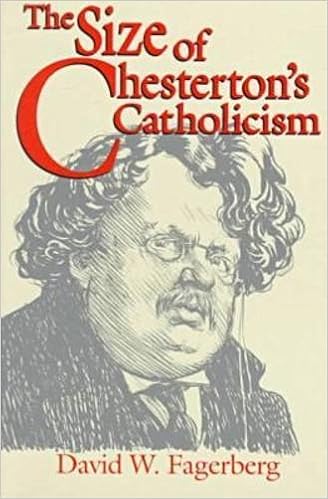
The Size of Chesterton's Catholicism by David W. Fagerberg. I had to write a paper on this for my Theology class. I won't go on for 8 pages like I did there, but I will say if you want to get a marvelous introduction to both Chesterton's wit and his reasons for converting to Catholicism, this a brilliant book that would serve you well. The wonderful thing about the book is that it basically is a introduction to Catholic theology. It tracked our Revelation and Faith class (basically a how-to be a theologian course) pretty strongly. By reading this book you will learn some real theology. Fagerberg also is brilliant in that he so gets Chesterton's brilliance, he can sum it up (an enormous enterprise) in an easy to read concise way in under 200 pages.
A definite two thumbs up!
Book 31:
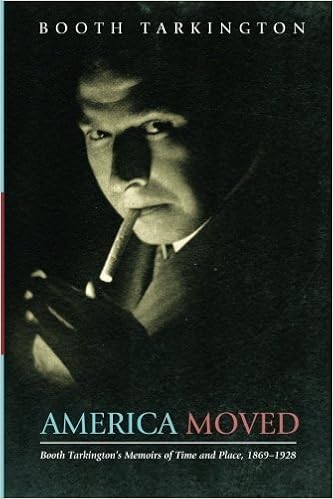
America Moved: Booth Tarkington's Memoirs of Time and Place 1869-1928. Edited by Jeremy Beers. This is really a collection of long magazine articles that Tarkington wrote for the likes of Colliers, the Saturday Evening Post and such. These are deeply autobiographical. Booth Tarkington is a forgotten American author. He actually won the Pulitzer Prize in 1919 for his novel The Magnificent Ambersons. That and other novels were adapted to the screen. He was very prolific and also wrote plays. Alas, he is of a conservative bent and fell out of popularity. He is indeed very nostalgic for the golden years of the past. He has a keen sense of the cost of change. He writes really well with a lot of insight. I enjoyed the first part of the book the most, the middle got duller because he goes on a rant about theater in the 1920s. It sounded exactly like people bemoaning the sordidness of the culture today. But then the end of the book picked up again (for me anyway) and ended rather magically.
Book 32:
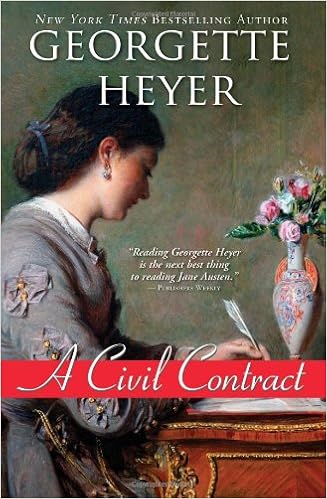
A Civil Contract by Georgette Heyer. I felt like reading something light after reading the above two books (not that either of them was especially heavy!). This Georgette Heyer novel struck me as a more mature and more subtle story. I liked its quiet nature. There were no kidnappings or rakish, sardonic handsome rich men boxing adversaries or outsmarting evil enemies. This was a delicately rendered story of the first year of a marriage of convenience. Lord Lynton passes away suddenly and so his son, Adam Deveril, must come back from the Napoleonic wars (he's been in the army for years) to rescue his inherited, heavily indebted estate. In order to save his mother and sisters from poverty and to save the family seat, Fontley, he realizes he must marry for money even though he is in love with the beautiful Julia. There is a magnificently rich 'tradesman' who has a plain daughter, Jenny, whom he is trying to marry off to one of the nobility. She's plump and plain and full of common sense. Adam fights down his revulsion and marries her. He is a decent man who does wants to do right by his new wife, but he still longs for Julia, and he rankles under his father-in-law's domineering vulgarity and his tactless, overwhelming conspicuous consumption. The story really is a quiet one, where Adam slowly falls out of romantic love with Julia and into a companionable and satisfying love for Jenny. It is completely believable and even though it is a quiet story of ordinary things, it never is dull.
For more book reviews go to Read 52 Books in 52 Weeks.

No comments:
Post a Comment