Saturday, April 30, 2011

Spring Cleaning My Mud Room or Clean House, Where Are You?

Inspired by Willa and Mystie, I decided to tackle my disgusting mud/laundry room.  Not cleaned for almost a year, I think.  Really, really gross!

So gross, I could only bear to take one picture and notice how I didn't take pictures of the insides of the closets, especially the one that houses the kitty litter box. (You didn't want to see that anyway!)  There are no close ups because, it was too painful for me.  So I quick snapped this and got to work.


Things I did:

Put away the load of laundry that was sitting on top of the washer

Ran two load of clothes in the hamper and thrown on the floor.

Hung up coats and snowpants that were thrown in a heap.

Put hats, gloves and scarves in cute little basket.

Here's the really disgusting part:  started working on those hampers in the way back that were full of old miscellaneous clothes, out grown, torn, stained, don't know what to do with kinds of things.  As I was cleaning I saw all these little, well what looked like mouse droppings.  Ugh!  And right back where the cat uses the litterbox.  I grumbled about how useless my cat is.  But upon closer viewing I realized that they were hundreds of little tiny bugs!  Eek, so you know what I did?  I threw all the clothes away.  Just chucked 'em.  Nobody has been missing them anyway. . . . 

Vacuumed thoroughly.

Took  a minivan full of cardboard recycling to the recycling center.

So here are the after pictures:

Bugs were living here but now they're gone!

Shot of slightly cleaner/tidier laundry room.  Could still use more work though!


Look!   Mittens, hats and scarves!  Probably should actually put these in storage for summer.


Hung up coats and lined up boots.  I didn't take a picture of the floor but that's where all the wrapping paper goes and it is nice and tidy too, now!

Friday, April 29, 2011

Weekly recap 4/24 - 4/20


This week we:
Recovered from celebrating Passover and Easter


Caught a lot of stinkbugs and flushed them down the toilet

Wondered if the proliferation of toads in our front garden is due to the invasion of aforementioned stinkbugs?

Weathered the weather, whether it be warm, cold, wet or dry (often all in the same day).

Enjoyed the blooming dogwoods and azaleas.

This dogwood was sooo sickly the first few years of its life.  Now look at it (it's the pink tree peeking through!)
 Becky was not at all interested in anything of a schoolish nature.  We did touch on the times tables a bit.

Sean and I worked through a Spectrum test prep book to see what he needs to know in the math portion.  Did some Khan Academy on fractions.

Josh and I went to Latin.  Becky went to art class.  Josh had the week off from Biology.  But then, suddenly realizing he has a whole year cumulative test in two weeks plus, as a master procrastinator, he has successfully avoided do the vocab cards for 14 out of 24 chapters (all due the day of the test) and has only half filled out his lab sheets, we determined (read me, his mother determined) he had no more time for computer and had to get his tail moving if he wanted to complete this course with any shred of dignity!  How's that for being unschooling about things!  But really if a teen freely commits to a class, they need to tow the line with the requirements.

Josh also rode his bike into town one day and he also mowed the lawn so he got some exercise.

Sean and Becky before leaving for the Easter Vigil
Sean got gamemaker and has been programming some games.  He's still very into his video/computer games. Sean and I went out to lunch on Thursday and had a fine time.

Here are the books we're currently reading:

Product Details
Wonderful! For our high school studies


Product Details
Back to this after our Lenten break

Product Details
Easter Read Aloud
Product Details
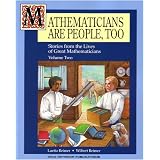
On to Volume Two
Sean has been reading these:


Product Details
A Sean picked book


Product Details
A Mommy picked book
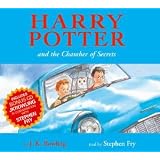
Becky has been listening to this audio book all week:

Product Details
Stephen Fry is excellent!


Today, Friday, I'm going back to the foot doctor.  My heel spur seems to have been healed by the cortisone shot I got 2 weeks ago.  Hurrah!  It is lovely to be able to walk without pain hobbling me!  This afternoon we've got tennis lessons.

Thursday, April 28, 2011

I believe in cursive

Don't try reading this if you don't know cursive!  You'll have to rely on someone else to tell you what it says!

Here's a link to an article about how cursive is being pushed out of school curriculum.   I think this is a really bad idea.


  • Not knowing cursive means you are just that much more illiterate.  It means you can't read your own language when written in cursive.
  • Not knowing cursive means that you can't read anything from the 'olden' days.  You can't thumb through old letters, for example and understand what's been written.  I found an old letter that my grandfather had written to my father on his birthday (maybe his 16th?).  It was so beautiful, so loving, from a devoted and proud father to his son.  If I couldn't read cursive, I would have missed that connection to the past.  I would be cut off from it.
  • Writing in cursive is great for dysgraphic/dyslexic kids.  You don't have to worry about reversing letters!
  • Writing in cursive is often quicker than printing.  My oldest daughter fought me on cursive so I gave up but guess what, she's in college now and writes all her notes in cursive!
  • My oldest son was diagnosed dysgraphic when he was 12.  Guess what the therapists did to correct the situation?  Well, all kinds of crazy therapeutic exercises that had him crossing the midline.  But they also took Handwriting Without Tears and made him do cursive!  And it helped, enormously.  He went from someone who dreaded writing, really it paralyzed him, to someone with confidence in his capabilities.  
  • Ever looked into Waldorf education?  You know how they have 'form' drawing?  Well, it's basically cursive penmanship practice.  There can be something therapeutic about practicing those loops!
  • Writing in cursive can be aesthetically pleasing.
  • You do still have to sign your 'John Hancock' for financial and legal documents.  Really most adult signatures are in cursive.  They are far more stylish that way!
  • I think you have to learn cursive in order to read cursive.  If you just try to give them lessons in reading it, it just doesn't stick, in my experience.  Learning cursive can take at least a couple of years to really consolidate things.  It's difficult for most people.  But I think it is well worth the effort.


  • Where would Ken Burns have been, without all those lovely letters written home during the Civil War?  How about all those journals and diaries?  Shut off to our children who don't know cursive!

    I know writing in cursive isn't a life and death matter.   My husband never got the hang of cursive and always prints (which is by the way barely legible even so).  However, he can read it!  My middle son loathes cursive, but maybe he'll change when he gets older, like his older sister.  But I do think education is about empowerment; about equipping our children with the ability to learn and denying them cursive doesn't empower them and it does, in my opinion. limit them.  It's a shame.

Poetic Knowledge - Book Study - Chapter Three

Well, I tremble as I begin this post.  I don't have a strong grasp on this material.  I don't feel like I've processed it and can even regurgitate it let alone comment on it!

So I think what I'm going to do, which may or may not be useful, is to just go through the chapter and talk about the things that jumped out at me.  We'll see how this goes. . . .

On thing I am finding difficult in this book is the use of terms I thought I knew but are used in a different sense here.  For instance 'gymnastic' and 'appetite.'  Gymnastic doesn't mean what Olga Korbut did at the Olympics, instead it means our physical engagement with the world.  It's experiencing reality bodily, like dancing to music, or feeling a breeze touch your face.  If I'm grasping this right, poetic knowledge is a first knowledge; our sensory-emotion response to encountering experience.  So that having to engage physically for poetic knowledge makes sense.

Appetite doesn't mean how hungry you are but rather one's emotions.  Taylor quotes Maritain, "Appetite . . . tends toward things as they are in themselves."  I think by this he means that say, when we love something, we  appreciate it/him/her for what they are in and of themselves and not for how we can use them, for example.

Taylor, it seems to me, is a bit disorganized in this chapter.  It is entitled Connatural, Intentional and Intuitive.  Where is the nice chart from the last chapter to define and clarify what he is talking about?  One has to really comb through the chapter to get at a definition of these terms.  Let me make an attempt:

Connatural is to participate in some way with something's nature.  The habit of noticing things keenly cultivates this connaturality.  This results in a sympathetic knowledge of something.

Intentional means. . . well I realize as I'm typing this I never did get what intentional means to Taylor in the context of poetic knowledge.

Intuitive means the spontaneous awareness of reality (that's one way Taylor explains it.)

One thing that jumped out at me was the idea that connaturality gives one a sympathetic understanding of something.  There is a connectedness between the observer who is really an 'experiencer' (observer sounds too distant) and what is being experienced.  When I read this my first reaction was that this was the opposite of what existentialism leads to, a feeling that one can never really know or feel union with another.  But then later Taylor quotes McInerny who is discussing Maritain (keeping up???) and says that the appetite is existential because it doesn't 'know' in the sense of possess, something but appreciates it for what it is of itself.

Another thing that I appreciated was Taylor's mention of how often understanding of something, that might even be known in a scientific way, can come together in a poetic experience, like when we are busy doing something else in our leisure and then suddenly the answer to a problem we've been chewing on seems to appear out of nowhere. I think everyone has had that experience.  This little example made me think about how all the ways of knowing, intuitive, poetic, scientific all work together in some unknown way in our minds and this is so much a given in our lives that it seems strange to step back and analyze it.

Yet another thing that made an impression on me in this chapter was Taylor's discussion of the habit of poetic experience, something that poets do that enables them to create these wonderful pictures and evoke emotions and be so on the mark, true to experience.  But I liked Taylor's distinguishing between experiencing what is real via poetic knowledge versus getting all romantically-mystical about it.  For instance a poet might convey the sensation of experiencing the beauty of tree, that's poetic knowledge, but if the poet starts going on and on about 'treeness' and trying to move into some spiritual understanding of trees, that is not poetic knowledge.  Poetic knowledge is a first knowledge that doesn't draw conclusions.  It doesn't work in competition with other ways of knowing, but complements them.

I felt edified by Taylor's distinction between the mystical and poetical.  Mystical means that one is interacting with an outside spiritual force.  Poetical is grounded in reality, meaning the here and now that can be experienced.

I also liked the connection between science, metaphysics and poetic knowledge; that they all begin in 'marvel.'

And I thought Taylor makes an important distinction between subjectivity and subjectivism.  Subjectivism means there is no reality outside of what the individual experiences.  This in my mind leads to relativism and that existential loneliness or alienation I was talking about earlier.  Subjectivity is when someone experiences reality as something passionately apprehended.  It is the way a person takes an objective truth and makes it his own, not his own truth but his own understanding or relationship with the objective truth.  At least that was my understanding of Taylor's point.

My favorite part of the chapter, and the part that resonates the most with unschooling and poetic knowledge was when Taylor talks about how the modern overemphasis of the scientific knowledge as the only way of knowing has transformed learning from an act of leisure to an act of work.  Learning nowadays is all about labor to acquire facts which is why a factory model for schools seems to make sense to so many.

I just remembered another thing that made an impression on me but I am running out of time so I can't bother to rife through the pages looking for it, is the idea of time flowing differently as we experience things.  When we are in love, we can spend hours with the beloved and it feels like no time at all.  A child absorbed in play has no idea of time passing.  And we can also experience sorrow in this way as well.  Poetic knowledge, this intense, nondiscursive encounter with reality is transcendental.  It glimpses into the eternal.

And finally, leading from that last insight, Taylor hearkens back to Homer's idea of poetic knowledge revealed in Odysseus's experience at Alcinious's banquet.  Taylor talks about the poetic experience of  celebration.  This made me think of the opposite experience that many teens and college students have of 'partying.'  Partying is about getting so drunk or stoned in order to manufactured some kind of heightened experience.  It really is the opposite of a celebration because it isn't honoring something like a guest or an event but it is very cut off and lonely and is done in a sort of desperation.  Party-ers become addicts and alcoholics and behave destructively.  They have no self-control when it comes to sexual relations.  There is no true connection or sympathetic experience.  I wonder if the reason so many teens engage in this behavior is because in their lives poetic experience has been so undervalued and so atrophied that they search for such an experience in all the wrong places.  Poetic knowledge sees the eternal, the big picture, the ennobling.  To have that aspect of one's mind so underfed make life very impoverished as a result.  So they grasp at anything that might imitate what they are starved for.

Wednesday, April 27, 2011

Wordless Wednesday - 4/27/11

Another grueling day:  Becky's eating cereal and watching Peanuts.

Tuesday, April 26, 2011

Fun Old Timey Strewing - 1897 Sears and Roebuck Catalogue

While looking for a book I uncovered this old gem:


I remember when I was young, my mom got this book as a Christmas present.  I loved looking at it as a kid.  After she passed away, we sorted through her books and I picked this one.  I promptly put it in storage.  I'm so happy I found it again.  It's been on our strewing coffee table and everybody from my husband to my youngest has enjoyed looking through it.

A new-fangled gasoline stove!


Veterinary instruments!

How about a restorative tonic?

Must be the first book catolog.  Sears carried lots of books.


Including this handsome Encyclopedia set


For all your firearm needs

I think this bed lounge looks like something out of a saloon in the Wild West!


It's a shame hats went out of fashion

Look at that harness!  Only $6.95!

Monday, April 25, 2011

Math Monday - Multiplication Chart

I strewed this chart this morning by taping it up on our wall of learning.   I got this from http://math.about.com

Oops!  Guess I needed a flash for this picture!  Too dark!


I showed her how you could pick one number along the very top row and another number in the very left hand column and when you followed them both to where they'd intersect, you get the answer if they are multiplied.  "Neat!"  She said, "Kind of reminds me of Battleship!"

A close up!  Now you can see what I'm talking about!