Sunday, September 23, 2018
Miss Buncle Married - Book 32
Miss Buncle Married is the next book in the Miss Buncle series by D. E. Stevenson. While it was a nice read and I enjoyed parts of the story, I had trouble getting into it. I put it down midway through the week thinking, this book is rather meh. But I picked it up again yesterday and found the story line picked up enough to keep my interest. It has a satisfactory ending. It didn't have the same charm as the first book, but I liked it enough that I plan to read the next book in the series, The Two Mrs. Abbotts.
For more book reviews, go to Read 52 Books in 52 Weeks.
Tuesday, September 18, 2018
Guiding Principles of Catholic Unschooling - Part 2
DEALING WITH SIN, DISCIPLINE AND FREEDOM
7) We are all sinners and fall short of the glory of God. Even though we are made in the image and likeness of God, because of Adam's fall we are all fallen ourselves. This is where I part ways with secular unschoolers of the radical variety, who really follow Rousseau in that they believe children are naturally good and society is what corrupts them. Nope. I think children are capable of great and wonderful, lovely, generous things, but they also are prone to sin and selfishness. Plus, they are immature and simply don't have the experience and executive function to make all their own decisions. I think it puts too much on a child in a developmentally inappropriate way to just let 'em loose to do everything their own way.
8) Parents have natural, God-given authority. Children need parents to protect and nurture them. They need their care and love, they need their guidance and wisdom, they need them to help form their characters in the most loving way possible. I don't believe in authoritarianism, but I do believe in authoritativeness. Authoritativeness is using your natural authority justly so you can do your job as parent. Your job as parent is to form and guide the little soul entrusted to you by God. I think a lot of unschoolers have trouble with authority and see it as all bad. Except maybe when it comes to safety, but other than that they don't feel they have the right to create firm limits. But I disagree. I think children need limits as much as they need play! I think God created things to work that way. But the limits don't have to be harsh. They have to be reasonable and clearly delineated. Maria Montessori referred to this as 'freedom within limits.'
9) Common sense and neuroscience research should be part of parenting. Some of the things that radical unschoolers encourage, to me, do not make sense especially with current studies on things like habits and addiction. We know now that too much video gaming or screen time is indeed bad for your health. I know unschoolers who will not put limits on such things. I'm uncomfortable with that. I don't think it corresponds with the evidence on brain development. Radical unschoolers will talk about self-regulation, but not all children will self-regulate about every little thing. Bad habits and addictions can occur if you don't create healthy limits. Candy and junk food, we know, are addictive. Therefore I think it is a parental prerogative to decide to limit such foods. We know that we should sleep and wake according to our circadian rhythms for the best health. Letting kids stay up late all the time isn't good for them. How you limit these things though, when unschooling will look different than mainstream effort at control which tend to use artificial methods like punishments, arbitrary time limits, etc. Unschooling, to me, would use gentler, more creative responses.
10) Parents can discipline in a loving, firm way without becoming punitive. You can discipline through attachment parenting, humor, distraction, creating helpful routines, promulgating expectations, one on one conversation, firm and fair reproofs, family meetings, reading out loud stories that illustrate problems, modeling how to deal with an issue, saying their first, middle and last name in that 'tone' (LOL), giving them 'the look', etc. I do believe it is the job of the parent to discipline their children. I do not think this necessarily includes punishment.
11) Catholic Unschooling is based on warm, healthy family relationships; it is aimed to form the whole child centered on a loving relationship with our Triune God: God the Father, Jesus the Son and the Holy Spirit. It trusts that God designed children to learn through conversation with parents and family, through being part of a family in terms of sharing, helping out, through books and stories (God gave us the Bible! And Jesus taught through parables!) and play and imitation and being in love with and filled with wonder at God's creation.
12) Catholic Unschooling has a different definition of freedom. A real difference I see between Catholic Unschooling and secular, radical unschooling is that Catholic Unschooling does not let pop culture be the dominant theme in expressing 'freedom.' Freedom is not about autonomy! In Catholicism, freedom is the opportunity to choose what is good. As St. Paul said in Philippians 4:
13) Catholic Unschooling believes in education for education's sake. A lot of secular unschooling seems to be very utilitarian in their view of education. Algebra is eschewed because they've never used it in real life. Handwriting isn't worth the effort to teach because in the future everyone will be typing on their cell phones or use voice recognition, etc. But Catholics shouldn't be viewing education this way. Education, again, is about glorifying God. It's about pursuing the good, the true and the beautiful. God gave us these wonderful faculties of analytical thinking, of reason, of curiousity, a capacity to design and invent. He gave us complex language with which to express our thoughts and with which to communicate with each other and Him! The study of numbers opens up to us the secrets of the universe! It is called by Christian scientists the language of God! It is worthy of study even if it is never used in 'real life.' The pursuit of knowledge is a godly pursuit and a life-long one. It allows us to grow closer to God and to appreciate the wonderfully mysterious and complex works of His hand.
7) We are all sinners and fall short of the glory of God. Even though we are made in the image and likeness of God, because of Adam's fall we are all fallen ourselves. This is where I part ways with secular unschoolers of the radical variety, who really follow Rousseau in that they believe children are naturally good and society is what corrupts them. Nope. I think children are capable of great and wonderful, lovely, generous things, but they also are prone to sin and selfishness. Plus, they are immature and simply don't have the experience and executive function to make all their own decisions. I think it puts too much on a child in a developmentally inappropriate way to just let 'em loose to do everything their own way.
8) Parents have natural, God-given authority. Children need parents to protect and nurture them. They need their care and love, they need their guidance and wisdom, they need them to help form their characters in the most loving way possible. I don't believe in authoritarianism, but I do believe in authoritativeness. Authoritativeness is using your natural authority justly so you can do your job as parent. Your job as parent is to form and guide the little soul entrusted to you by God. I think a lot of unschoolers have trouble with authority and see it as all bad. Except maybe when it comes to safety, but other than that they don't feel they have the right to create firm limits. But I disagree. I think children need limits as much as they need play! I think God created things to work that way. But the limits don't have to be harsh. They have to be reasonable and clearly delineated. Maria Montessori referred to this as 'freedom within limits.'
9) Common sense and neuroscience research should be part of parenting. Some of the things that radical unschoolers encourage, to me, do not make sense especially with current studies on things like habits and addiction. We know now that too much video gaming or screen time is indeed bad for your health. I know unschoolers who will not put limits on such things. I'm uncomfortable with that. I don't think it corresponds with the evidence on brain development. Radical unschoolers will talk about self-regulation, but not all children will self-regulate about every little thing. Bad habits and addictions can occur if you don't create healthy limits. Candy and junk food, we know, are addictive. Therefore I think it is a parental prerogative to decide to limit such foods. We know that we should sleep and wake according to our circadian rhythms for the best health. Letting kids stay up late all the time isn't good for them. How you limit these things though, when unschooling will look different than mainstream effort at control which tend to use artificial methods like punishments, arbitrary time limits, etc. Unschooling, to me, would use gentler, more creative responses.
10) Parents can discipline in a loving, firm way without becoming punitive. You can discipline through attachment parenting, humor, distraction, creating helpful routines, promulgating expectations, one on one conversation, firm and fair reproofs, family meetings, reading out loud stories that illustrate problems, modeling how to deal with an issue, saying their first, middle and last name in that 'tone' (LOL), giving them 'the look', etc. I do believe it is the job of the parent to discipline their children. I do not think this necessarily includes punishment.
11) Catholic Unschooling is based on warm, healthy family relationships; it is aimed to form the whole child centered on a loving relationship with our Triune God: God the Father, Jesus the Son and the Holy Spirit. It trusts that God designed children to learn through conversation with parents and family, through being part of a family in terms of sharing, helping out, through books and stories (God gave us the Bible! And Jesus taught through parables!) and play and imitation and being in love with and filled with wonder at God's creation.
12) Catholic Unschooling has a different definition of freedom. A real difference I see between Catholic Unschooling and secular, radical unschooling is that Catholic Unschooling does not let pop culture be the dominant theme in expressing 'freedom.' Freedom is not about autonomy! In Catholicism, freedom is the opportunity to choose what is good. As St. Paul said in Philippians 4:
Finally, brothers, whatever is true, whatever is honorable, whatever is just, whatever is pure, whatever is lovely, whatever is gracious, if there is any excellence and if there is anything worthy of praise, think about these things.I've noticed that a lot of unschooling children and teens looks rather trendy in their purple hair and nose rings, etc. Not that there is anything per se wrong with that! I mean, people are allowed to have fun as long as it is moral! But it seems to me to be a rather superficial thing that shows an unhealthy need to conform. And that's what happens a lot. Kids want to be free and cool and edgy and what they wind up doing is taking on all the tribal attributes of whatever tribe they, in their immaturity, aspire to be part of. That's not freedom! Longing to be cool or fashionable is actually being vulnerable and easy pickings for exploitation. I think Catholic Unschooling is talking about a deeper freedom. A freedom to be 'man fully alive' so we can glorify God, to paraphrase St. Ireneaus.
13) Catholic Unschooling believes in education for education's sake. A lot of secular unschooling seems to be very utilitarian in their view of education. Algebra is eschewed because they've never used it in real life. Handwriting isn't worth the effort to teach because in the future everyone will be typing on their cell phones or use voice recognition, etc. But Catholics shouldn't be viewing education this way. Education, again, is about glorifying God. It's about pursuing the good, the true and the beautiful. God gave us these wonderful faculties of analytical thinking, of reason, of curiousity, a capacity to design and invent. He gave us complex language with which to express our thoughts and with which to communicate with each other and Him! The study of numbers opens up to us the secrets of the universe! It is called by Christian scientists the language of God! It is worthy of study even if it is never used in 'real life.' The pursuit of knowledge is a godly pursuit and a life-long one. It allows us to grow closer to God and to appreciate the wonderfully mysterious and complex works of His hand.
Sunday, September 16, 2018
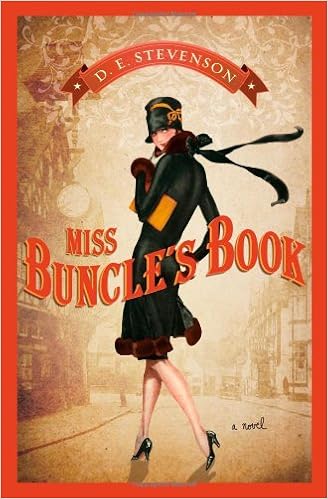
Miss Buncle's Book - Book 31
This is my third D. E. Stevenson book. I'm eating them up!
Miss Buncle's Book is a sweet humorous tale of a shy, awkward spinster who has spent her whole life in the little village of Silverstream. She and her housekeeper, Dorcas, have survived on Miss Buncle's 'dividends.' But the dividends have been drying up due to the economy (perhaps the Great Depression?). So Miss Buncle tries to think of some way to make more money. She's torn between keeping hens or writing a book. She decides on the book and to her delight her first effort is published under the pseudonym, John Smith. But the problem is that Miss Buncle has no imagination. She has pretty much just changed the names of her fellow villagers and written about them truthfully in all their pettiness and absurdity. The book becomes a best seller and the loathsome and fearsome Mrs. Featherstone Hogg recognizes herself in it. She is determined to find out who this John Smith really is. All sorts of things happen as a result of Barbara Buncle's book. We meet many charming and eccentric villagers and wait with bated breath to see what happens when at last Miss Buncle's secret becomes known!
A really enjoyable, gentle read.
For more book reviews go to Read 52 Books in 52 Weeks.
Miss Buncle's Book is a sweet humorous tale of a shy, awkward spinster who has spent her whole life in the little village of Silverstream. She and her housekeeper, Dorcas, have survived on Miss Buncle's 'dividends.' But the dividends have been drying up due to the economy (perhaps the Great Depression?). So Miss Buncle tries to think of some way to make more money. She's torn between keeping hens or writing a book. She decides on the book and to her delight her first effort is published under the pseudonym, John Smith. But the problem is that Miss Buncle has no imagination. She has pretty much just changed the names of her fellow villagers and written about them truthfully in all their pettiness and absurdity. The book becomes a best seller and the loathsome and fearsome Mrs. Featherstone Hogg recognizes herself in it. She is determined to find out who this John Smith really is. All sorts of things happen as a result of Barbara Buncle's book. We meet many charming and eccentric villagers and wait with bated breath to see what happens when at last Miss Buncle's secret becomes known!
A really enjoyable, gentle read.
For more book reviews go to Read 52 Books in 52 Weeks.
Saturday, September 15, 2018
Guiding Principles for Catholic Unschooling - Part 1
TRUST IN GOD'S PLAN
1) We are made in the image and likeness of God. What does that mean? Well, I think it means that we are made for Love, that is God, Who is love. Love is the ultimate truth, beauty and goodness and so I think as creatures with souls, we are attracted to and in fact, deeply long for Truth, Goodness and Beauty. Education is ultimately about discovering the good, the true and the beautiful! Therefore if God created us in His image, we naturally seek the good, the true and the beautiful, that is, we are naturally made to learn.
2) Human beings are naturally creative problem solvers. I think this is a corollary to #1. Since we are creatures with souls we have a self-consciousness that allows us to step outside of a situation and think critically. This is a hallmark of our species. We are creative, inventive; able to choose options intelligently and foresee consequences. We build things, we arrange things, we plan for things to optimize their usefulness to us. This allowed us, a relatively weaker being when compared to other animals, to survive and to become the ultimate survivalists in the natural world. This is our very nature. And so children will be natural learners because they too are creative, inventive, wondering beings who have an internal drive to control and manipulate (in a good way, usually) their surroundings.
3) Because of #1 and #2 children naturally are driven to become competent adults. All children want to learn to be independent and self-sustaining. Humankind has a long childhood with complex development, but the end goal is to emerge into competent adulthood. As parents we need to be patient with the emergence of this adulthood which may or may not correspond to our modern cultural expectations. Also, there are many things that can become obstacles in this development, mistreatment, disabilities, non-optimum situations, etc. One major qualm I have with our school system is that for most children, it actually impedes the natural learning God instilled in our very nature and it tends to disrespect individual development. Its priorities are often at odds with what is healthy and wholesome. This damages children.
4) God designed children to learn in family groups. The school system is a fairly new invention in terms of human endeavor. But part of the complementarity of marriage is that it is creates the optimal situation in which a child can be raised. A child's development, his personality, his maturity all is supported and encouraged by having healthy relationships with his family; primarily with his mother and father, but also with siblings and grandparents, etc. Therefore, it is unhealthy to take a child out of a situation which is the natural way children were intended to grow and learn, and place them in an unnatural context of many unrelated peers and strangers as instructors and role models.
5) Institutional methods do not nurture learning as it was designed to happen. Children learn through play. Schools are suspicious of this! It goes against their own institutional need to control things so as to justify their own importance. But God designed children to learn through play. Substituting mass instruction and scopes and sequences is a rather worldly approach to growing children. It is not one that reflects trust in God's plan! Children need instruction of course, but within the context of the family and within his own developmental process.
6) Play is not just whiling away the time in unproductive silliness. We've been brainwashed to think that play is less valuable than sitting at a table filling out a worksheet. But this is exactly backwards!* The worksheet is narrowing; play is broadening! Play is about imagination, creativity, inventiveness. It involves incorporating and testing reality the child has encountered. It also involves a good deal of imitation of what the child has observed. It is physical, it is mental, it is emotional, it is therapeutic. It frees a child; unlike school (or school at home) which is confining. One of the reasons often cited for the rise in anxiety in children is the loss of play time.
*I have often seen this complaint by homeschooling moms, For example: "Oh if I didn't make him sit down and work in his spelling workbook he'd spend all day playing with Legos!" Believe me, the spelling workbook is entirely unnecessary and Legos are a brilliant way to learn! Not spelling perhaps, although my middle son loved those Bioncle books. He ate them up like potato chips. The more you read, the better the spelling, usually. And he also would make detailed maps about the battles his Bionicles were waging, as well as writing little short stories and plays about them! How is it that though he never had formal spelling, he is a fine speller at the age of 23? Well, part of it is that we did do copy work as a family, but I'll get to creative ways to work in learning that doesn't happen spontaneously later in this series!
1) We are made in the image and likeness of God. What does that mean? Well, I think it means that we are made for Love, that is God, Who is love. Love is the ultimate truth, beauty and goodness and so I think as creatures with souls, we are attracted to and in fact, deeply long for Truth, Goodness and Beauty. Education is ultimately about discovering the good, the true and the beautiful! Therefore if God created us in His image, we naturally seek the good, the true and the beautiful, that is, we are naturally made to learn.
2) Human beings are naturally creative problem solvers. I think this is a corollary to #1. Since we are creatures with souls we have a self-consciousness that allows us to step outside of a situation and think critically. This is a hallmark of our species. We are creative, inventive; able to choose options intelligently and foresee consequences. We build things, we arrange things, we plan for things to optimize their usefulness to us. This allowed us, a relatively weaker being when compared to other animals, to survive and to become the ultimate survivalists in the natural world. This is our very nature. And so children will be natural learners because they too are creative, inventive, wondering beings who have an internal drive to control and manipulate (in a good way, usually) their surroundings.
3) Because of #1 and #2 children naturally are driven to become competent adults. All children want to learn to be independent and self-sustaining. Humankind has a long childhood with complex development, but the end goal is to emerge into competent adulthood. As parents we need to be patient with the emergence of this adulthood which may or may not correspond to our modern cultural expectations. Also, there are many things that can become obstacles in this development, mistreatment, disabilities, non-optimum situations, etc. One major qualm I have with our school system is that for most children, it actually impedes the natural learning God instilled in our very nature and it tends to disrespect individual development. Its priorities are often at odds with what is healthy and wholesome. This damages children.
4) God designed children to learn in family groups. The school system is a fairly new invention in terms of human endeavor. But part of the complementarity of marriage is that it is creates the optimal situation in which a child can be raised. A child's development, his personality, his maturity all is supported and encouraged by having healthy relationships with his family; primarily with his mother and father, but also with siblings and grandparents, etc. Therefore, it is unhealthy to take a child out of a situation which is the natural way children were intended to grow and learn, and place them in an unnatural context of many unrelated peers and strangers as instructors and role models.
5) Institutional methods do not nurture learning as it was designed to happen. Children learn through play. Schools are suspicious of this! It goes against their own institutional need to control things so as to justify their own importance. But God designed children to learn through play. Substituting mass instruction and scopes and sequences is a rather worldly approach to growing children. It is not one that reflects trust in God's plan! Children need instruction of course, but within the context of the family and within his own developmental process.
6) Play is not just whiling away the time in unproductive silliness. We've been brainwashed to think that play is less valuable than sitting at a table filling out a worksheet. But this is exactly backwards!* The worksheet is narrowing; play is broadening! Play is about imagination, creativity, inventiveness. It involves incorporating and testing reality the child has encountered. It also involves a good deal of imitation of what the child has observed. It is physical, it is mental, it is emotional, it is therapeutic. It frees a child; unlike school (or school at home) which is confining. One of the reasons often cited for the rise in anxiety in children is the loss of play time.
*I have often seen this complaint by homeschooling moms, For example: "Oh if I didn't make him sit down and work in his spelling workbook he'd spend all day playing with Legos!" Believe me, the spelling workbook is entirely unnecessary and Legos are a brilliant way to learn! Not spelling perhaps, although my middle son loved those Bioncle books. He ate them up like potato chips. The more you read, the better the spelling, usually. And he also would make detailed maps about the battles his Bionicles were waging, as well as writing little short stories and plays about them! How is it that though he never had formal spelling, he is a fine speller at the age of 23? Well, part of it is that we did do copy work as a family, but I'll get to creative ways to work in learning that doesn't happen spontaneously later in this series!
Sunday, September 9, 2018
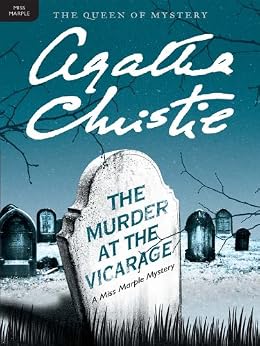
Murder at the Vicarage - Book 30
I decided to stray from my efforts to read Hercule Poirot mysteries chronologically. I think maybe his personality grates on my nerves a bit. So I lit on trying out Miss Marple. I really enjoyed The Murder At the Vicarage. I believe this is the first novel that features Miss Marple. She lives in a tiny village out the in the country. She is astute and notices everything. She loves to study Human Nature and as she is elderly she's had a life time to perfect her skills.
An unpleasant man, Col. Protheroe, is found murdered in the vicarage study. He was waiting for the vicar to return when someone shot him. Since he had many people who disliked him, there are plenty of suspects. The facts slowly unfold as the villagers all strive, along with caustic Inspector Slack and his cohort Captain Melchett, to solve the mystery. These latter two interview various villagers about what their relationship to the murdered man was and where they were between 6 and 7 p.m. on the night of the murder. The villagers though are watching everything and exchanging important gossip.
The story is told in the first person of the middle aged vicar who has, not so long ago, married a young, pretty wife. He's adjusting to her unpredictability and her poor household management. There's the village doctor, the various gossiping old ladies, the poacher who kept poaching on rich Col. Protheroe's property, the young cleric who seems to be undergoing emotional difficulties, Col. Protheroe's pretty new second wife, his careless young teen daughter, the strange beautiful woman who had mysteriously appeared in the village (named, aptly Mrs. Lestrange!) and the handsome visiting portrait painter who all the ladies are ga-ga over. Oh and there's an archaeologist and his secretary who seem to be a little too familiar with each other for propriety's sake.
A fun mystery with a sweet ending.
For more book reviews go to Read 52 Books in 52 Weeks.
Tuesday, September 4, 2018
Crazy Car Schedule
I'm just writing this out so I can make sure I am not double booking or otherwise screwing things up. It is crazy that things are this crazy! We had it all tightly calibrated until the community college cancelled S's French class. He absolutely needs two semesters of 4 credits of a language. He was taking a 14 week class (instead of a 16 week) because the teacher for the 16 week class at the closest campus got terrible reviews and he's really intimidated by taking a foreign language. So he opted for a 14 week course at a further away campus with a teacher that got lots of good reviews. Except they cancelled that class.
On top of this V suddenly announced Sunday she had a job. A neighbor asked her if she could take their kids back and forth to school. This had us scrambling. We had to rearrange several things to accommodate this but then S's class got cancelled as well. That meant that he had super reduced options for other language classes. It's like trying to do a Sudoku, figuring this out.
V and S share the Subaru
I drive my minivan
R take his car to work
J takes his car to work but he's off Thursday, Friday and Saturday (during the summer when they have extended hours) Usually during the winter they have slightly shortened hours and J just has 2 days off. They keep playing with the schedule though. But he's just going to have to tell them Thursday needs to be one of his days off. I simply can not do insane amounts of driving anymore. I can not and I will not.
Monday:
V has Subaru - I watch D
I drop B off 15 minutes early to her math tutor - 12:30
Drive to St. M for the Ladies Latin study group - 1:00
Drive home - 2:00
S has Subaru to go to his Communications class at 12:20 to 1:40
S picks up B and brings her home by 2:20 (cutting it close!)
V needs Subaru by 2:20 for p/u - D either is napping with some of us at home to watch him or V takes him with her.
Evening:
S has Environmental Science at 7:00
V has ESL class at about same time? So hopefully they can drive together
I will watch D
Tuesday:
V has car - D sleeping (S should watch D)
D up and to preschool
I take B to her co-op - 8:30
I drive S to his new class ASL at further campus - class is at 12:20
Drive back - should have time to stop and check on puppy
P/u B at 1:40
Drop her off - drive back to get S and back home again (this is the really yucky part)
V has Subaru - D either sleeping with B at home or he goes with V. I'm thinking B will have homework to do for her psych class.
B has on line psychology class 5:30 - 6:30
Evening:
V can drive to class
S can drive B to youth group and p/u in my minivan (7:00)
I watch D
Wednesday:
V has Subaru - D sleeping (S is home to watch D)
I drive B to therapy leave 9:00 for 9:30 appt.
I drive S to his class/piano lesson 12:00 is college skills only 1/2 semester but he has piano lesson at 2:00 at same campus)
I drive B to voice lesson then drive over to pick S up after his class 2:15 - 3:00
V has Subaru - must take D with her as no one is at home
Evening:
S and V can go to classes together in the evening
I watch D
Thursday:
V has Subaru - D sleeping - 7:15
D - preschool begins at 9:15
V p/u D
J takes S to ASL
I take B to math and p/u (12:00 to 1:30)
B has on line psychology class, 5:30-6:30
Evening:
V has class
For September B has study lounge for SAT prep
I watch D
Friday
V has Subaru - D sleeping
I do theology/church history with B
12:10 mass at STJN?
Fairly free day.
Whew!
On top of this V suddenly announced Sunday she had a job. A neighbor asked her if she could take their kids back and forth to school. This had us scrambling. We had to rearrange several things to accommodate this but then S's class got cancelled as well. That meant that he had super reduced options for other language classes. It's like trying to do a Sudoku, figuring this out.
V and S share the Subaru
I drive my minivan
R take his car to work
J takes his car to work but he's off Thursday, Friday and Saturday (during the summer when they have extended hours) Usually during the winter they have slightly shortened hours and J just has 2 days off. They keep playing with the schedule though. But he's just going to have to tell them Thursday needs to be one of his days off. I simply can not do insane amounts of driving anymore. I can not and I will not.
Monday:
V has Subaru - I watch D
I drop B off 15 minutes early to her math tutor - 12:30
Drive to St. M for the Ladies Latin study group - 1:00
Drive home - 2:00
S has Subaru to go to his Communications class at 12:20 to 1:40
S picks up B and brings her home by 2:20 (cutting it close!)
V needs Subaru by 2:20 for p/u - D either is napping with some of us at home to watch him or V takes him with her.
Evening:
S has Environmental Science at 7:00
V has ESL class at about same time? So hopefully they can drive together
I will watch D
Tuesday:
V has car - D sleeping (S should watch D)
D up and to preschool
I take B to her co-op - 8:30
I drive S to his new class ASL at further campus - class is at 12:20
Drive back - should have time to stop and check on puppy
P/u B at 1:40
Drop her off - drive back to get S and back home again (this is the really yucky part)
V has Subaru - D either sleeping with B at home or he goes with V. I'm thinking B will have homework to do for her psych class.
B has on line psychology class 5:30 - 6:30
Evening:
V can drive to class
S can drive B to youth group and p/u in my minivan (7:00)
I watch D
Wednesday:
V has Subaru - D sleeping (S is home to watch D)
I drive B to therapy leave 9:00 for 9:30 appt.
I drive S to his class/piano lesson 12:00 is college skills only 1/2 semester but he has piano lesson at 2:00 at same campus)
I drive B to voice lesson then drive over to pick S up after his class 2:15 - 3:00
V has Subaru - must take D with her as no one is at home
Evening:
S and V can go to classes together in the evening
I watch D
Thursday:
V has Subaru - D sleeping - 7:15
D - preschool begins at 9:15
V p/u D
J takes S to ASL
I take B to math and p/u (12:00 to 1:30)
B has on line psychology class, 5:30-6:30
Evening:
V has class
For September B has study lounge for SAT prep
I watch D
Friday
V has Subaru - D sleeping
I do theology/church history with B
12:10 mass at STJN?
Fairly free day.
Whew!
Anna and her Daughters - Book 29
I've just discovered D. E. Stevenson (a relative of Robert Louis Stevenson). She writes cozy, intelligent novels. I read Amberwell, supposedly the first of the Ayrton Family trilogy, but I can't seem to find the follow up novels, at least not on Kindle. So I decided to try this novel, Anna and Her Daughters. It was a very satisfying read. If you are in the market for a light, but never silly or crass sort of British novel (seemingly set in time from the 1930s or so to the 1950s), here's your author!
I enjoyed seeing the world through Jane Harcourt's eyes as her family copes with her father's death and the changing circumstances of their lives. They must move from London to a small village in Scotland. The novel's plot is the unfolding of how the mother and each of the three daughters cope with this change. All sorts of things happen, but in a quietly told, understated way.
I need a light diversion these days. So glad I've encountered D. E. Stevenson!
For more book reviews, go to Read 52 Books in 52 Weeks.
Subscribe to:
Posts (Atom)