Showing posts with label math. Show all posts

Wednesday, December 1, 2010

Book Nostalgia

My 20 year old was home for Thanksgiving.  There is an 11 year age difference between her and her younger sister.  She's been kind of out of our homeschooling scene for three years now.  Her last year in high school she was busy working at Starbucks, taking classes at the community college and hanging with friends.  And then she went away to college.

Sitting in the recliner in our family room surveying the (messy) landscape of our homeschooling life, she said suddenly (I think moved by nostalgia):  "Mom, don't forget to read that book on mathematicians and that book on the history of medicine out loud to the little kids.  I still think about those books!"

So, dear Reader, I pass these words on to you.

Mathematicians Are People, Too: Stories from the Lives of Great MathematiciansExploring the History of Medicine

Tuesday, November 30, 2010

Sudoku

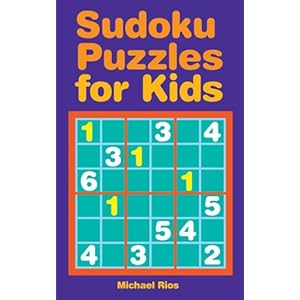
This is what my 11 yo did last night in bed before he went to sleep.

Sudoku Puzzles for Kids

My husband loves Sudokus.  He does them to relax.  I, personally, find them very frustrating.  I tend to go more with stuff like Scrabble and crossword puzzles, but he likes numbers.  He graduated to Ken-Kens and then Kakuros.

Becky learned to form numbers by sitting on her daddy's lap and filling in the squares with him.  Now he plays his games on his ipad.  Often on a Sunday afternoon, you'll find him on the sofa with one or two children working on a Sudoku or Kakuro together.

So it is only natural that my son would think Sudoku was a great thing to do before bed.  By the way, I just happened to pull this book off shelf  the other day, after about a year of residence there; the book was partially filled in quite a while ago and then shelved and now it is recirculating.

Here's an article talking about how great Sudokus are for your brain.

Friday, October 22, 2010

Living Math

This is a very popular resource for homeschoolers.  I love the book lists!  That's really where I've benefited the most from this wonderful woman's efforts to share her love of math.  Lots of ideas here.  Enjoy!

Tuesday, May 18, 2010

Scales

Buy a scientific scale like one on this page. Put it out where your kids can play with it. Watch them entertain themselves by weighing everything they can think of. Watch them weigh an apple, take a bite, weigh it again, take another bite. Watch them determine how much one item weighs more or less than another item. Listen to them chat to each other fluently referring to milligrams and centigrams.

Monday, May 17, 2010

Little House Fractions

Read The Little House series out loud to your daughter (over the course of her 7th year). When she is eight she will come to you and say: Mommy, remember when Mary and Laura had to share their cookie with Carrie? And they each broke their cookie in half and gave her both halves. And they knew they were giving her more than they got but they didn't know how to divide it up fairly? Well I figured it out. Break the two cookies in half and everybody gets 1/2. Then take the remaining 1/2 of a cookie and break it into 3 equal parts. That way everyone gets 1/2 plus a little more.

Sunday, May 16, 2010

Noah's Ark Math

Read the story of Noah's Ark to your kids. Have one inquisitive kid ask, "so how big is a cubit, anyway?" Use your dictionary skills to look up definition. Kids suddenly want to measure the distance between their forearms and tip of middle finger. Locate retractable tape measurer (this might take a while if your house is anything like ours). Kids measure the distance used to determine cubits. Argue over whether it is really 21 inches or 18 inches. Start measuring everything you can. When one sibling says let's go out and figure out how big the ark was, gently recede into the background (but first warn them to be careful not to cut themselves on the sides of the metal tape). Watch them tumble out of the house enthusiastically planning and organizing how they are going to do this measuring. Think about how beautiful the crisp fall morning is. Go change the baby's diaper. Check outside and see that the kids are still at work on their project. Make yourself a cup of tea. Sit by the window and nurse the baby. Notice that the kids have gotten sidewalk chalk out and are using this to help measure out the distances. Listen to one child as he excitedly runs into tell you that they figured out that the ark was about the length of our very long driveway. Puzzle about how Noah could have fit all those animals on there. Watch the children continue to measure bushes, trees, the length of the house, their body lengths after having another child mark it off with chalk. Look down and coo at the baby. Think about how blessed it is to be home raising your children.

Cinnamon Toast Fractions

Make your child cinnamon toast on a regular basis. Ask the child if she wants her toast cut into halves or quarters. At some point get silly and cut child's toast into thirds or sixths. When child is having a 'tea' for her dolls, experiment, while child supervises, with cutting toast into various different fractions. Make sure you have a loaf of bread and enough cinnamon and sugar. This may take a while!

Learn that it is harder to cut toast into odd numbered fractions than it is to cut into even numbered ones. Use a sharp knife or else cinnamon toast will get really mashed up and crumbled, the smaller the fractions you try to make. Learn that trying to cut cinnamon toast into 1/16 pieces is a little extreme.

Child from this scenario now regularly asks for cinnamon toast cuts into 1/8 pieces. She gets upset if you only cut it up into 1/6th.

Brother of said child still likes his cinnamon toast in halves. Though it is best if it is cut into two triangles. This means you can take a bite in the center of the hypotenuse and get lines of buttery cinnamon sugar on both sides of your mouth. Girl child likes the dainty little 1/8 size pieces because it avoids this messy phenomenon. Also, 1/8 size pieces fit perfectly on toy dishes, if you happen to be sharing a snack with your teddy bear. This may be the difference between boys and girls.

[Photo credit: WikiHow]

Jar O' Pennies


You know how pennies accumulate in jars or bowls. At least around our house they do. Take said jar of pennies. Place them somewhere your children can reach them. For us this is the kitchen counter. Make sure your child is old enough to know not to put pennies in their mouth. At some point the child wants to explore the pennies. This either happens on their own or you begin playing with them and they want to join in. I forget how it happened with us. This was all serendipitous to begin with.

Anyway, play with the pennies. Make long snakes out of the them on the table. Count how many pennies are in the snake. Stack up pennies and see who can make a taller stack. Make shapes from the pennies: triangles, squares, rectangles, circles, animals, people, whatever!

Leave the jar available for as long you want. After a few days, weeks, months, the child might stop playing with the pennies. Thanksgiving or some other holiday comes along forcing a deep cleaning of the house. Counter gets clear of all day to day debris. The jar of pennies gets put away in a closet. A year later, it is the closet's turn to be purged. Jar of pennies makes another appearance. Child squeals with happiness when she sees the jar. She demands to be able to play with pennies. This time she's a year older, so while you and she are playing you show her how to count by twos. It makes the counting go faster. You tell her that maybe we can count up some pennies and use the money for something: a lollipop, a packet of seeds, some money to put in the poor box at church. This has the effect of motivating her to count higher. You can start learning to count by fives too, this way.

Play casually like this, in and out of the days, sometimes ignoring the pennies for a few days, sometimes playing a lot. Again at some point the jar of pennies begins to gather dust from neglect. It gets put away again. The seasons come and go. The closet gets rearranged to make room for something. The jar returns again to the counter.

This time the child is even older. Her dad tells her that if she can identify all the coins and all the dollar bills going up to $20.00 she can begin to receive allowance. Child thinks this is the coolest thing ever! This means she'll be able to buy her own lollipops, seed packets or give her own money to help the poor. So set alongside the penny jar (the pennies are still fun to make shapes with, count by twos and fives) is a small bowl of change gathered from Dad's dresser top. Now we discover that 5 pennies equals 1 nickel and ten pennies or 2 nickels equals 1 dime.

For our kids it was a developmental thing to understand all this coinage and how it worked. Some kids got it faster than others. Periodically dad quizzes child. Dad possesses magical ability to make everything fun. So these quizzes are gentle and humorous. One day child gets it all right. She remembers a nickel means 5 cents, she remembers that a quarter is 25 cents and that 4 of them equals a dollar. Calloo Callay! Oh frabjous day! Beaming child receives an allowance.

Even later, that big jar of pennies is great for illustrating the concept of multiplication. Take twenty pennies, break them into 4 groups of 5, count them up by ones and then by the 4 groups, change to 5 groups of 4. Put them into two rows of ten. Do this lots of times. It is especially appropriate to do this when you've broken out the Multiplication Rock and you've been listening to it as you drive around on errands. When your child is happily singing, Three, It's the Magic Number, you can play with the pennies to illustrate.

Pennies: the ultimate math manipulative.

Photo credit: Ephemerist

Photo credit: Coinguy