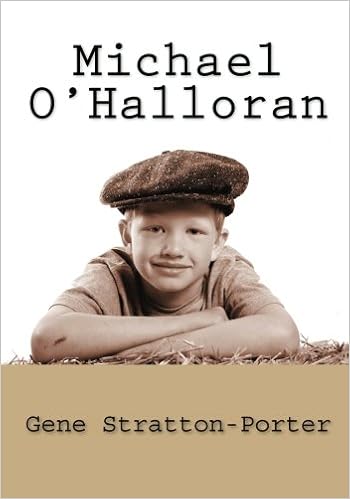
On a whim, I decided to read another Gene Stratton Porter novel. I've read her Girl of the Limberlost which I loved and last year I read her novel Laddie which I enjoyed as well. So I downloaded Michael O'Halloran on my kindle and prepared to have a cozy read. Alas, that did not happen. This book struck me as bizarre in so many ways.
Set in the city of 'Multiopolis' which is supposed to represent any Midwestern city during the WWI era, Porter tries to to be allegorical, I think. We follow the lives of 4 couples: Mickey, the nickname for the title character, and the little lame girl he rescues, Lily Peaches. Mickey is a 10 year old orphan surviving on the streets of the city by selling papers. He's a newsie. Then there's Douglas Bruce and his lady love, Leslie, whose father is an important man in the city but who is unspoiled by her wealth because she gets ecstatic going out into NATURE and listening to birdsong, mostly the tamarack swamp. Then there's James Minturn and his rich, society wife who through slavery to her high society role has neglected her children to the point of death of their youngest daughter and thereby has alienated her husband. And finally there is noble farmer Peter and his wife Nancy who come to Mickey and Peaches' rescue by taking them from the city to the country.
Mickey is supposed to be 10 but he teaches everyone how to be better people because he is a symbol of what the author thinks would fix the world. I found his long speeches and all the slang and colloquialisms that were supposed to make him cuter, really cloying. The book was just too didactic and forced for me to buy into it or to feel attached to any of the characters much. It was, though, a neat glimpse into city life around that era. I kept picturing Charlie Chaplin's The Kid while reading it. I noticed that several times the author talked about the evils of immigrants coming in and taking jobs from real Americans. This era was the height of anti-immigration and isolationism (in reaction to involvement in the first world war).
While there were some charming elements to the novel, it just didn't win me over and I struggled to finish it. I even agree with the premise that we need more appreciation for the beauty of nature and music in our lives and city living alienates from that. But the rather heavy-handed, sentimental presentation of these ideas turned me off.
For more book reviews go to Read 52 Books in 52 Weeks.
For more book reviews go to 52 Books in 52 Weeks.

No comments:
Post a Comment