If you are interested in unschooling Latin, one way to do this is to encounter it as a living language. Every day Catholics around the world pray the Mass and the rosary in Latin! This isn't as common as it used to be but Latin is definitely making a comeback in the Catholic Church. It never died out entirely, of course, but there is a resurgence in interest in it.
Here are resources developed by my Latin teacher! She's a lovely lady with years of homeschooling experience. She does this in her spare time (which isn't much!). These resources are really neat! Check them out!
Thursday, October 21, 2010

Loganberry Books
If you are homeschooling, you are probably reading a lot of children's books. Reading a lot of children's books, makes you remember books you've read as a child. Remembering books you've read may make you tell stories from them to your children. This makes you want to find these books from your childhood. Sometimes these books are not easily found at the library or Amazon. Sometimes you have only the vaguest recollection of them.
Have I got a site for you!
Go to Loganberry books and browse around. Then submit book stumpers and see if someone out there in internet land also read that book and remembers more than you do! Or just have fun reading through all the book stumpers. It's a trip down memory lane!
Have I got a site for you!
Go to Loganberry books and browse around. Then submit book stumpers and see if someone out there in internet land also read that book and remembers more than you do! Or just have fun reading through all the book stumpers. It's a trip down memory lane!
Wednesday, October 20, 2010


NaNoWriMo
Many people already know about this, but it is fairly new to us. A couple years ago my middle son and I participated. We were kind of lame about it though. This year my three sons and I have decided to participate. It looks cool! We've got our thinking caps on trying to come up with what we'll write about.
So here's the link.
So here's the link.
Tuesday, October 19, 2010
Thoughts on Spelling
Here's some thoughts I've developed over the years when it comes to children and spelling:
1. Some kids are natural spellers; many are not.
2. The more reading and writing you do the better you get at spelling.
3. I read somewhere that spelling skills are usually about two years behind reading level. I believe this is true.
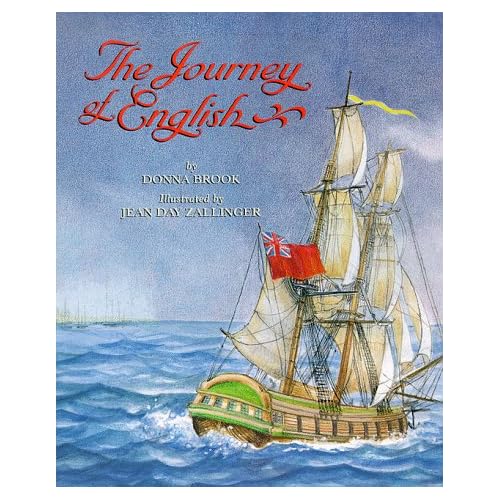
4. The study of the history of language helps you become a better speller. You learn why knock and know are spelled that way; why some words spell the 'f' sound with 'ph,' etc. This puts all those spelling rules in context and makes all the exceptions interesting instead of frustrating. A great book to introduce children to the history of English is this one:
 5. Spelling happens. My husband was a terrible speller. He only did well on his weekly spelling quizzes at school because his dad paid him a dollar if he got an A. None of this ever translated into writing. He has a paper he wrote in high school where every other word is circled in red because it was misspelled. Yet somehow he made it through law school and even graduated near the top of his class. He didn't feel confident in spelling until he was 30 years old. Now he's a great speller!
6. Worrying about your 9 year old's spelling is like worrying that your 3 year old won't get potty trained before college. In other words, don't worry!
7. I admire Susan Wise Bauer (even though she's not an unschooler, I think she's tremendously cool and very wise in many ways!) but I disagree most vehemently with her advice to not let kids use the spell checker on the computer. I think having to stop and look up words when trying to write is actually counterproductive. I'll tell you why. It makes spelling and writing too labor intensive and overwhelming, especially for a child who does not take naturally to either of these two skills. They shut down and grow resistant to learning. The exception to this is if the child looks up a word on their own initiative; then it sinks in. For my kids the spell checker does three wonderful things: 1) It eases the spelling burden and frees them up to write. 2) When they spell a word wrong they get instant feedback on how it actually is spelled. 3) It teaches them the value of good proofreading. They soon learn to get someone else to read what they wrote; someone who can correct the things the spell checker can't catch, like accidentally writing 'there' for 'they're' for example. And this brings their attention to that particular problem word and becomes a good learning moment.
8. If you leave dictionaries lying around your house, you will catch your children thumbing through them and looking up words. Sometimes they might be words you don't want them to know quite yet!
9. My children pester me all the time with requests to spell words. I am often torn between just spelling the word for them and not turning every interaction into a little lesson or empowering them by teaching them spelling rules. You know that saying, if you give a man a fish. . . . . so I compromise! About half the time I give them the spelling rule and the other half I just spell it for them.
10. At some point my unschooled kids got discouraged about spelling. That's a good time to decide to devote some focused energy on teaching them the rules. See this for one possible resource that may help you!
1. Some kids are natural spellers; many are not.
2. The more reading and writing you do the better you get at spelling.
3. I read somewhere that spelling skills are usually about two years behind reading level. I believe this is true.
4. The study of the history of language helps you become a better speller. You learn why knock and know are spelled that way; why some words spell the 'f' sound with 'ph,' etc. This puts all those spelling rules in context and makes all the exceptions interesting instead of frustrating. A great book to introduce children to the history of English is this one:
6. Worrying about your 9 year old's spelling is like worrying that your 3 year old won't get potty trained before college. In other words, don't worry!
7. I admire Susan Wise Bauer (even though she's not an unschooler, I think she's tremendously cool and very wise in many ways!) but I disagree most vehemently with her advice to not let kids use the spell checker on the computer. I think having to stop and look up words when trying to write is actually counterproductive. I'll tell you why. It makes spelling and writing too labor intensive and overwhelming, especially for a child who does not take naturally to either of these two skills. They shut down and grow resistant to learning. The exception to this is if the child looks up a word on their own initiative; then it sinks in. For my kids the spell checker does three wonderful things: 1) It eases the spelling burden and frees them up to write. 2) When they spell a word wrong they get instant feedback on how it actually is spelled. 3) It teaches them the value of good proofreading. They soon learn to get someone else to read what they wrote; someone who can correct the things the spell checker can't catch, like accidentally writing 'there' for 'they're' for example. And this brings their attention to that particular problem word and becomes a good learning moment.
8. If you leave dictionaries lying around your house, you will catch your children thumbing through them and looking up words. Sometimes they might be words you don't want them to know quite yet!
9. My children pester me all the time with requests to spell words. I am often torn between just spelling the word for them and not turning every interaction into a little lesson or empowering them by teaching them spelling rules. You know that saying, if you give a man a fish. . . . . so I compromise! About half the time I give them the spelling rule and the other half I just spell it for them.
10. At some point my unschooled kids got discouraged about spelling. That's a good time to decide to devote some focused energy on teaching them the rules. See this for one possible resource that may help you!
Monday, October 18, 2010
Phonics Pathways

That's why I like this resource! I've used it with preschoolers to teens. Heck, if I can't remember if something ends with -able or -ible, I can use it too, as a 50 year old adult.
Spelling for my kids is a painful subject. They do not take to it easily. For my older kids, we did an emergency remedial spelling year when they were in 8th and 7th grade and were feeling very discouraged by their spelling struggles. We used this book off and on for a year. I thumbed through it until I got to a spelling rule they stumbled on. Then I'd write the spelling rule up on our white board. Then I'd dictate the list of words that went with that spelling rule. Sometimes they'd write them on the whiteboard too or sometimes they preferred to write on paper. Sometimes we just orally spelled the words. Then I'd dictate the sentences that contained the spelling words. This they usually preferred to write on paper.
Right now I'm using the book a little differently with my youngest three kids. I've got a space on my kitchen cupboard door that says SPELLING RULE OF THE WEEK. I've been posting a new spelling rule each week. The cupboard is right next to our kitchen table where we have most of our meals. At some point during the week, I remember to discuss the spelling rule and then I orally quiz the kids on words. Often the kids have already read the rule and list of words so my talking is just a kind of review.
It's simple! It's easy! It's relaxed! It works!
Conversations
Conversations are the number one way children learn in an unschooling environment. At least that's been my experience. Pay attention to conversations. Here's one I had with my 9 year old daughter last week:
We were in the car driving somewhere. She's in the back seat buckled in and I'm, of course, in the front driving. Apropos of nothing she says suddenly:
"There are sixty seconds in a minute."
"That's right," I say.
"And there are sixty minutes in an hour."
"Yes," says I.
"And there are 25 hours in a day," she continues.
"Actually, there are 24 hours in a day."
"Oh! Twenty-four!" She mulls this over for a second or two.
"And there are seven days in a week."
"That's right."
There's a bit of a silence and I wait for her to go into how many weeks are in a month, but her mind moves in a slightly different direction.
"There are four seasons in a year."
"Yes."
"And there are four months in each season."
"Well, there are twelve months in a year and there are four seasons, so. . . "
"Oh, then there are three months in a season!" She's a little excited that she puzzled that out.
Me, enthusiastically: "That's right!"
Again, she pauses to think a bit.
"There are ten years in a decade."
"Correct!"
"And there are a hundred years in a century."
"Correct again!"
"And is there a word for if you have a thousand years?"
"Yes, it's called a millennium."
Child tries out this new word by repeating it carefully several times. It's a fun word to say.
"Is there a word for a million years?" She wants to know.
"Gee, honey, if there is, I can't remember it right now!"
She laughs, "That's because we haven't been around very long!"
Unschooling can make one feel rather insecure about whether a child is learning. Noting conversations like this is a wonderful way to 'see' the natural learning that is taking place.
We were in the car driving somewhere. She's in the back seat buckled in and I'm, of course, in the front driving. Apropos of nothing she says suddenly:
"There are sixty seconds in a minute."
"That's right," I say.
"And there are sixty minutes in an hour."
"Yes," says I.
"And there are 25 hours in a day," she continues.
"Actually, there are 24 hours in a day."
"Oh! Twenty-four!" She mulls this over for a second or two.
"And there are seven days in a week."
"That's right."
There's a bit of a silence and I wait for her to go into how many weeks are in a month, but her mind moves in a slightly different direction.
"There are four seasons in a year."
"Yes."
"And there are four months in each season."
"Well, there are twelve months in a year and there are four seasons, so. . . "
"Oh, then there are three months in a season!" She's a little excited that she puzzled that out.
Me, enthusiastically: "That's right!"
Again, she pauses to think a bit.
"There are ten years in a decade."
"Correct!"
"And there are a hundred years in a century."
"Correct again!"
"And is there a word for if you have a thousand years?"
"Yes, it's called a millennium."
Child tries out this new word by repeating it carefully several times. It's a fun word to say.
"Is there a word for a million years?" She wants to know.
"Gee, honey, if there is, I can't remember it right now!"
She laughs, "That's because we haven't been around very long!"
Unschooling can make one feel rather insecure about whether a child is learning. Noting conversations like this is a wonderful way to 'see' the natural learning that is taking place.
Subscribe to:
Posts (Atom)